
Fig leaf skeletonizer
Choreutis nemorana
Description
How to identify
The fig leaf skeletonizer (Choreutis nemorana) is a moth species belonging to the family Choreutidae, order Lepidoptera, which specifically targets fig plants.
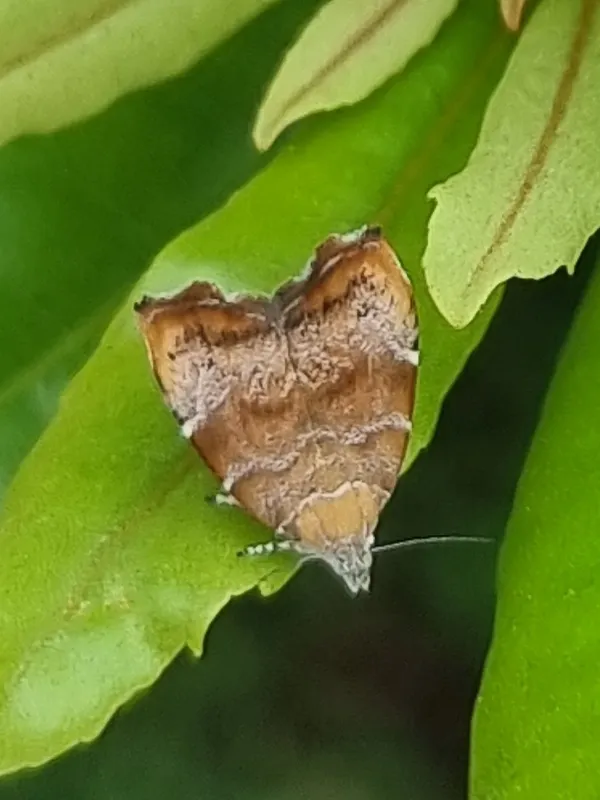
Adult moths have a wingspan of approximately 15–20 mm, with dark brown forewings adorned with golden or silvery bands and fringes.
The larvae are small, reaching up to 15 mm in length, and possess a yellowish-green body covered with distinct rows of dark spots or warts.
Pupation occurs within a compact, white, spindle-shaped cocoon usually found on the underside of leaves or in crevices of the tree bark.
This species is a specialized monophagous pest, meaning it relies exclusively on Ficus carica for its life cycle completion.
What it damages
Larval feeding is the primary cause of damage, as they skeletonize the leaves by consuming the parenchyma and leaving only the leaf veins behind.
In addition to leaf damage, larvae may feed on young shoot tips and fig fruits, causing significant physiological stress to the tree.
Heavily infested trees show reduced photosynthetic capacity, which directly negatively impacts the overall vigor and productivity of the plant.
The larvae often spin silk webs that tie leaves together, creating shelters where they feed and develop undisturbed by external predators.
Severe infestations lead to premature leaf drop, which weakens the tree's ability to store energy for the following growing season.
When it appears
The insect typically overwinters as an adult moth in sheltered locations like cracks in tree bark, garden debris, or even outbuildings.
Emergence begins in early spring, coinciding with the bud burst of fig trees, at which time females begin laying eggs on the undersides of young leaves.
Depending on the climatic zone, the pest can complete two to three generations annually, causing continuous pressure throughout the summer months.
Peak larval activity is usually observed in the mid-summer period (June and July) when temperatures are optimal for rapid growth and development.
As autumn approaches, the final generation pupates to prepare for overwintering, bringing the annual cycle of activity to a close.
Signs of infestation
The most recognizable symptom is the presence of skeletonized leaf patches, where the green tissue has been entirely removed by the larvae.
Webbing between leaves or at the tips of shoots is a definitive sign of infestation, indicating the presence of active larval colonies inside.
The accumulation of frass (larval excrement) near the webbed leaf areas is a clear indicator that the larvae are actively feeding nearby.
Leaves that appear curled, discolored, or prematurely withered during the active season often contain larvae or pupae of the moth.
Checking the bark of the trunk or main branches during the off-season may reveal discarded pupal cases left behind after the moth emergence.
Control measures
Sanitation is key: removing and destroying fallen leaves and debris in the autumn significantly reduces the number of overwintering individuals.
Small-scale infestations can be managed by manually picking and crushing the webbed leaves before the larvae disperse.
Biological control using microbial insecticides based on Bacillus thuringiensis is effective against young larvae and is safe for fruit-bearing trees.
When chemical control is necessary, target the early stages of larval development to ensure the highest mortality before significant damage occurs.
- Always verify the safety intervals for any chemical applied to edible fig fruits.
- Encouraging natural predators, such as birds or parasitic wasps, can help keep local populations under control.
Taxonomy
- Latin name
- Choreutis nemorana
- Order
- Lepidoptera (butterflies)
- Family
- Choreutidae
- EPPO code
- SIMANE
Discussion
No discussions yet — be the first.