
Tarophagus
Tarophagus
Description
How to identify
Tarophagus is a genus of planthoppers belonging to the family Delphacidae, known for causing significant damage to specific tropical crops.
These insects are characterized by their jumping behavior and presence on their host plants, typically the Colocasia esculenta (taro).
The most prominent species, Tarophagus proserpina, is well-documented in the Pacific region as a primary threat to taro cultivation.
The lifecycle consists of eggs inserted into the leaf petioles, followed by nymphal stages, and winged adults capable of long-distance dispersal.
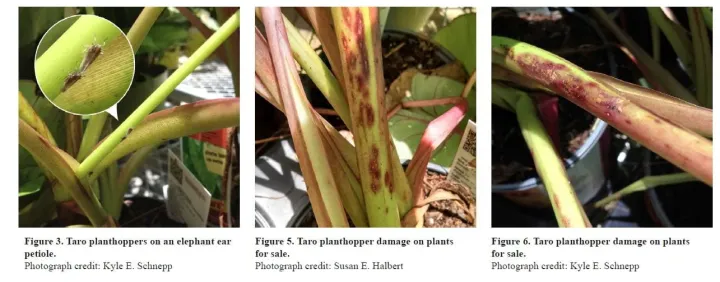
Nymphs are often distinguished by white waxy filaments on their abdomen, which serve as a unique morphological identification feature.
What it damages
The primary host for this pest is taro, where both nymphs and adults feed on the sap by piercing the plant tissues with their mouthparts.
By targeting the tender, young leaves and petioles, the insect disrupts the plant's ability to develop strong foliage and healthy corms.
Heavy infestations lead to stunting and reduced yields, which can be devastating for farmers relying on taro as a staple food source.
Beyond direct mechanical damage, the insect facilitates the growth of sooty mold, which impairs the leaf's photosynthetic capacity.
In some regions, these planthoppers have been associated with the transmission of viruses, which further complicates the health of the crop.
Signs of infestation
Leaves affected by Tarophagus often show symptoms of curling, yellowing, and general deformation in the early stages of the attack.
Presence of honeydew on the leaf surfaces indicates active feeding, which is frequently followed by the colonization of dark-colored sooty mold.
Careful examination of the leaf base or the unfurling leaves usually reveals the presence of numerous nymphs scurrying when disturbed.
A noticeable decrease in plant vigor is observed as the infestation persists, leading to poor overall plant development and smaller corm size.
In severe cases, the plant may exhibit wilting and necrosis, especially if the infestation coincides with environmental stress like heat or drought.
Control measures
Effective management begins with the use of clean planting materials to ensure that eggs are not introduced into new fields.
Field sanitation is critical; removing crop residues and weeds helps reduce the overwintering or refuge sites for the pest population.
Biological control, including the encouragement of natural predators like spiders or parasitic wasps, is a sustainable way to manage outbreaks.
When necessary, systemic or contact insecticides may be applied, though it is crucial to target the specific stages vulnerable to treatment.
- Use of resistant taro varieties where available.
- Regular field scouting for early detection.
- Application of horticultural oils if infestation levels remain low.
- Integration of cultural and chemical control measures.
Taxonomy
- Latin name
- Tarophagus
- Order
- Hemiptera (bugs, aphids, leafhoppers)
- Family
- Delphacidae
- EPPO code
- TAROSP
Discussion
No discussions yet — be the first.