
Smaller brown planthopper
Calligypona propinqua
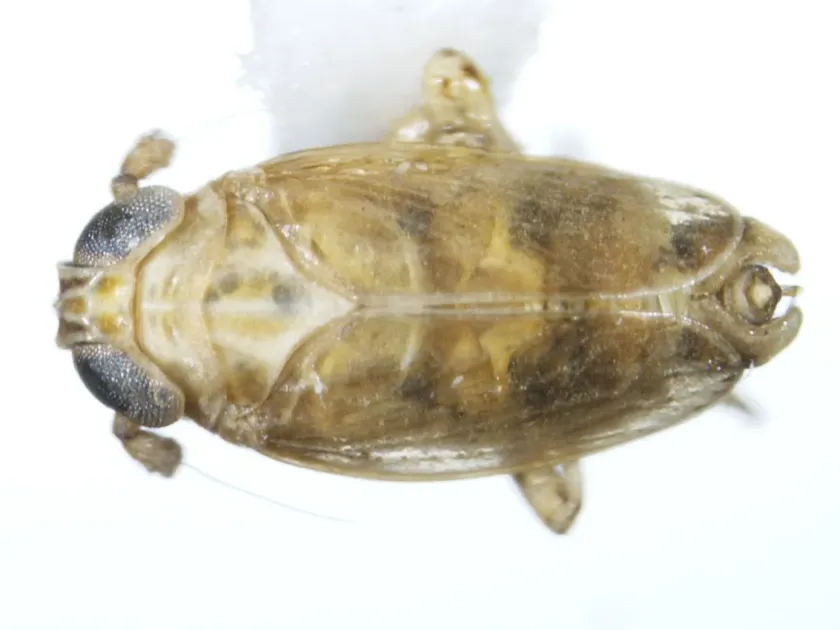
Description
How to identify
The smaller brown planthopper (Calligypona propinqua, also known as Laodelphax striatellus) is a small insect belonging to the family Delphacidae. Measuring about 3 to 4 mm, it is known for its ability to jump and its specific wing structure.
Adults exhibit color variations ranging from pale brown to dark brown or blackish hues. Nymphs, which lack fully developed wings, are often found in the lower leaf sheaths of host plants.
Identification is best achieved by sweeping infested fields during the cooler parts of the day. They are typically associated with moist habitats and thrive in dense vegetation where humidity is higher.
Their life cycle consists of the egg stage, five nymphal instars, and the adult stage. In many regions, they overwinter as nymphs within crop debris or in wild grasses near field borders.
The population growth is highly dependent on ambient temperature, with multiple generations possible in a single growing season if conditions remain favorable.
What it damages
This pest primarily attacks cereals, including wheat, barley, oats, and rice. It also utilizes a wide range of wild grasses as alternative hosts throughout the season.
Damage is caused by both adults and nymphs piercing the plant tissue and sucking the sap. This process directly depletes the plant's resources and induces physiological stress.
The most critical aspect of the damage is the transmission of plant viruses, most notably the cereal dwarfing virus. Viral infection often results in catastrophic yield losses if left uncontrolled.
Infected plants show signs of severe stunting, reduced tiller formation, and failure to head properly. The resulting grain is often shriveled or the plant may fail to produce any seeds at all.
Infestation often occurs in patches within the field, creating visible unevenness in crop height and density, which becomes more pronounced as the season progresses.
Signs of infestation
Early symptoms include pale, chlorotic spots or streaks on the leaves. These injuries are caused by the insertion of the insect's stylet during feeding.
Viral transmission symptoms are distinct and involve stunted growth, yellowing or reddening of the leaves, and proliferation of excessive, deformed tillers. This is known as "grass-clump" or "dwarfing" symptoms.
A field scouting observation might reveal the presence of numerous jumping insects when foliage is disturbed. This is a clear indicator that the population density is increasing.
In cases of severe infestation, the plant tissue may wilt or die back prematurely. The loss of chlorophyll leads to a significant decrease in the plant's overall energy production capacity.
The presence of sooty mold on the foliage may sometimes be associated with high populations of sap-sucking insects, although it is not a direct symptom of the planthopper itself.
Control measures
Cultural control practices are essential for managing this pest. These include keeping field margins free of weeds, which are known breeding grounds for planthoppers.
Effective crop residue management, such as deep plowing after harvest, is vital to destroy the overwintering nymphs and reduce the starting population for the next season.
Systemic insecticides applied as seed treatments provide the best protection against early-season colonization and help prevent the transmission of insect-borne viruses.
If population levels exceed the economic threshold during the growing season, foliar applications of appropriate contact or systemic insecticides are required to prevent widespread damage.
Regular monitoring using sticky traps and visual inspection is the standard approach to determine the exact timing for insecticide applications to maximize effectiveness.
Taxonomy
- Latin name
- Calligypona propinqua
- Order
- Hemiptera (bugs, aphids, leafhoppers)
- Family
- Delphacidae
- EPPO code
- CALGPR
Discussion
No discussions yet — be the first.