
Delphacid leafhopper
Calligypona
Description
How to identify
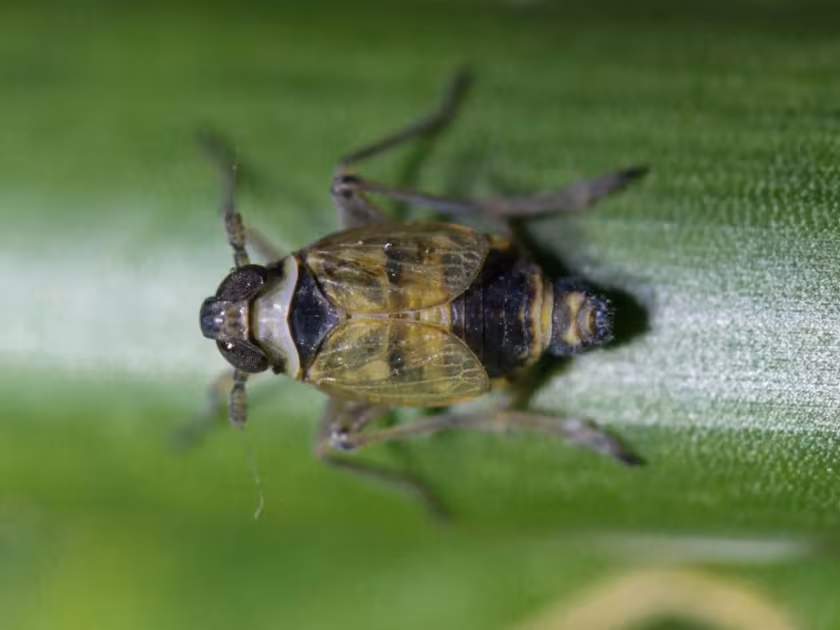
The Delphacid leafhopper (Calligypona marginata) belongs to the order Hemiptera, family Delphacidae. These insects are small, typically measuring between 3 to 4 mm in length.
Adults exhibit a color palette ranging from light brown to deep black, with transparent wings featuring distinct reticulated venation patterns.
Sexual dimorphism is present; males are generally smaller and darker than females, with a more slender body structure compared to the broader abdomen of the female.
Equipped with specialized saltatorial (jumping) hind legs, these insects are highly mobile, allowing them to escape threats rapidly and move efficiently between cereal plants.
They undergo incomplete metamorphosis, meaning the nymphs resemble miniature versions of the adults but lack fully developed wings until their final molting stages.
What it damages
The pest primarily targets cereal crops, including wheat, barley, rye, and oats, causing significant physiological stress to the plants.
Feeding involves using piercing-sucking mouthparts to extract vital sap from leaves and stems, which directly impairs the plant's nutrient transport system.
A primary concern is their role as vectors for various plant viruses, such as the wheat striate mosaic virus, which can cause systemic infection and severe yield reduction.
Feeding sites often manifest as chlorotic spots, which eventually coalesce, leading to leaf desiccation and stunted development of the affected tillers.
Economic damage is most severe during the early vegetative stages, as weakened plants become highly susceptible to environmental stressors and secondary fungal pathogens.
When it appears
Nymphs of various developmental stages serve as the overwintering form, surviving cold periods within the soil or protected by debris from previous harvests.
As spring temperatures consistently exceed 8-10 degrees Celsius, nymphs become active, moving from over-wintering sites to emerging cereal seedlings.
The maturation from nymph to adult occurs throughout the late spring and early summer, coinciding with the peak growth phase of most cereal crops.
Egg-laying typically peaks in May, with females depositing their eggs directly into the leaf tissues or stems of the host grasses.
Depending on the climatic conditions of the region, the population can complete multiple generations within a single growing season, necessitating ongoing vigilance.
Signs of infestation
Initial infestation signs include leaf tip yellowing and curling, which can easily be mistaken for nitrogen deficiency or water stress in young crops.
Characteristic symptoms of virus transmission include a striped appearance (striation) and severe stunting, leaving the affected plants significantly smaller than healthy ones.
Evidence of infestation is often identified by the presence of 'honeydew' on leaf surfaces, a sugary residue excreted by the insects that promotes sooty mold growth.
Field patches with inhibited growth, uneven height, or yellowish-red discoloration are common indicators of established leafhopper colonies.
Close inspection of the underside of leaves or the crop canopy often reveals the jumping adults, which are sensitive to vibration and light movement.
Control measures
Integrated Pest Management (IPM) is essential, starting with the mechanical removal of wild grasses and weeds that act as refuges for the pest.
Maintaining proper spatial isolation between cereal fields and pastures or grassy areas reduces the risk of migration during the insect's active phase.
- Application of systemic insecticide seed treatments to provide early-season protection.
- Foliar insecticide applications (pyrethroids or neonicotinoids) when pest density exceeds economic thresholds.
- Utilization of resistant crop varieties that may show less attraction to the leafhoppers.
- Deep tillage of stubble after harvest to bury and eliminate overwintering nymphs.
- Monitoring population levels using yellow sticky traps to inform timing for chemical intervention.
Chemical control should be strategically timed to coincide with the most vulnerable developmental stages of the insect to ensure maximum efficacy and reduce environmental impact.
Taxonomy
- Latin name
- Calligypona
- Order
- Hemiptera (bugs, aphids, leafhoppers)
- Family
- Delphacidae
- EPPO code
- CALGSP
Discussion
No discussions yet — be the first.