
Asiraca clavicornis
Asiraca clavicornis
Description
How to identify
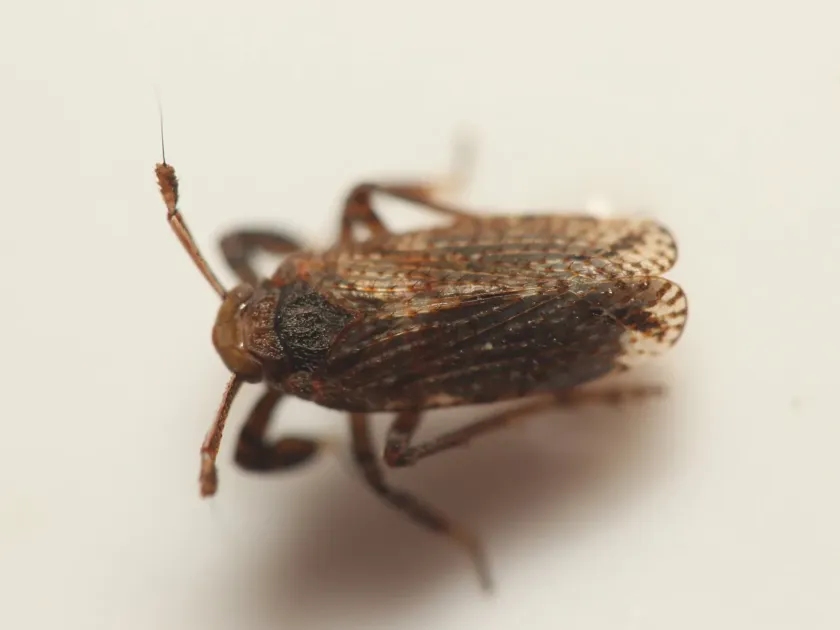
Asiraca clavicornis is a species of insect belonging to the family Delphacidae, within the order Hemiptera. It is easily recognized by its distinctive club-shaped antennae, which serve as its primary morphological identifier.
The adult insect typically displays a brownish or grayish coloration, which acts as camouflage against the dry or green stems of cereal plants where it spends most of its life cycle.
Adults possess functional wings, facilitating dispersal between fields and new crops, while nymphs are wingless and remain focused on feeding within the dense lower canopy of the host plants.
This species is characterized by its cryptic behavior, often hiding in leaf sheaths or near the base of the stalks, which makes detection challenging during routine field scouting.
Entomologists and agronomists distinguish this species by examining the structure of the antennae and general body shape, comparing them with other related delphacid species common in agricultural landscapes.
What it damages
Asiraca clavicornis primarily infests various cereal crops, including wheat, barley, rye, and oats, causing significant physiological stress during critical stages of plant development.
The pest utilizes its piercing-sucking mouthparts to feed on plant sap. By extracting essential nutrients, it disrupts the flow of photosynthates, leading to stunted growth and weakened plant vigor.
Feeding damage is particularly severe when it occurs at the seedling stage, potentially resulting in reduced stand density or complete loss of plants in localized areas of the field.
In addition to direct mechanical injury, the feeding process can facilitate the entry of secondary pathogens, further compromising the structural integrity and health of the crop.
High infestation levels lead to reduced grain fill and lower yield quality, negatively affecting the economic profitability of cereal production if left unmanaged.
When it appears
The life cycle of Asiraca clavicornis is highly synchronized with the phenological development of grasses and cereals, ensuring optimal conditions for survival and reproduction throughout the year.
The species overwinters primarily as late-instar nymphs, seeking refuge in the soil, organic debris, or within the stubble of harvested fields to survive cold winter temperatures.
As temperatures rise in the spring, the nymphs resume activity and begin feeding on early-season cereal crops, marking the onset of the primary infestation cycle for the season.
Multiple generations can occur during the growing season, with population peaks usually coinciding with the warmer months when metabolic rates and reproduction are at their highest.
As the season nears its end, the insects gradually transition towards wild grasses or winter cereal volunteers, entering a period of diapause in preparation for the upcoming winter.
Signs of infestation
The first indicator of an infestation is often a patchy appearance in the field, where plants exhibit reduced growth rates and uneven development compared to healthy sectors.
Visible chlorosis or yellowing of the leaf tips is a common symptom of sap loss, often accompanied by leaf curling or wilting if the infestation pressure is sufficiently high.
The presence of honeydew on the leaves is a classic sign of sap-feeding insects; this sticky substance often promotes the growth of sooty mold, which impairs the plant's ability to perform photosynthesis.
Stunted stems or structural deformities in the ears of the grain may become apparent as the plant reaches maturity, indicating that the damage occurred earlier in the development phase.
In severe cases, the lodging of stems due to overall weakness or localized tissue death at the base of the plant can be observed, making the field susceptible to harvest complications.
Control measures
Integrated Pest Management (IPM) strategies for Asiraca clavicornis prioritize cultural practices, such as maintaining proper crop rotation and reducing weed reservoirs around fields.
Effective tillage practices after harvest, such as deep plowing, can help destroy overwintering sites, significantly reducing the pest population pressure for the next planting season.
Chemical control, when necessary, involves the application of selective systemic insecticides. These are most effective when applied based on scouting thresholds rather than prophylactic schedules.
Regular field scouting using insect nets is essential for monitoring population density, ensuring that any interventions are timely and localized to the areas with the highest infestation levels.
Encouraging the presence of natural enemies, such as parasitic wasps and predatory insects, plays a crucial role in maintaining the ecological balance and suppressing population outbreaks.
Taxonomy
- Latin name
- Asiraca clavicornis
- Order
- Hemiptera (bugs, aphids, leafhoppers)
- Family
- Delphacidae
- EPPO code
- ASIRCL
Discussion
No discussions yet — be the first.