
Caucasian mole
Talpa caucasica
Description
How to identify
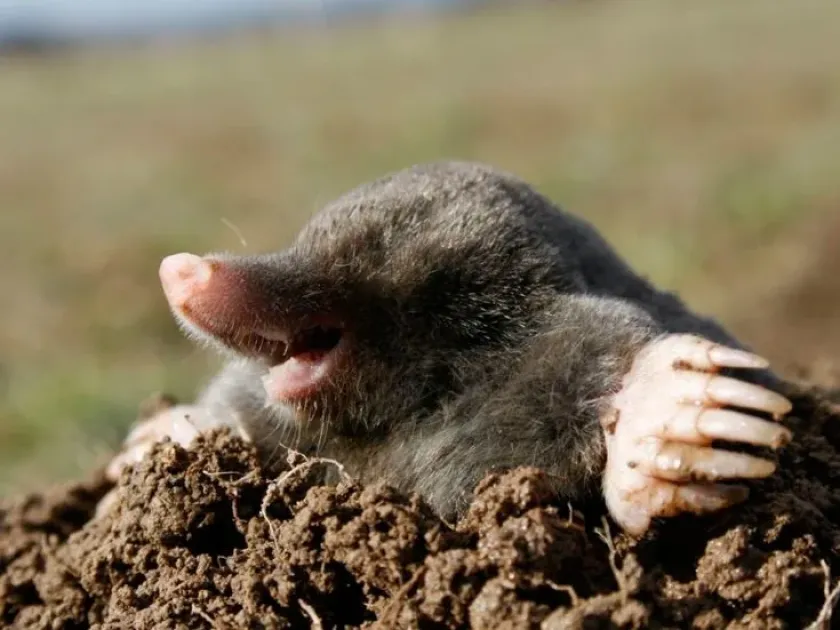
The Caucasian mole (Talpa caucasica) is a small mammal belonging to the Talpidae family. It is strictly adapted to a fossorial lifestyle, characterized by powerful forelimbs equipped with claws for efficient digging through soil layers.
Physically, the animal reaches a length of approximately 12–15 cm and is covered with dense, dark fur that allows for smooth movement in tight tunnels. Its eyes are rudimentary and covered by skin, as sight is not required in its subterranean environment.
This mole is highly active and maintains a rapid metabolism, requiring it to consume large quantities of soil-dwelling invertebrates, such as earthworms and insect larvae, throughout the day and night.
The life cycle involves seasonal reproduction, with females producing small litters that mature quickly. Once independent, young moles disperse to establish their own tunnel systems, which can span significant areas.
They construct complex, multi-level tunnel networks: shallow galleries for foraging and deep permanent chambers for nesting and wintering, making them a persistent presence in favorable habitats.
What it damages
While the Caucasian mole is insectivorous and does not consume vegetation, its burrowing activity causes significant damage to agricultural crops. The primary harm occurs when tunnels intersect with plant roots.
Roots that are exposed to air in a tunnel cavity lose access to moisture and nutrients, causing the plant to wither, stunt, or die, which is particularly destructive for vegetable crops and saplings.
The structural damage to the soil created by mole tunnels leads to water loss, as irrigation or rainwater drains through the subterranean channels rather than reaching the root zones.
Vegetable crops like potatoes, carrots, and onions, along with floral bulbs and young orchard trees, are highly vulnerable to root displacement and soil disturbance caused by the mole's constant expansion of territory.
In large-scale farming, the presence of molehills creates uneven terrain, which interferes with modern harvesting machinery and can lead to yield losses due to soil instability.
Signs of infestation
The most prominent sign of mole presence is the appearance of molehills, which are conical piles of displaced soil pushed to the surface during the excavation of deep tunnels.
Surface activity is evidenced by raised ridges or "tunnels" visible on the soil surface or lawn, created as the mole forces its way through the upper layer of sod in search of food.
Unexpected plant wilting or sudden tilting of seedlings and flowers often indicates that their root system has been compromised by a tunnel passing directly beneath them.
- Distinctive piles of fresh, loose soil on the surface.
- Visible, undulating ridges in lawns and garden beds.
- Soil collapse or sinking in localized areas after rain.
A combination of these signs indicates that a mole is actively foraging in the area, necessitating early intervention to protect sensitive crops and garden structures.
Control measures
Controlling the Caucasian mole is challenging due to its underground nature. The most reliable physical defense involves installing fine-mesh wire barriers around gardens, buried deep to prevent burrowing.
Vibrational and sonic repellent devices can be used to disturb the mole's environment, potentially driving them away, though their efficacy can vary significantly depending on soil density and structure.
Standard horticultural practices such as regular soil rolling and maintaining optimal soil moisture levels can make tunnel construction more difficult, discouraging the animal from staying.
For persistent issues, specialized live traps can be placed in active tunnels. It is crucial to identify the main traffic tunnels correctly, as placement is key to the success of trapping.
While moles are often considered pests, they also provide ecosystem services by aerating soil and consuming harmful grubs; therefore, exclusion methods are generally preferred over eradication.
Taxonomy
- Latin name
- Talpa caucasica
- Family
- Talpidae
- EPPO code
- TALPCA
Discussion
No discussions yet — be the first.