
Eastern mole
Scalopus
Description
How to identify
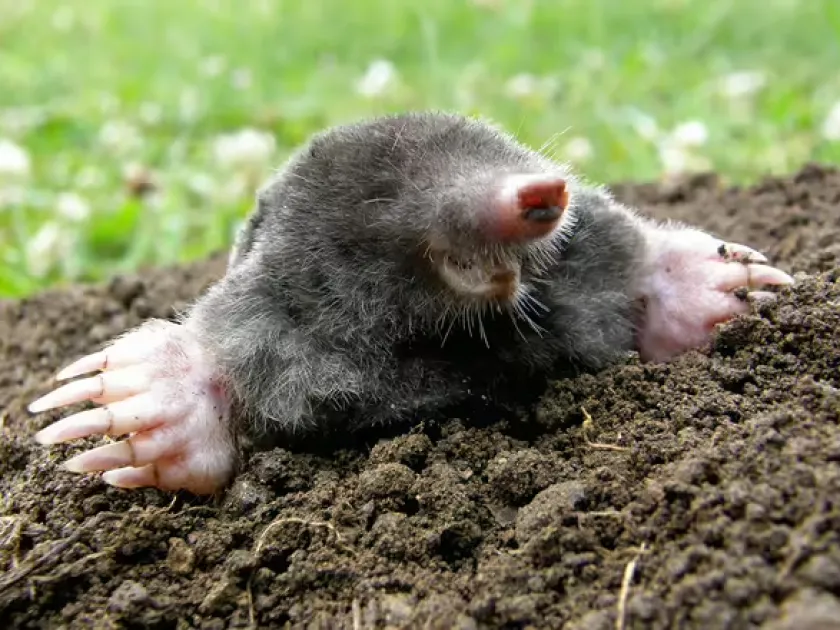
The eastern mole (Scalopus aquaticus) is a small, insectivorous mammal belonging to the family Talpidae. It is perfectly adapted to an underground lifestyle, possessing large, shovel-like forefeet designed for efficient digging.
The body is covered in dense, velvety fur that typically ranges from gray to dark brown. They lack visible eyes and external ears, which are essentially redundant in their dark, subterranean environment.
An adult eastern mole is generally 12 to 16 centimeters long. Their powerful pectoral muscles allow them to push through soil with significant force, enabling them to create complex networks of tunnels.
They are solitary creatures that spend almost their entire lives underground. A female typically gives birth to a single litter of two to five pups each spring, which mature rapidly within their first season.
Unlike other species, the eastern mole is highly active year-round, requiring a constant supply of food due to its extremely high metabolic rate, which dictates its continuous tunneling activity.
What it damages
While the eastern mole primarily feeds on earthworms and grubs, its behavior is highly destructive to agricultural crops, lawns, and ornamental gardens.
The primary damage is caused by the physical disruption of plant root systems. As they tunnel through the soil, they displace roots, causing them to dry out and die rapidly, which is especially lethal for young seedlings.
Their tunneling activity leads to the formation of ridges and mounds, which can severely ruin the appearance of commercial turf, golf courses, and private residential lawns.
By creating air pockets under the surface, moles can hinder the normal absorption of water and nutrients by plant roots, leading to patchiness and overall decline in plant health.
In agricultural fields, the mounds created by moles can become hazards for machinery, potentially damaging blades or other harvesting equipment during field operations.
When it appears
The eastern mole is active throughout all four seasons. While they do not hibernate, their surface-level activity fluctuates based on soil conditions and environmental temperature.
Spring is the peak season for mole activity, as the ground thaws and they become more mobile for mating and expanding their feeding territories, leading to high visibility of their damage.
During the dry summer months, moles often move deeper into the soil or toward irrigated areas like gardens and lawns where the moisture levels support higher populations of earthworms.
Autumn marks another period of increased activity as they prepare for winter, often widening and extending their tunnel networks to reach deeper layers where the soil remains workable.
In winter, activity continues in the deeper strata of the soil, usually below the frost line, allowing them to remain active and continue foraging regardless of surface weather conditions.
Signs of infestation
The most recognizable sign of eastern mole presence is the appearance of raised ridges on the soil surface, created by the animal as it tunnels just below the top layer of the ground.
Another clear indicator is the presence of molehills, which are volcano-shaped piles of soil pushed up from deeper tunnels. These mounds are distinct from those made by other burrowing rodents.
Dead or wilting patches of turf or vegetables often point to mole damage, indicating that the roots have lost physical contact with the soil and can no longer draw moisture.
Soil settling or collapses after heavy rainfall often expose portions of the mole's hidden tunnel system, which can be seen in residential landscapes and garden beds.
- Surface ridges.
- Volcano-shaped soil mounds.
- Wilting plants.
- Uneven or spongy soil.
Control measures
Trapping is widely considered the most effective way to control eastern moles. Success depends on identifying the active tunnels and placing traps in a way that intercepts the animal.
Exclusion is another powerful method, where subterranean barriers made of wire mesh or galvanized hardware cloth are buried along the perimeter of gardens to prevent entry.
Reducing the food source, such as managing grub populations with insecticides, can make the soil less attractive to moles, although this does not eliminate earthworm presence.
Commercial repellents and ultrasonic devices often offer inconsistent results, as moles are highly persistent and quickly adapt to environmental disturbances.
Keeping soil properly hydrated and maintaining healthy turf can sometimes minimize the depth of tunneling, but it does not fully deter these highly active animals from exploring your yard.
Taxonomy
- Latin name
- Scalopus
- Family
- Talpidae
- EPPO code
- SKALSP
Discussion
No discussions yet — be the first.