
Large Japanese mole
Mogera robusta
Description
How to identify
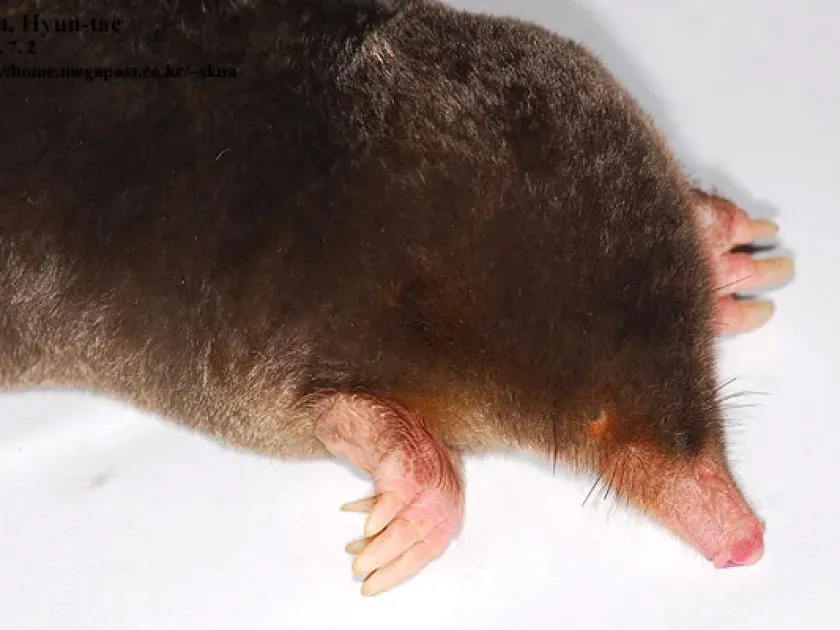
The Large Japanese mole (Mogera robusta) is a robust mammal belonging to the Talpidae family, known for its significant size and digging capabilities.
The animal is characterized by a sleek, dark coat and specialized front paws that function like powerful shovels, enabling it to displace large amounts of soil.
Unlike smaller mole species, this animal is highly territorial and maintains extensive networks of subterranean tunnels that can span across large gardens.
The species is perfectly adapted to a subterranean lifestyle, possessing rudimentary eyes and highly sensitive vibrissae used for navigation in absolute darkness.
It remains active throughout the year, focusing its efforts on deep burrowing to search for earthworms and soil insects in nutrient-rich garden beds.
What it damages
The primary damage caused by Mogera robusta is the indirect destruction of vegetation due to the disturbance of the soil and root systems.
Vegetable gardens are particularly susceptible, as tunnels often cut through the root zones of carrots, potatoes, and various leafy greens.
The mechanical damage to roots causes plants to wilt rapidly and often leads to crop failure, especially in early stages of plant development.
Young fruit trees and decorative shrubs are frequently harmed when their root balls are disturbed, resulting in nutrient deprivation and stunted growth.
Additionally, the formation of large mounds and tunnels creates air pockets in the soil, which leads to the drying out of delicate root systems.
Signs of infestation
The most prominent sign of infestation is the appearance of large, conical soil mounds, known as molehills, scattered across the garden surface.
Pathways of sunken or raised soil indicate the exact route of the mole’s tunnels, providing a clear map of its activity across the cultivation area.
A sudden decline in plant health, characterized by wilting without visible leaf damage or pest presence on the foliage, often indicates tunneling beneath the roots.
Freshly disturbed soil near the base of plants or at the edges of walkways is another indicator that the mole is actively foraging in the vicinity.
During the early morning or evening hours, observant gardeners may notice slight soil movements or structural changes in the ground surface.
Control measures
Managing the Large Japanese mole requires a combination of mechanical exclusion and deterrent tactics to force the animal to vacate the area.
Physical barriers, such as underground wire mesh buried to a depth of 70 centimeters, effectively prevent the mole from invading specific garden beds.
Electronic ultrasonic repellers that emit ground vibrations are widely used to make the environment uncomfortable, discouraging the mole from tunneling nearby.
Trapping using specialized professional mole traps placed in active tunnels is the most direct method for reducing the population on a small scale.
Maintaining a well-watered lawn and implementing regular soil cultivation can sometimes discourage mole colonization by disrupting their ideal burrowing environment.
Taxonomy
- Latin name
- Mogera robusta
- Family
- Talpidae
- EPPO code
- MOGERO
Discussion
No discussions yet — be the first.