
Desman
Galemys
Description
How to identify
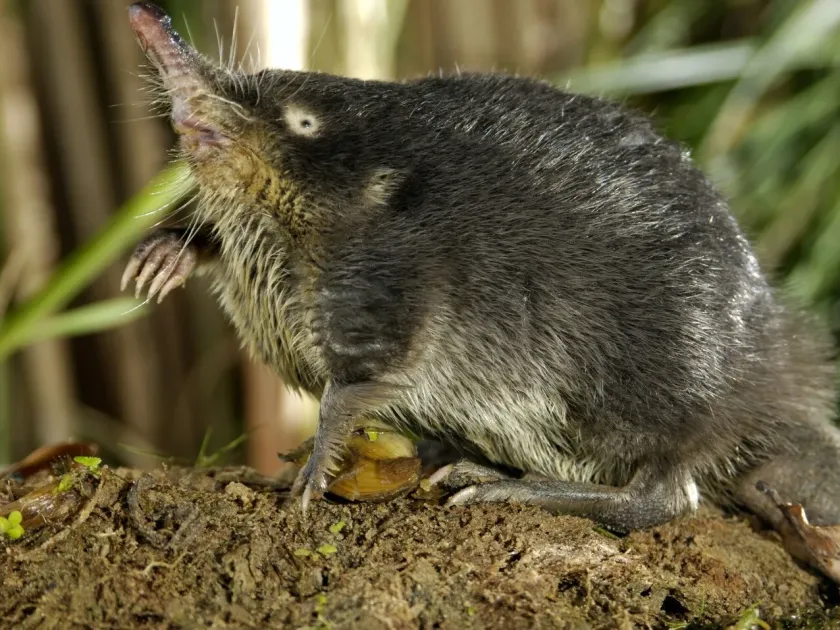
The desman is a semi-aquatic mammal belonging to the Talpidae family, known for its unique snout and specialized tail adapted for life in water.
These animals are primarily nocturnal and highly elusive, which makes them difficult to monitor within agricultural landscapes and drainage networks.
They possess webbed feet and water-repellent fur, allowing them to swim effectively and maintain complex burrow systems near water bodies.
As members of the order Eulipotyphla, they feed on aquatic insects and mollusks, yet their tunneling habits cause significant infrastructure problems.
Because many desman populations are endangered, any management strategy must prioritize conservation while protecting vital agricultural water systems.
What it damages
The primary concern for agronomists is the physical damage caused to the walls of irrigation canals, dams, and drainage embankments due to burrowing.
These tunnels compromise the structural integrity of earth-filled barriers, leading to water seepage, soil erosion, and potential canal collapse.
Water loss through hidden tunnels significantly reduces the efficiency of irrigation systems, depriving crops of necessary moisture during critical growth stages.
The erosion caused by desman activity disrupts the stability of banks, making it difficult for machinery to move safely along irrigation lines.
Repairing infrastructure damaged by these animals represents a recurring cost and logistical challenge for large-scale agricultural operations.
Signs of infestation
Presence is typically marked by the identification of burrow entrances located just below the water level of irrigation canals or nearby ponds.
An oily sheen on the water surface, caused by the animal's musk glands, is a common indicator of their recent passage through the area.
Soil slumping along the canal banks indicates the collapse or existence of deep underground tunnels that weaken the structure from beneath.
Leftover shells from aquatic snails and insect remains found along the bank often point to feeding stations used by the animals.
Unexplained drops in water volume within closed irrigation systems are strong evidence that leakage is occurring through underground breaches.
Control measures
Installing geo-textiles or concrete reinforcements along canal banks is the most effective way to prevent burrowing and protect infrastructure.
Regular inspection of irrigation embankments allows for the early detection and filling of tunnels with gravel or soil mixed with stones to deter burrowing.
Using sonic deterrent devices may help in keeping the animals away from sensitive areas of the irrigation and drainage infrastructure.
Collaboration with local wildlife agencies is essential for managing interactions, as lethal control methods are often prohibited for this protected species.
Implementing landscape management, such as maintaining vegetation that is not attractive to desmans, can help reduce their colonization of human-made water paths.
Taxonomy
- Latin name
- Galemys
- Family
- Talpidae
- EPPO code
- GALMSP
Discussion
No discussions yet — be the first.