
Star-nosed mole
Condylura cristata
Description
How to identify
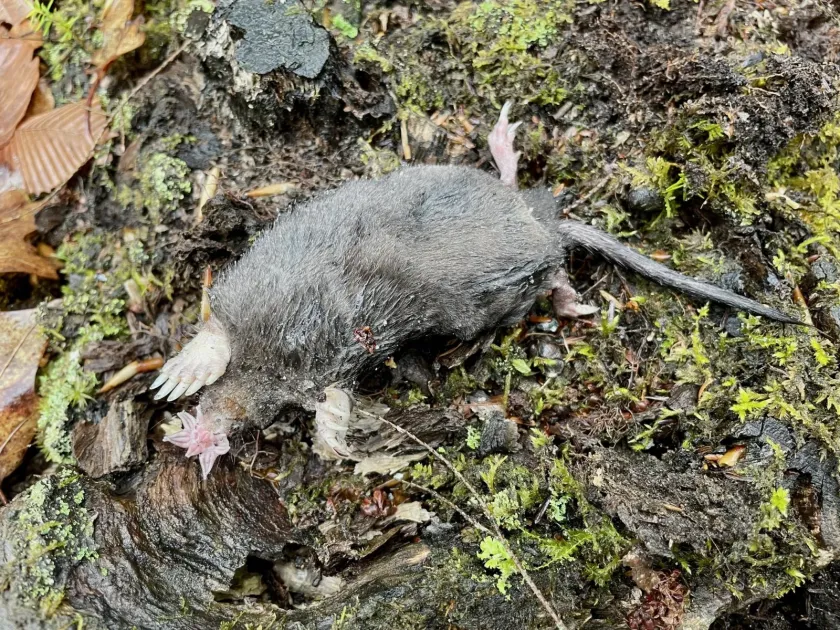
The star-nosed mole (Condylura cristata) is a unique mammal belonging to the Talpidae family. It is most recognizable by its distinctive star-shaped nose, which features 22 pink, fleshy, and highly sensitive tentacles used to detect prey.
The adult creature is approximately 15–20 cm long and is covered in dense, coarse, blackish-brown fur. It possesses a thick, scaled tail which serves as a fat storage organ during the winter months.
These animals are semi-aquatic and prefer damp, marshy soils. Their front limbs are powerful and adapted for digging, although they are generally less robust than those of the common European mole.
They are insectivores that feed primarily on aquatic and terrestrial invertebrates, including earthworms, insect larvae, snails, and small crustaceans found in water.
The star-nosed mole is one of the fastest eaters in the animal kingdom, capable of identifying and consuming prey in a fraction of a second due to its hypersensitive nose.
What it damages
The star-nosed mole does not consume agricultural plants, roots, or tubers. However, it is considered a nuisance in gardening and horticulture due to its burrowing habits.
The primary damage occurs when the mole excavates tunnels under garden beds, which displaces the soil around the plant roots. This leaves the roots suspended in air pockets, leading to dehydration and nutrient deficiency.
Seedlings and young plants are particularly vulnerable, as their shallow root systems are easily disrupted by the mole's tunneling activity beneath the topsoil.
The disturbance of the soil structure can lead to stunted growth and reduced harvest yields for sensitive crops, especially in well-fertilized, loose garden soils where movement is effortless.
While the mole is not a pest that eats crops, the presence of mounds and the physical collapse of garden rows can significantly interfere with routine maintenance and irrigation processes.
When it appears
Star-nosed moles are active throughout the entire year, as they do not hibernate. Their surface activity is most visible during the early spring when the ground softens after the thaw.
During the summer months, they often prefer areas near water sources, which might reduce their activity in dry garden beds but does not eliminate their presence entirely.
In the autumn, they retreat into deeper, more permanent tunnels to prepare for the winter, making their surface activity less frequent and less noticeable to gardeners.
The breeding season occurs in late winter and early spring. After the birth of their young, the overall activity level on the site increases as the family expands their network of tunnels.
These creatures are predominantly nocturnal, though they may exhibit occasional diurnal activity, particularly in secluded or heavily vegetated areas of a garden.
Signs of infestation
The most common sign of a star-nosed mole is the appearance of small, raised earth mounds on the surface of the soil. These tunnels are often found in rows and can look like small, distorted ridges.
Plants suddenly wilting or dying, especially in a straight line across a garden bed, often indicate that a tunnel has been dug directly underneath them, depriving them of soil contact.
Ground subsidence is another common indicator, where the soil sinks slightly as the tunnels collapse after rain or irrigation, disrupting the surrounding landscape.
- Small, irregular soil mounds or "volcanoes" on the lawn or beds.
- Visible ridges or tunnels in the soft topsoil.
- Sudden wilting of vegetable plants with no evidence of root rot.
- Uneven settling of garden surfaces after watering.
The presence of water-logged areas or moist soil edges is the most likely location to find the entrances to their tunnel systems.
Control measures
Control measures should focus on deterrence rather than eradication, as the star-nosed mole helps control populations of harmful grubs and other soil-dwelling insects.
Ultrasonic repellents or wind-powered noise makers can effectively discourage moles by creating constant vibrations that they find uncomfortable, encouraging them to relocate.
Installing physical barriers, such as deep-buried wire mesh or hardware cloth (up to 40 cm deep), around high-value garden beds or greenhouses is the most effective permanent solution.
Repellents based on strong scents, such as castor oil or rags soaked in pine-based cleaners placed in the active runs, can temporarily push moles away from specific areas.
Maintaining a well-packed soil surface through regular tilling and cultivation can make burrowing more difficult and less appealing for the star-nosed mole, reducing overall damage to your plants.
Taxonomy
- Latin name
- Condylura cristata
- Family
- Talpidae
- EPPO code
- CNDYCR
Discussion
No discussions yet — be the first.