
Siberian mole
Talpa altaica
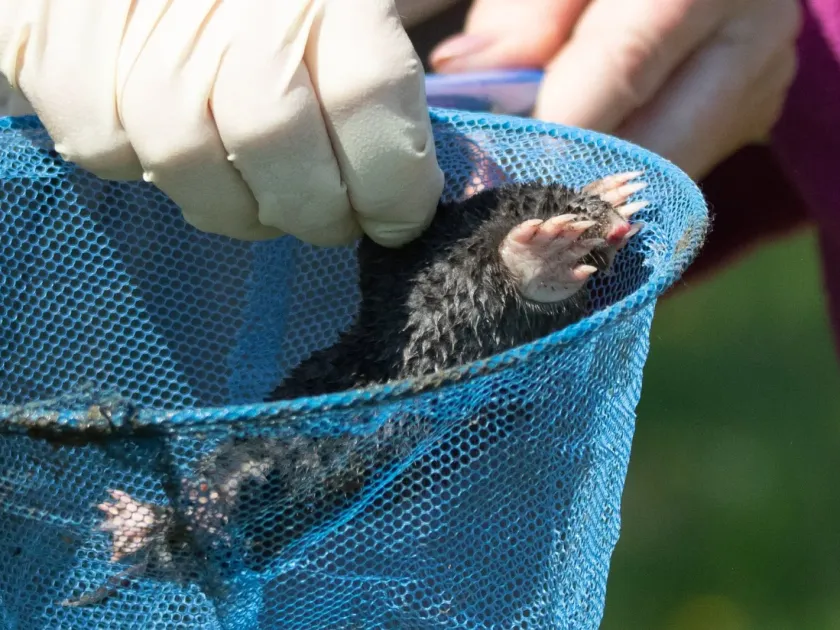
Description
How to identify
The Siberian mole (Talpa altaica) is a large insectivorous mammal belonging to the Talpidae family, widely distributed across parts of Russia and Northern Asia.
These animals are perfectly adapted for a fossorial (digging) lifestyle, possessing a cylindrical body covered with thick, velvet-like dark fur that does not get dirty.
Their front limbs are exceptionally powerful, shovel-like, and turned outwards, which acts as a primary tool for navigating through compressed soil layers.
While their eyes are vestigial and hidden under skin, their senses of touch and hearing are highly acute, allowing them to detect prey in deep tunnels.
They are solitary creatures that maintain extensive tunnel systems, remaining active throughout the year regardless of seasonal temperature fluctuations.
What it damages
The primary damage caused by Siberian moles is not direct consumption of vegetation, but the disruption of the soil structure and root systems of garden crops.
When digging tunnels, the animal creates air pockets underneath roots, which prevents plants from absorbing water and nutrients, eventually leading to wilting.
Large mounds of soil, known as molehills, cover and destroy lawn areas, making them unsuitable for aesthetic purposes and difficult to maintain with machinery.
In vegetable gardens, these tunnels serve as highways for other pests, particularly voles and mice, which actively feed on tubers and root crops accessed through the mole's network.
Young seedlings, fruit trees, and decorative bushes often suffer from disturbed soil stability, causing them to dry out or fail to establish properly.
Signs of infestation
The most visible indicator of a Siberian mole presence is the appearance of fresh molehills, which are piles of displaced soil pushed up from the underground tunnels.
Surface ridges or raised soil trails are often visible on lawns, indicating shallow tunnels where the mole has recently moved while searching for food.
Unexpected plant death or sudden yellowing of foliage in otherwise healthy plants often signals that their root systems have been compromised by subsurface activity.
Increased soil compaction and instability in specific areas are common results of a long-term burrowing cycle conducted by a resident mole.
Observations of soil movement or cave-ins on beds during quiet periods confirm that the tunnel system is currently being used by the animal.
Control measures
Mechanical trapping is the most effective way to eliminate a mole problem, provided the traps are placed strategically in the active tunnels where the animal passes.
Vibrational repellents are widely used to discourage moles, as these animals are highly sensitive to constant earth-born vibrations and will move to quieter areas.
Installing subterranean fences, such as galvanized mesh buried deep around the perimeter of garden beds, provides a permanent physical barrier against intrusion.
Maintaining a clean garden by controlling the population of soil insects and grubs reduces the attractiveness of the site, as the mole loses its primary food source.
Regular cultivation and heavy soil compaction in areas surrounding decorative zones make it physically difficult for the mole to maintain its network of tunnels.
Taxonomy
- Latin name
- Talpa altaica
- Family
- Talpidae
- EPPO code
- TALPAL
Discussion
No discussions yet — be the first.