
Rice delphacid
Tagosodes orizicola
Description
How to identify
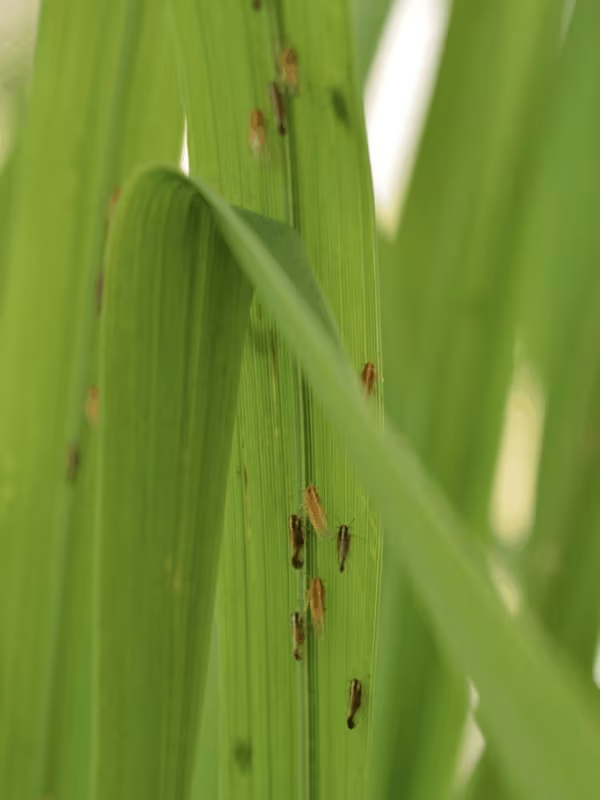
The rice delphacid (Tagosodes orizicola) is a small insect belonging to the family Delphacidae (order Hemiptera), known for being a major agricultural pest.
Adults are typically 3–4 mm in length, displaying a yellowish to brownish coloration that provides effective camouflage on rice plants.
The species exhibits wing polymorphism, having both short-winged and long-winged forms, allowing for efficient population dispersal.
Nymphs resemble smaller, wingless versions of the adults and progress through five distinct instars before reaching maturity.
It is commonly confused with other planthoppers, but its association with rice and the transmission of specific viruses aid in its identification.
What it damages
The primary host for Tagosodes orizicola is cultivated rice, though it can survive on various wild grass species surrounding paddy fields.
Feeding occurs by puncturing the plant tissue with a piercing-sucking mouthpart to extract phloem sap from the stems and leaves.
Direct damage causes leaf yellowing, plant stunting, and significantly reduced grain yield due to impaired plant physiology.
The pest is the primary vector for the rice hoja blanca virus (RHBV), which causes severe chlorosis and can destroy entire fields if left untreated.
Heavy infestations can lead to lodging and a complete failure of the panicles to develop properly, causing substantial economic losses.
When it appears
The life cycle of the rice delphacid is highly dependent on environmental conditions, particularly high humidity and warm temperatures.
Under optimal tropical conditions, the insect can complete its life cycle in a few weeks, allowing for multiple generations per growing season.
The peak occurrence of the pest usually coincides with the vegetative stage of rice, which provides a constant supply of nutrients.
Populations tend to decline during the dry season or during periods of temperature extremes, overwintering on alternative grass hosts.
Rapid population buildup is often observed during periods of high rainfall and cloudy weather, which favor the survival of the nymphs.
Signs of infestation
Initial signs of infestation include the appearance of yellowing leaf tips that eventually curl and dry out prematurely.
Infected plants show white stripes or total chlorosis, which are characteristic symptoms of the hoja blanca virus carried by the insects.
The presence of sooty mold on the leaves, which grows on the honeydew excreted by the insects, is a reliable indicator of high infestation levels.
Stunted growth of the rice plants and irregular development of the crop canopy are typical visual cues of a heavy infestation.
Closer inspection of the plant base or the underside of leaves will reveal the insects, which are often skittish and move quickly when disturbed.
Control measures
Cultivating resistant rice varieties is the most effective and sustainable strategy to mitigate damage from both the insect and the virus.
Integrated Pest Management (IPM) practices involve the careful monitoring of population levels to justify the use of targeted chemical interventions.
Maintaining clean field borders by removing weeds helps reduce the number of alternative hosts and overwintering sites for the delphacid.
The use of balanced nitrogen fertilization is recommended to prevent creating overly lush canopies that attract larger populations of the pest.
Conservation of natural predators, such as spiders and predatory beetles, is encouraged to help regulate population numbers naturally within the ecosystem.
Taxonomy
- Latin name
- Tagosodes orizicola
- Order
- Hemiptera (bugs, aphids, leafhoppers)
- Family
- Delphacidae
- EPPO code
- SOGAOR
Discussion
No discussions yet — be the first.