
Tagosodes
Tagosodes
Description
How to identify
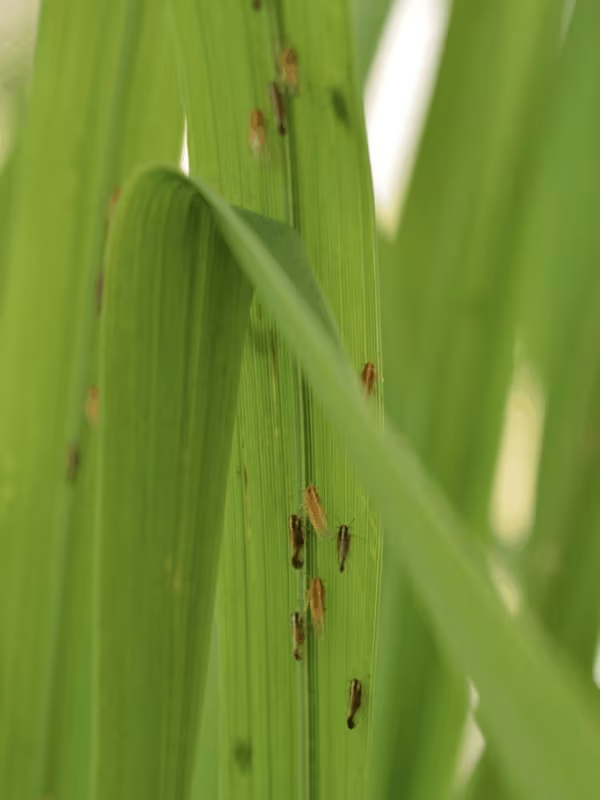
Tagosodes, most notably the species Tagosodes orizicolus, is a small insect belonging to the planthopper family (Delphacidae) within the order Hemiptera. Adults typically measure 3-4 mm in length, with coloration ranging from light brown to dark brown.
The species exhibits wing dimorphism: macropterous forms (long-winged, capable of long-distance flight) and brachypterous forms (short-winged, flightless). Their hind legs are modified for jumping, a characteristic feature of this family.
Females deposit eggs directly into the leaf or stem tissue of rice plants. Nymphs pass through five developmental instars, physically resembling the adults but smaller and without fully developed wings.
The life cycle is closely tied to the irrigation cycles of rice fields. In favorable temperature and humidity conditions, one generation can be completed in approximately 20–25 days, allowing for rapid population growth.
These pests thrive in high humidity and are particularly abundant in rice fields that receive heavy nitrogen fertilization, which encourages lush, succulent plant growth favored by the insects.
What it damages
Rice is the primary host for Tagosodes. However, the pest can also survive on various grass weeds, which act as alternative hosts during the off-season or when rice is not present.
Both adults and nymphs feed by piercing plant tissues with their stylets to extract sap. This direct feeding leads to a loss of plant vigor, stunting, and reduced biomass production.
The most severe impact is the transmission of the Rice Hoja Blanca Virus (RHBV). Infection causes significant symptoms, including plant stunting, leaf chlorosis, and, in severe cases, the failure of the plant to produce a panicle.
Feeding sites often become secondary infection points for fungal diseases. Furthermore, the honeydew excreted by the insects encourages the growth of sooty mold, which inhibits photosynthesis.
In cases of high infestation, entire sections of rice fields may show extensive damage, leading to significant yield losses if not managed with timely intervention.
Signs of infestation
The initial sign of infestation is the appearance of chlorotic, yellowish patches on the leaves caused by the insects' extraction of phloem sap.
Close inspection often reveals the presence of small insects clustered at the base of the stems or on the underside of leaves; they will jump actively when disturbed.
The presence of honeydew, a sticky, sugary substance secreted by the planthoppers, creates a visible sheen on the leaves and can lead to the growth of dark sooty mold.
In cases of virus transmission, plants display distinct patterns of stunting, curling, or striped chlorosis, marking a systemic impact on the crop's development.
Widespread wilting or "hopperburn" in specific areas of the rice field indicates that the insect population density has reached damaging levels.
Control measures
The use of resistant rice cultivars is the most sustainable approach to managing Tagosodes. Breeding programs focus on developing varieties that are both resistant to the insect and the associated virus.
Agronomic practices, such as maintaining clean field borders and eliminating host grasses, are essential to reduce the pest's reservoir populations during the off-season.
Managing nitrogen input is critical; excessive fertilization should be avoided as it creates an environment conducive to rapid planthopper multiplication.
Chemical control involving systemic insecticides is often necessary when populations exceed economic injury thresholds. These products are taken up by the plant and target the pests during feeding.
Integrated Pest Management (IPM) programs rely on regular field scouting using yellow sticky traps to monitor population levels and ensure that chemical applications are timed effectively.
Taxonomy
- Latin name
- Tagosodes
- Order
- Hemiptera (bugs, aphids, leafhoppers)
- Family
- Delphacidae
- EPPO code
- TAGOSP
Discussion
No discussions yet — be the first.