
Golden Rove Beetle
Tachyporus chrysomelinus
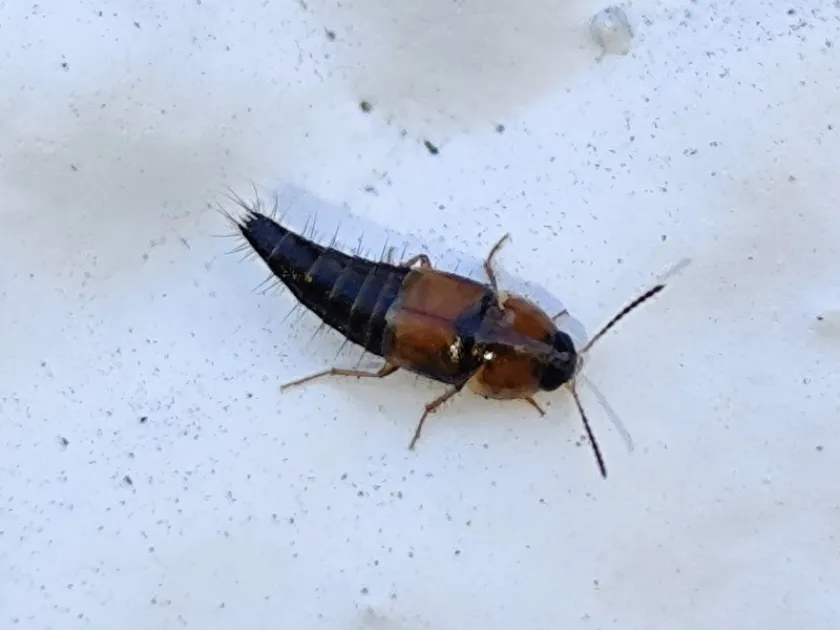
Description
How to identify
The Golden Rove Beetle (Tachyporus chrysomelinus) belongs to the Staphylinidae family within the order Coleoptera. This small beetle typically measures between 3 to 5 mm in length.
It is characterized by its elongated body shape and distinct golden-brown or yellowish elytra, which are shorter than the abdomen, a classic feature of the rove beetle group.
The beetle is a capable flyer, allowing it to migrate between habitats effectively during the growing season in search of favorable feeding or breeding grounds.
Its larvae are campodeiform, meaning they are active and predatory in nature, often residing in damp soil or leaf litter where they search for food.
Field identification is best achieved by using pitfall traps or by carefully inspecting the soil surface and plant base in the early hours of the morning.
What it damages
While many rove beetles are considered beneficial predators, the Golden Rove Beetle can occasionally cause damage to seedling stages of various agricultural crops.
The primary damage occurs when adults feed on the tender tissues of young shoots or stems, leading to stunted growth or complete destruction of the seedling.
These feeding injuries are often most problematic during early spring when alternative food sources are scarce for the emerging population.
Severe infestations can lead to significant economic losses, especially in densely planted crops where the beetles can move rapidly between plants.
The feeding patterns often manifest as necrotic spots or small excavations that compromise the structural integrity of the plant's hypocotyl.
When it appears
The life cycle of this beetle is heavily influenced by soil moisture and temperature, which dictate the developmental speed of larvae and the activity of adults.
Adult beetles emerge from their overwintering sites in early spring as soon as the soil temperatures rise sufficiently to support metabolic activity.
Reproductive activity usually peaks between May and June, with eggs being deposited in moist soil or organic debris, providing the necessary humidity for the larvae.
During the summer months, beetles remain highly active, though their distribution may shift towards more humid and sheltered areas of the field.
As temperatures decline in autumn, the beetles seek out refuges in the soil or under dense vegetation to survive the winter months in a state of dormancy.
Signs of infestation
The presence of this pest is indicated by physical damage to the base of stems, often occurring just at or slightly below the soil surface level.
Seedlings may appear wilted or chlorotic, despite adequate soil moisture, which often points towards localized root or stem feeding by insects.
The active presence of adult beetles on the foliage or ground during night surveys is a strong indicator of high population density.
Presence of small, shallow pits in the plant tissue, combined with the discovery of small yellowish-brown beetles, confirms their status as the pest in question.
Large weed populations in field margins often serve as a reservoir, leading to localized "hot spots" of infection that spread into the crop fields.
Control measures
Integrated Pest Management (IPM) for this beetle relies on cultural practices that disrupt their life cycle and reduce the available shelter for overwintering.
Effective management includes the removal of crop residues and diligent weed control in and around the fields to limit the availability of breeding sites.
Chemical control is rarely the first choice, but it may be necessary if threshold levels are exceeded, typically using insecticides applied in the evening.
- Plowing fields after harvest to disrupt soil habitats.
- Maintaining clean field edges to prevent beetle migration.
- Using seed treatments to protect young sprouts.
- Monitoring with pitfall traps to time necessary interventions.
Biological control methods involving the preservation of natural predators like spiders or other ground beetles can help keep their populations in check.
Taxonomy
- Latin name
- Tachyporus chrysomelinus
- Order
- Coleoptera (beetles)
- Family
- Staphylinidae
- EPPO code
- TACPCH
Discussion
No discussions yet — be the first.