
Aleochara sparsa
Aleochara sparsa
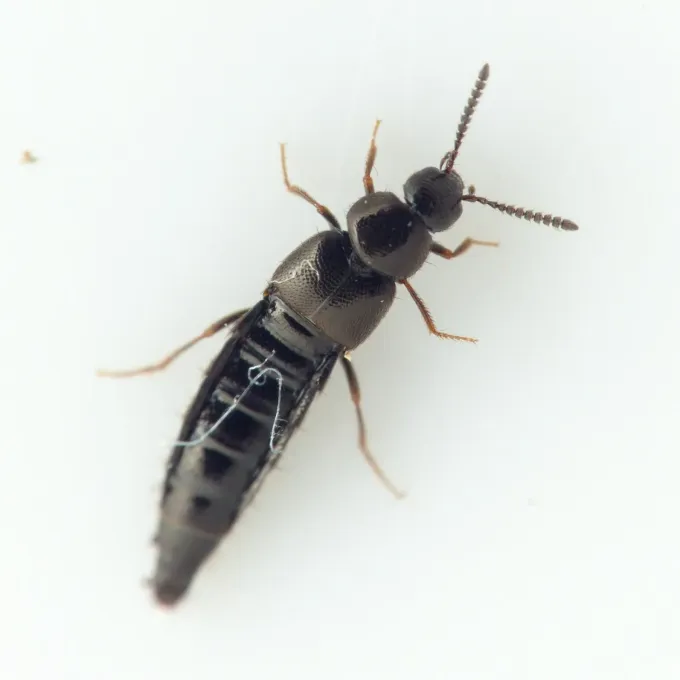
Description
How to identify
Aleochara sparsa is a species of rove beetle belonging to the family Staphylinidae, known for its slender body and distinct behavior patterns.
These beetles are characterized by their elongated, dark-colored bodies and functional wings, which allow them to migrate across fields quite effectively.
As members of the Staphylinidae family, they possess a unique ability to rapidly move and display defensive posturing by lifting their abdomens.
The larvae are specialized to lead a parasitic lifestyle, typically developing within the puparia of other insects found in the soil environment.
Morphological identification of this specific species requires detailed observation of the antennae and pronotal structures, usually under magnification.
What it damages
While primarily acting as parasitoids, Aleochara sparsa can cause secondary damage to various vegetable crops, particularly those in the Brassicaceae family.
Damage occurs when larvae, in search of hosts, inadvertently penetrate the root tissues or when the ecological balance of the soil is severely disrupted.
Root systems weakened by this beetle become susceptible to secondary infections, such as root rot or bacterial soft rot, leading to crop yield losses.
Vegetable production areas that experience intensive monoculture are more prone to elevated levels of Aleochara sparsa activity.
The presence of these beetles can disrupt the natural biological control agents that would otherwise manage common root-attacking pests like cabbage flies.
When it appears
The life cycle of the beetle is highly synchronized with its hosts, primarily flies that inhabit the root zones of cruciferous plants throughout the season.
Adult beetles typically emerge from overwintering sites in late spring, triggered by rising soil temperatures and the availability of fresh root systems.
Larval activity reaches its peak during the mid-summer months, aligning with the highest density of host puparia in the topsoil layers.
The species may produce multiple generations in warmer climates, leading to a persistent presence on vegetable plots throughout the summer.
As temperatures drop in the autumn, the beetles transition to their overwintering stage, burying themselves deeper into the soil profile for protection.
Signs of infestation
One of the primary signs of infestation is the yellowing or wilting of plants that otherwise appear to have sufficient irrigation and fertilization.
Careful inspection of the soil surrounding the plant roots may reveal the presence of damaged puparia and evidence of larval boring activity.
Distorted or misshapen root vegetables often indicate deep tissue damage occurring earlier in the plant's development stages.
Observing small, active beetles on the soil surface, particularly during early morning hours, is a clear indicator of a local population presence.
A reduction in overall crop vigor, combined with the presence of lesions on the taproots, serves as a strong diagnostic indicator for farmers.
Control measures
Effective management begins with robust crop rotation practices that break the life cycle of the beetles and their associated host populations.
Deep autumn plowing is a recommended agrotechnical method to disturb overwintering sites and reduce the beetle population for the following year.
The use of biological control agents, such as entomopathogenic nematodes or fungi, can provide sustainable suppression of the beetle population.
Selective pesticide use is crucial to avoid damaging beneficial soil organisms, which often act as natural regulators of the beetle density.
- Implementation of physical barriers for seedling protection.
- Strict management of cruciferous weed species near crop fields.
- Timely harvest to prevent prolonged exposure of roots to pests.
- Monitoring soil health to maintain diverse microbial and invertebrate communities.
Taxonomy
- Latin name
- Aleochara sparsa
- Order
- Coleoptera (beetles)
- Family
- Staphylinidae
- EPPO code
- ALEOSR
Discussion
No discussions yet — be the first.