
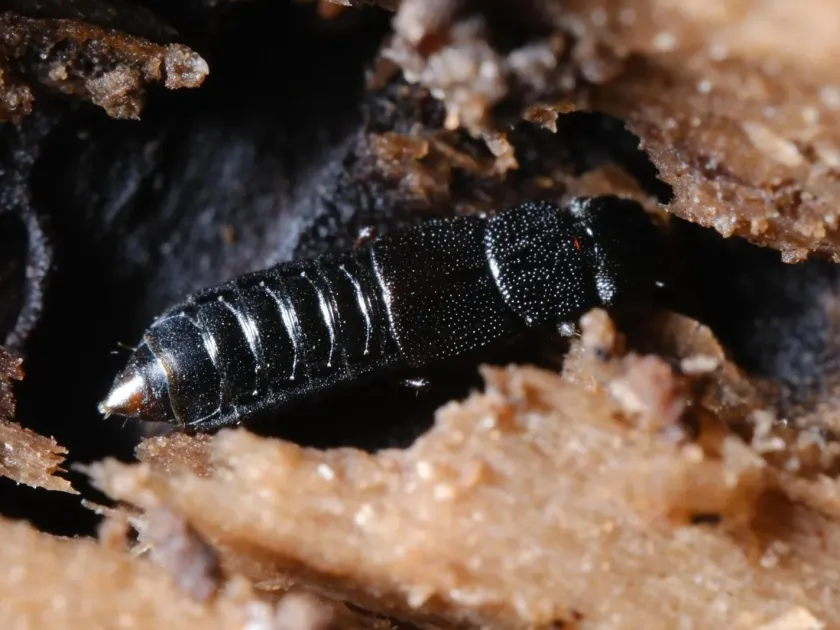
Rove beetle of the genus Anotylus
Anotylus
Description
How to identify
Beetles of the genus Anotylus belong to the large Staphylinidae family. These are small insects, typically ranging from 2 to 5 mm, characterized by an elongated body and shortened elytra that leave most of the abdomen exposed.
Unlike many predatory members of this family, certain Anotylus species have adapted to feed on decaying plant material and occasionally on the tissues of living plants, classifying them as occasional pests.
Their coloration is generally dark brown or black, and they possess well-developed mandibles and segmented antennae, which are key features for professional identification.
The larvae live a secluded life, residing primarily in the soil or within decomposing organic matter, where they are protected from environmental fluctuations and natural enemies.
Adults are nocturnal or crepuscular, meaning they are most active during low-light conditions and prefer to hide in the soil or under debris during the day.
What it damages
Damage caused by Anotylus is most significant during periods of high soil moisture when they attack the subterranean parts of young plants, including roots, stems, and germinating seeds.
Vegetable crops are particularly vulnerable during their seedling phase, as their tender tissues are easily damaged by the beetles' sharp mandibles.
In fields with high levels of crop residue, these beetles can cause significant losses in grain or legume germination by feeding on the sprouting seeds.
Beyond physical destruction, the wounds created by these insects serve as entry points for various soil-borne pathogens, leading to root rot and secondary infections.
The impact is highly dependent on environmental conditions, with the most severe damage occurring in waterlogged or overly rich organic soils.
When it appears
The seasonal activity of Anotylus is driven by soil temperature and moisture levels, typically peaking in the spring and early summer.
As soon as soil temperatures reach a threshold for activity, adults emerge from overwintering sites in deeper soil layers to feed and lay eggs.
Warm and wet weather promotes rapid life cycles, often leading to a significant increase in population density in the middle of the growing season.
As temperatures begin to drop and soil moisture stabilizes in the autumn, the beetles gradually retreat back into the soil to undergo winter diapause.
The duration of each developmental stage is strictly regulated by climate, making accurate timing of monitoring efforts essential for effective management.
Signs of infestation
Early symptoms of an infestation include the presence of irregular, shallow gouges or cavities on the stems and roots just below the soil surface.
Stunted growth, yellowing foliage, or sudden wilting of seedlings without obvious surface-level causes often indicate subterranean feeding by these pests.
Careful excavation of the root zone around affected plants will usually reveal the presence of the small, agile dark beetles.
- girdling of young stems;
- failure of seeds to sprout due to early consumption;
- dark, necrotic patches on roots;
- patchy stands across the field.
Producers may also notice a characteristic musty or decaying odor emanating from the soil in areas of heavy infestation.
Control measures
Effective management begins with proper agronomic practices, such as deep tillage to incorporate crop residues and eliminate potential breeding grounds.
Maintaining optimal soil drainage is a primary preventative measure, as these beetles thrive in excessively damp or waterlogged conditions.
Seed treatments with appropriate insecticides provide a critical layer of protection during the germination stage, preventing early-season damage.
Crop rotation remains an essential strategy to break the life cycle of soil-dwelling pests and reduce population accumulation over successive seasons.
In greenhouses or high-value crops, biological control agents or targeted soil applications can be used if monitoring indicates that threshold levels have been exceeded.
Taxonomy
- Latin name
- Anotylus
- Order
- Coleoptera (beetles)
- Family
- Staphylinidae
- EPPO code
- ANOYSP
Discussion
No discussions yet — be the first.