
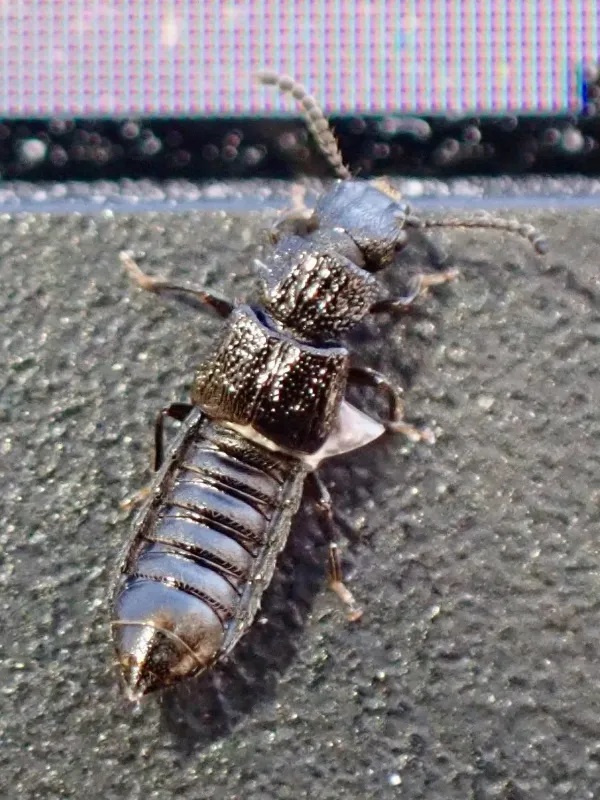
Staphylinid beetle (Anotylus rugosus)
Anotylus rugosus
Description
How to identify
Anotylus rugosus is a beetle belonging to the Staphylinidae family (rove beetles), commonly known as the wrinkled staphylinid beetle.
The adult beetle is typically 3–5 mm long, characterized by an elongated body shape and a distinctly wrinkled pronotum, which serves as a key identification feature.
They possess a dark brown to black coloration, allowing them to remain inconspicuous within the soil environment and organic debris.
The larvae, which dwell in the soil, are pale and slender, making them difficult to detect during standard field scouting sessions.
Rove beetles of this species are highly mobile, and adults are capable of flight, which facilitates their movement across fields searching for suitable crops.
What it damages
Unlike most predatory rove beetles, Anotylus rugosus can cause direct damage by feeding on roots and stems of young vegetable and cereal plants.
Seedlings of tomatoes, cucumbers, cabbage, and young cereal crops are particularly susceptible during their initial growth stages in the field.
The feeding activity creates small wounds on the roots, which stunts plant growth and prevents the efficient uptake of water and nutrients.
Root damage caused by these beetles acts as an entry point for various secondary pathogens, leading to soil-borne diseases such as root rot.
High infestation rates can lead to significant thinning of crop stands, requiring replanting or additional measures to save the remaining plants.
When it appears
The activity of Anotylus rugosus typically commences in early spring as soon as soil temperatures reach favorable levels for movement and feeding.
Peak activity and subsequent damage are most frequently observed during May and June, coinciding with the growth phase of newly planted crops.
Environmental factors like soil moisture play a significant role in their reproductive success, with humid years often leading to higher population density.
The lifecycle consists of egg, larval, and pupal stages, with adult beetles remaining active throughout the warm summer months before finding overwintering sites.
By late autumn, the beetles migrate deeper into the soil or seek shelter under crop residues to survive the winter period.
Signs of infestation
The primary visual sign of infestation is the unexplained wilting or yellowing of seedlings that occurs despite adequate watering and soil conditions.
When examining the root system, you will notice characteristic superficial lesions, small bites, or areas of decay caused by the larval or adult feeding.
In infested areas, fine tunnels or disturbed soil around the base of the plant often indicate the presence of the beetles below the surface.
Affected plants are often easily pulled from the soil, as their lateral root systems have been heavily compromised by the pest's activity.
Finding small, dark-colored beetles in the soil surrounding damaged root systems during a visual inspection confirms the presence of this pest.
Control measures
Effective management begins with strict adherence to crop rotation, which helps interrupt the lifecycle of the pest and reduces population buildup.
Deep autumn tillage is a highly effective practice that disrupts the overwintering sites and destroys larvae before they reach maturity.
For high-value vegetable crops, the use of seed treatments or soil-applied insecticides can provide essential protection during the vulnerable seedling stage.
Maintaining soil health and ensuring rapid plant establishment through proper fertilization can help plants withstand minor feeding damage.
Continuous monitoring using soil traps allows growers to detect population spikes early and implement necessary control measures in a timely manner.
Taxonomy
- Latin name
- Anotylus rugosus
- Order
- Coleoptera (beetles)
- Family
- Staphylinidae
- EPPO code
- OXTERU
Discussion
No discussions yet — be the first.