
Aleochara curtula
Aleochara curtula
Description
How to identify
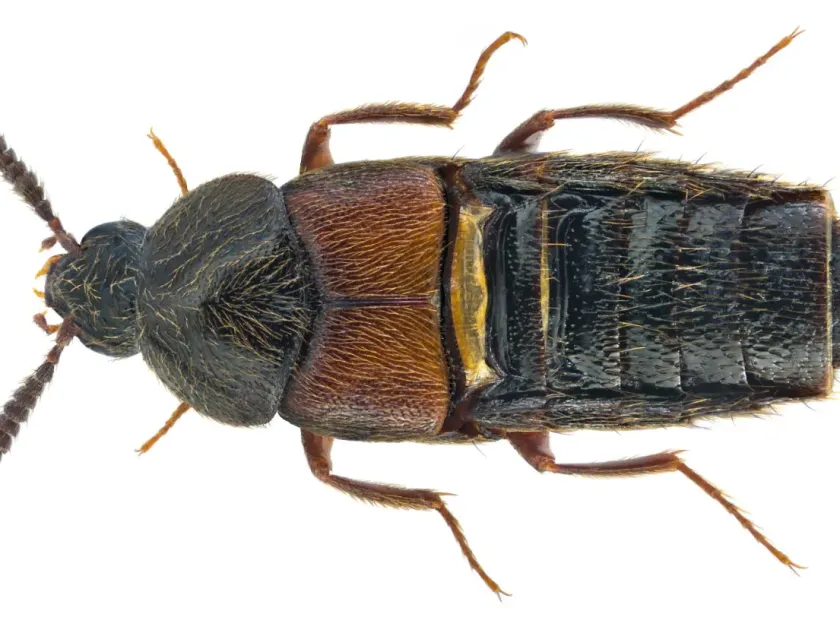
Aleochara curtula is a species of rove beetle belonging to the family Staphylinidae, within the order Coleoptera. Adult beetles are characterized by an elongated body, typically ranging from 4 to 7 mm in length, with a dark, often metallic appearance.
The most distinctive feature of the genus is the presence of shortened elytra, which leave most of the abdomen exposed. The body is covered in fine pubescence, and the mouthparts are well-developed, designed for predatory feeding.
The larval stages are highly mobile and possess distinct thoracic legs, allowing them to navigate complex soil structures and decaying organic matter where they typically dwell.
This species thrives in moist environments. They are frequently found in areas with rotting organic materials, manure piles, or fields characterized by high moisture content and accumulated crop debris.
Identification in the field often requires systematic trapping, as these beetles are primarily nocturnal or hidden within the substrate during the peak sunlight hours.
What it damages
Although many staphylinids are beneficial as natural predators, Aleochara curtula may act as a secondary pest. When organic matter is scarce, larvae may feed on the root systems of young seedlings.
This feeding activity causes mechanical injuries to the root tissues, weakening the plant's structural integrity and making it more susceptible to environmental stressors.
Root damage serves as an entry point for various soil-borne pathogens, including fungi and bacteria, leading to rot and significantly reducing the overall plant growth rate.
In high-intensity agriculture, infestation often correlates with improper soil management, such as the application of raw manure which attracts beetles and provides an ideal breeding ground.
The damage is typically localized but can result in patchy stands if the larval population density is high during the germination and early vegetative phases of the crop.
When it appears
The seasonal activity of Aleochara curtula begins in early spring, as soil temperatures consistently exceed 10 degrees Celsius, coinciding with the emergence of crop seedlings.
Peak population levels are generally observed during the summer months when warmer temperatures accelerate the developmental cycle of the beetle and enhance its metabolic rate.
As autumn approaches, the beetles prepare for overwintering, seeking shelter deep within the soil or beneath accumulated organic refuse to survive the winter cold.
Rainy seasons significantly boost reproductive success, as soil moisture is critical for the survival of eggs and the early developmental stages of the larvae.
Agronomic monitoring should be heightened during the spring season to capture potential infestations before the larvae cause irreparable damage to young root systems.
Signs of infestation
A primary indicator of infestation is the unexplained yellowing and wilting of young plants, especially in areas with recent organic fertilizer application.
Inspecting the root zone frequently reveals necrosed or damaged root tissues that are inconsistent with standard nutrient deficiencies or drought-related stress.
The presence of adult beetles on the soil surface, particularly after heavy rainfall or during the cooler parts of the day, signals an active population nearby.
The existence of tunnels or disturbed soil around the base of the plant, often accompanied by foul odors from decomposing tissues, is a hallmark of larval presence.
Poor uniformity in crop emergence and stunted growth in specific sections of the field are strong triggers for conducting a detailed soil examination.
Control measures
The most effective management strategy is sound agronomic practice, specifically ensuring that any organic fertilizer used is fully composted before field application.
Mechanical cultivation and soil tillage are highly effective in disrupting the beetle's habitat and exposing larvae to natural predators, such as birds or predatory insects.
If populations exceed economic damage thresholds, localized application of authorized soil-applied insecticides can be considered as a last-resort measure.
Biological control, including the use of entomopathogenic fungi or nematodes, can help regulate the beetle population in a more sustainable and environmentally friendly manner.
- Implement proper drainage to keep soil moisture levels manageable.
- Perform crop rotation to disrupt the beetle's life cycle.
- Remove crop residues that serve as overwintering sites for the adults.
Taxonomy
- Latin name
- Aleochara curtula
- Order
- Coleoptera (beetles)
- Family
- Staphylinidae
- EPPO code
- ALEOCU
Discussion
No discussions yet — be the first.