
Aleochara tristis
Aleochara tristis
Description
How to identify
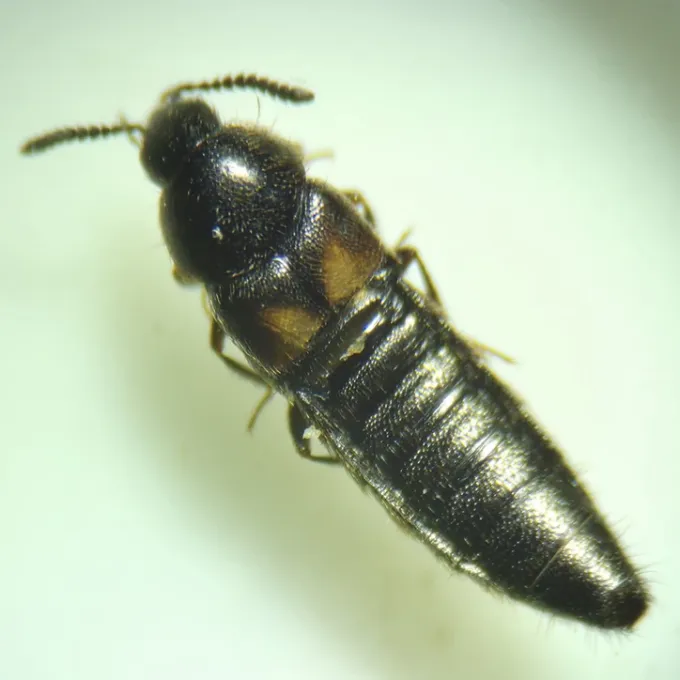
Aleochara tristis is a species of rove beetle (family Staphylinidae) that plays a significant role in agricultural ecology. Like other staphylinids, these beetles are characterized by their elongated bodies and shortened elytra that expose most of the abdomen.
Adult beetles are typically 3 to 5 mm long, with a dark, brownish-black color. The body surface is covered with fine hairs, giving the beetle a dull appearance. They are highly mobile and possess agile movements when hunting on the soil surface.
The larval development of Aleochara tristis is complex. The first instar larva is mobile and actively searches for a host, while subsequent instars transition into endoparasites within the puparium of the host insect.
Identification of the species in the field is challenging due to the high morphological similarity between different species of the genus Aleochara. Microscopic analysis of male genitalia is often required for definitive identification.
These beetles are recognized as efficient predators and parasitoids, contributing to the natural suppression of populations of various dipteran pests that inhabit the soil.
What it damages
It is crucial to classify Aleochara tristis as a beneficial organism rather than a pest. Its presence in agricultural systems is highly desirable due to its role in regulating harmful fly populations.
The larvae of Aleochara tristis are specialized parasitoids of the pupae of the cabbage root fly (Delia radicum). By parasitizing these pupae, the beetle prevents the emergence of adult flies, thereby protecting the host plant.
Crops that benefit from the presence of this insect include various brassicas, such as cabbage, broccoli, cauliflower, radish, and turnip. Protection of the root system is the main positive impact on crop yields.
The economic value of this beetle lies in its ability to serve as a self-sustaining biological control agent. It helps reduce the need for chemical soil treatments, preserving soil health.
In summary, Aleochara tristis provides natural ecosystem services that are essential for integrated pest management (IPM) strategies in vegetable production.
When it appears
The activity of adult Aleochara tristis begins in the spring, typically coinciding with the warming of the topsoil, which triggers the emergence of the beetles from their overwintering sites.
The life cycle of the beetle is precisely synchronized with the phenology of the cabbage root fly. The emergence of adults aligns with the peak oviposition period of the pest.
Activity is most pronounced throughout the growing season, particularly from May through August, when both the predators and their hosts are present in the soil environment.
Depending on the climatic conditions of the region, the insect may complete one or two generations per year, ensuring a steady presence throughout the summer.
Overwintering occurs in the soil, usually at depths of 10 to 15 centimeters. The beetles or pupae survive the winter months, remaining dormant until temperatures increase in the following spring.
Signs of infestation
Signs of Aleochara tristis activity include a noticeable reduction in cabbage root fly infestation levels despite the presence of the pest in the local ecosystem.
When examining the soil around the base of vegetable plants, researchers may find empty or damaged puparia of cabbage root flies, which are clear indicators of parasitism by rove beetle larvae.
Crops show better root development and lack of tunneling damage compared to crops in fields where the population of staphylinids is absent or suppressed by chemicals.
Healthy plant growth in high-risk areas for cabbage root fly infestation can be interpreted as a potential result of natural biological control by these beetles.
Occasional sightings of small, fast-moving dark beetles on the soil surface during evening scouting can confirm the presence of a healthy population of staphylinids.
Control measures
Management strategies for Aleochara tristis are focused on conservation biological control—maintaining the population of the beneficial insect on the farm.
- Avoid the use of broad-spectrum soil insecticides that negatively impact staphylinid beetle populations.
- Maintain crop residues and non-tilled soil areas to provide stable overwintering habitats.
- Adopt sustainable soil management practices, such as minimal tillage, to prevent damage to larval development sites.
- Promote habitat diversity on the farm to support a balanced food web for beneficial predators.
- Monitor pest levels closely to ensure that intervention is only used when the economic threshold is exceeded and natural control is insufficient.
Taxonomy
- Latin name
- Aleochara tristis
- Order
- Coleoptera (beetles)
- Family
- Staphylinidae
- EPPO code
- ALEOTR
Discussion
No discussions yet — be the first.