
Aleochara
Aleochara
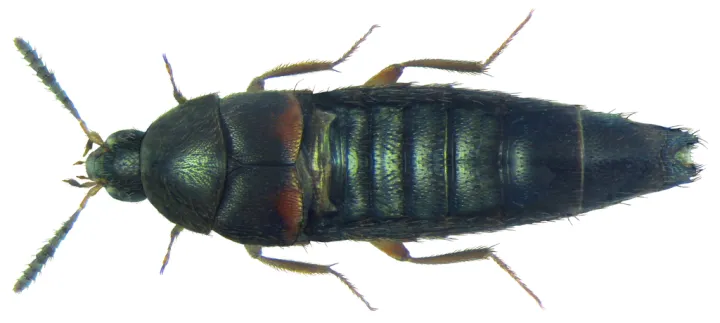
Description
How to identify
Aleochara is a genus of rove beetles (Staphylinidae) known for their diverse ecological roles. While often found in agricultural settings, they are frequently misidentified as pests due to their presence near dying plants.
The adult beetles typically possess an elongated body with short elytra that do not fully cover the abdomen, a hallmark feature of the Staphylinidae family. They are usually dark-colored, helping them blend into soil and debris.
The larval stage is particularly significant as they are endoparasitoids of dipteran pupae. This means they develop inside the pupal cases of flies, including species that are serious agricultural pests.
Identifying Aleochara is crucial for integrated pest management. They serve as natural enemies of cabbage root flies and other root-attacking dipterans, making them a key component of organic farming.
Agronomists must distinguish these beetles from true root-feeding pests. Their presence often signals an active biological control process occurring in the soil ecosystem.
What it damages
Aleochara does not damage crops. Unlike phytophagous insects, these beetles do not feed on plant tissues, nor do they burrow into roots or stems. Any damage to the plant is caused by the pests they are hunting.
When an infestation of cabbage root flies occurs, Aleochara larvae actively locate the host pupae. They consume the contents, thereby preventing the next generation of flies from emerging.
They are primarily associated with cruciferous crops, which are the main hosts for the fly larvae they parasitize. This association is purely predatory rather than parasitic towards the crop itself.
Confusion often arises when farmers see these beetles near wilted plants. However, the wilting is a symptom of root damage caused by the fly larvae, while the beetle is simply there to feed on them.
In conclusion, Aleochara provides a valuable service by reducing the pest load, protecting the crop from further damage without any negative impact on the harvest yield.
When it appears
The activity of Aleochara follows the seasonal patterns of its host flies. In spring, adults emerge from the soil to forage and find mates once temperatures become favorable.
Throughout the growing season, particularly during the larval development periods of cabbage flies, Aleochara remains active in the upper soil layers to locate pupae.
Temperature and moisture levels dictate the activity levels of these beetles. Periods of drought may reduce their foraging efficiency as they retreat deeper into the soil for protection.
By autumn, the beetles prepare for overwintering. They usually hibernate in the soil or protected leaf litter, making them sensitive to deep tillage practices during this period.
Understanding their seasonal cycle helps agronomists plan cultivation activities in a way that minimizes disruption to these beneficial predators, ensuring their presence in the following season.
Signs of infestation
There are no diagnostic signs of Aleochara damage to crops. If a crop shows signs of stress or nutrient deficiency, the root system should be examined for damage caused by fly larvae, not the beetle.
The presence of adult beetles in the soil near the root zone is a positive sign. It indicates that the biological control system is functioning and that the beetle is regulating fly populations.
One can confirm their activity by carefully inspecting soil samples for empty or parasitized fly pupae. Evidence of a small exit hole in a pupal case often indicates that an Aleochara larva has successfully emerged.
Since the beetle is not a pest, scouting protocols should focus on the target fly pests, using the beetle's presence as a biological indicator rather than a threat.
Educating farm staff to recognize these beetles as beneficial predators prevents unnecessary pesticide applications that would otherwise kill these natural allies.
Control measures
Management of Aleochara focuses on conservation. Because they are beneficial, there is no need for control measures against them; rather, practices should aim to protect their population.
Avoid the use of broad-spectrum soil insecticides. These chemicals are non-selective and will destroy the populations of Aleochara, leading to an increase in pest outbreaks due to the loss of natural control.
Implementation of integrated pest management (IPM) strategies is essential. These strategies leverage the natural predatory habits of beetles like Aleochara to keep pest numbers below economic thresholds.
- Maintain soil health and organic matter to support beetle habitat.
- Limit tillage in areas where beneficial populations are overwintering.
- Use selective pest control methods that target only the primary pest species.
- Monitor the density of fly pests to determine if biological control is sufficient.
By fostering a diverse soil ecosystem, growers can utilize Aleochara as a natural tool, reducing dependency on chemical inputs and promoting sustainable agricultural practices.
Taxonomy
- Latin name
- Aleochara
- Order
- Coleoptera (beetles)
- Family
- Staphylinidae
- EPPO code
- ALEOSP
Discussion
No discussions yet — be the first.