
Greenhouse camel cricket
Tachycines asynamorus
Description
How to identify
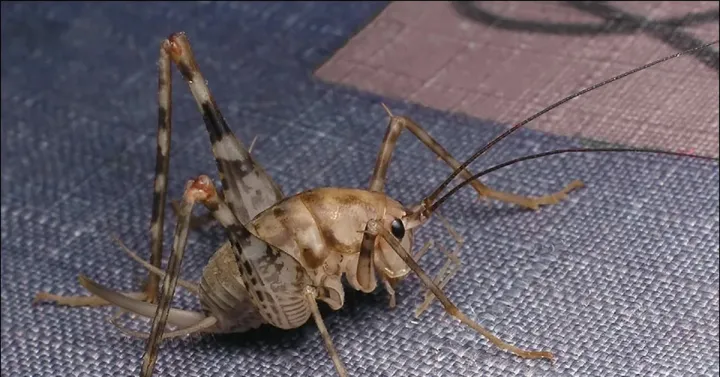
The greenhouse camel cricket (Tachycines asynamorus) belongs to the family Rhaphidophoridae in the order Orthoptera. This insect is easily identified by its hunchbacked appearance and long, powerful hind legs adapted for jumping.
Adults typically measure 15–20 mm in length and possess a light brown to dark mottled coloration. They are wingless insects, which distinguishes them from many other cricket species found in nature.
Their most striking feature is the exceptionally long, thread-like antennae that can be twice the length of their body. These antennae serve as vital sensory organs in the dark, damp environments they prefer.
Females possess a prominent sword-shaped ovipositor, which they use to deposit eggs into loose soil or potting substrates. Due to their lack of wings, they rely entirely on jumping for movement.
As a non-migratory pest in cooler climates, they thrive specifically in the stable microclimate of greenhouses, where they can survive and reproduce throughout the year.
What it damages
Greenhouse camel crickets are generalist feeders and cause damage to a wide variety of greenhouse crops, including vegetables, seedlings, and ornamental flowers.
They feed primarily on the tender parts of plants, such as young leaves, succulent shoots, flower buds, and petals. This grazing often leaves plants ragged and aesthetically ruined.
Beyond leaf damage, they can feed on developing fruits, leaving irregular pits and scars. These injuries often serve as entry points for secondary infections like fungal rots or bacterial decay.
Seedlings are particularly vulnerable; a small population of crickets can quickly consume or destroy entire trays of young plants overnight, leading to significant economic losses.
They are also known to consume organic debris and decaying plant matter, which often hides their presence until significant damage to living crops becomes visible.
When it appears
In a protected greenhouse environment, the lifecycle of the camel cricket is continuous. There is no hibernation period, and generations often overlap, allowing for constant population growth.
They are strictly nocturnal; during the day, they remain hidden in dark, cool, and humid areas, such as under pots, in cracks in the concrete, or deep within dense soil mulch.
Development from egg to adult takes several months, passing through multiple nymph stages that look like miniature versions of the adults. These nymphs are just as destructive as the adults.
The absence of seasonal cues in greenhouse cultivation means that producers must monitor for these pests year-round rather than just during the traditional growing seasons.
Temperature and humidity levels found in most greenhouses are ideal for their breeding, making early detection critical to preventing an infestation from becoming established.
Signs of infestation
The first signs of an infestation include ragged or torn leaf margins. Unlike slugs, they do not leave slime trails, and unlike caterpillars, the damage is often more erratic and centered around the soil surface.
Plants may show signs of missing tissue or holes in leaves that seem to appear overnight. If flower buds are damaged, you might see irregular chewing patterns on the petals.
Physical evidence of their presence often includes cast-off exoskeletons (molted skins) found in corners, under pots, or near the base of benches, left behind as they grow.
Droppings, which resemble small black pellets, can often be found near the areas where they feed or congregate. These are frequently found on greenhouse floors or containers.
The most definitive sign is the direct sighting of the insect during the night. Using a flashlight, you can spot them as they jump away from light sources toward dark crevices.
Control measures
Effective control starts with strict sanitation. Removing debris, dense weeds, and unnecessary clutter in the greenhouse reduces the number of hiding spots available to the crickets.
- Seal cracks in floors and walls to limit movement and breeding sites.
- Use sticky traps placed on the floor to monitor population density and catch adults.
- Apply entomopathogenic nematodes to the soil to target the eggs and nymphs in their breeding environment.
- Apply targeted insecticides only as a last resort, ensuring they are compatible with greenhouse food safety standards.
Hand-picking or trapping at night using simple containers or manual collection can significantly reduce small populations without the need for harsh chemicals.
Always inspect new plant shipments or imported materials carefully, as this is the most common way for camel crickets to be introduced into a clean greenhouse environment.
Taxonomy
- Latin name
- Tachycines asynamorus
- Order
- Orthoptera (locusts)
- Family
- Rhaphidophoridae
- EPPO code
- TACHAS
Discussion
No discussions yet — be the first.