
Greenhouse camel cricket
Diestrammena
Description
How to identify
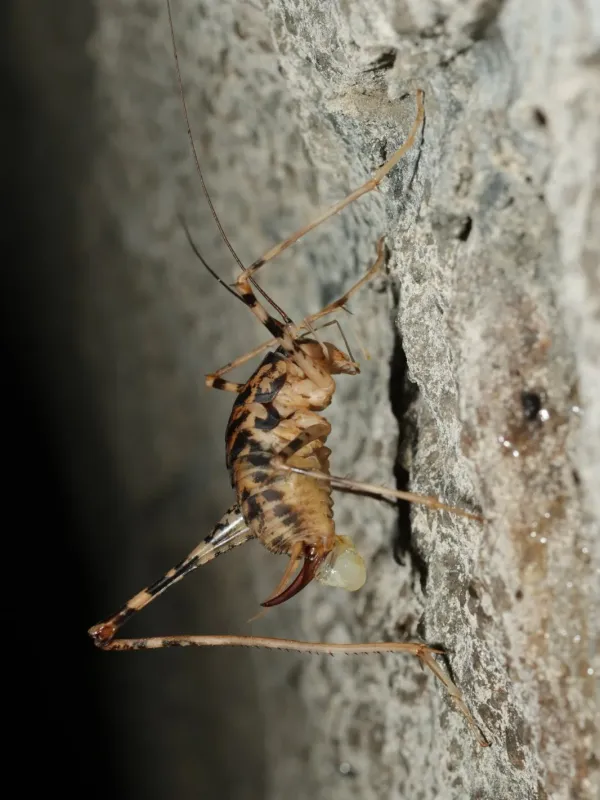
The greenhouse camel cricket, belonging to the family Rhaphidophoridae, is a wingless insect characterized by its humped back and extremely long, delicate antennae. These features make it well-adapted to life in dark and humid environments.
Adult crickets typically measure 15 to 25 mm in length, excluding their legs and antennae. Their bodies are usually brownish, which helps them camouflage effectively in shadowed areas of greenhouses or cellars.
Their hind legs are notably enlarged, allowing them to jump significant distances when disturbed. These insects rely heavily on their long antennae to navigate and sense their surroundings in low-light conditions.
As nocturnal creatures, they are rarely seen during the day. They prefer dark, damp hideouts such as under pots, benches, or in cracks within the foundation of the greenhouse structure.
Nymphs resemble smaller versions of adults and undergo several molting stages, gradually increasing in size and intensity of their brownish coloration as they mature.
What it damages
This insect is a polyphagous pest, capable of consuming a wide variety of plants grown in controlled environments. They are particularly destructive to young, tender seedlings and lush decorative foliage.
The crickets feed by chewing on leaves, stems, and buds. Because they consume the succulent tissues of the plant, they can quickly stunt the growth of even healthy specimens if left unmanaged.
In cases of high infestation, they may strip entire leaves to the veins and bite through the stalks of delicate plants, leading to irreversible structural damage and loss of the crop.
Beyond direct consumption, the damage they cause makes plants highly susceptible to secondary infections. Open wounds from feeding provide easy access for various fungal and bacterial pathogens.
The most vulnerable crops include greenhouse-grown vegetables like tomatoes and cucumbers, as well as many types of indoor ornamental flowers maintained in humid conditions.
When it appears
In greenhouses and interior landscapes, the greenhouse camel cricket can remain active throughout the year. The controlled climate provides a perfect environment for continuous reproduction, regardless of external seasons.
Their activity peaks during the night. They emerge from their daytime refuges to feed, covering significant ground in search of favorable plant material before returning to darker areas before sunrise.
The reproduction cycle and development of nymphs are driven by temperature. Warmer greenhouse conditions typically lead to faster development, potentially allowing multiple generations per year.
While they are primarily greenhouse pests, they may also enter from the outdoors during colder months, seeking warmth, moisture, and shelter within residential or agricultural buildings.
Female crickets deposit eggs into damp soil or organic media. Moist potting soil serves as an ideal incubator for the next generation of pests.
Signs of infestation
The most noticeable sign of damage is the appearance of ragged, uneven edges on leaf margins. Unlike some insects that skeletonize leaves, camel crickets tend to eat large, irregular chunks.
Damage to the growing tips of plants is another common indicator. The loss of terminal buds can lead to lateral branching or stunted vertical growth, affecting the plant's final form.
Observation of dark, pellet-like frass on the soil surface or the tops of greenhouse benches often indicates where the insects have been resting or feeding.
Sudden wilting or snapping of young stems is a sign that the cricket may have been feeding at the base of the plant, compromising its structural integrity.
- Irregular, ragged holes in leaf tissue.
- Missing terminal buds and young shoots.
- Visible excrement pellets on soil or benches.
- Base-of-stem damage causing seedling wilt.
Control measures
Sanitation is the most critical step in managing camel crickets. Regularly removing plant debris, dead leaves, and unnecessary supplies or wooden boards eliminates their daytime hiding spots.
Sticky traps placed strategically along walls or under benches serve as both an effective monitoring tool and a way to reduce the population of active adults.
Chemical control should be employed only when necessary. Using insecticides approved for indoor use during the evening hours ensures better contact with the insects during their peak activity.
Biological control using entomopathogenic nematodes applied to the soil can be highly effective in reducing the number of nymphs and preventing them from reaching maturity.
Exclusion methods, such as sealing foundation gaps and installing fine-mesh screens on ventilation openings, are essential to stop new individuals from entering the greenhouse environment.
Taxonomy
- Latin name
- Diestrammena
- Order
- Orthoptera (locusts)
- Family
- Rhaphidophoridae
- EPPO code
- DIESSP
Discussion
No discussions yet — be the first.