
Camel cricket
Ceuthophilus
Description
How to identify
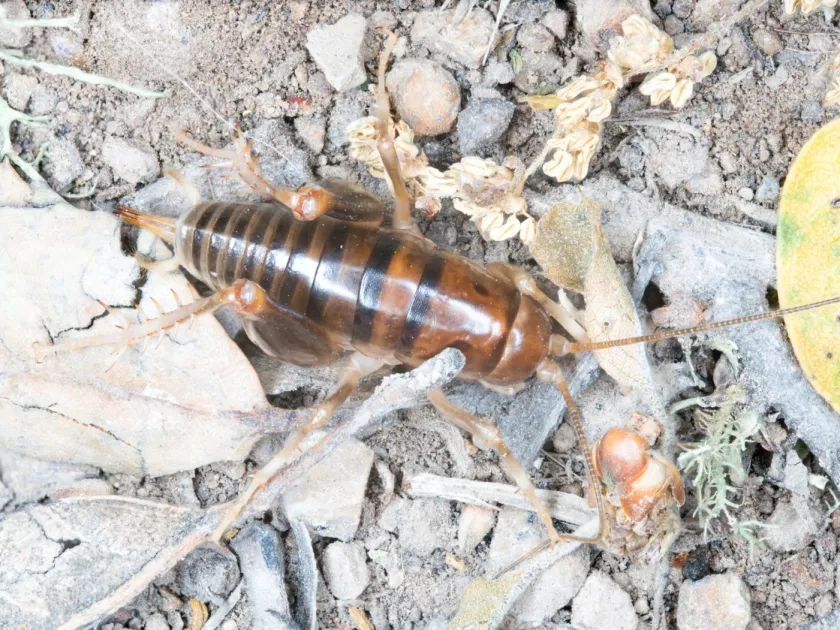
Camel crickets (genus Ceuthophilus), often referred to as cave crickets, are members of the Rhaphidophoridae family. They are flightless insects characterized by long, spindly legs and a hunched-back appearance.
These insects lack wings and auditory organs, so they do not chirp like common crickets. They are typically light to dark brown and rely on their long antennae to navigate in complete darkness.
They are nocturnal creatures that prefer cool, damp, and dark environments. Their bodies are covered in fine sensory hairs that help them detect movement and shifts in air currents.
Females are generally larger than males and possess a prominent ovipositor, which they use to deposit eggs into moist soil or organic matter.
Due to their size and jumpy nature, they are often perceived as a nuisance when they migrate into human structures during extreme weather conditions.
What it damages
Camel crickets are scavengers that will feed on a wide variety of organic materials, including plants and fungi found in greenhouses or garden beds.
They can cause damage to seedlings and tender foliage, leading to stunted growth or the loss of young plants if the infestation is heavy.
When they move indoors, they may damage stored fruits and vegetables, causing deep bite marks that make the food susceptible to rot.
While they are not strictly specialized agricultural pests, their tendency to congregate in large numbers can lead to significant localized destruction.
Their presence is often more of a psychological issue for humans, but their feeding habits can still impact the aesthetics and health of ornamental plants.
When it appears
The activity of camel crickets is heavily influenced by temperature and humidity, with peak activity occurring during the warmer months.
They thrive in high-humidity environments, and their populations often expand rapidly during wet seasons, making garden areas particularly attractive to them.
As temperatures begin to drop in the autumn, these insects actively seek warmer environments for survival, often entering residential homes or greenhouses.
The lifecycle begins in the spring when nymphs emerge from eggs laid in the soil, beginning their cycle of foraging and growth.
Nighttime is when they are most active on the surface, moving from their daytime hiding spots to search for food sources.
Signs of infestation
Indications of a camel cricket presence include irregular, ragged holes in the leaves of plants, often appearing overnight.
Seeing the insects jump away when you enter a dark shed, basement, or greenhouse is the most common sign of an active infestation.
Look for droppings, which are small and dark, found near the base of walls or underneath pots and debris in damp areas.
Damage to roots or low-hanging fruits is a clear sign that these pests are active in the area and seeking moisture or nutrients.
The presence of shed exoskeletons in basements or storage rooms indicates that the insects are successfully molting and maturing in your environment.
Control measures
The most effective strategy is to eliminate the moisture and humidity that attract these pests in the first place, combined with thorough sanitation.
Physical traps, such as sticky boards, can be very effective at capturing individuals and reducing the local population without using harsh chemicals.
- Reducing humidity with dehumidifiers in basements.
- Removing piles of wood, mulch, and debris from around the foundation.
- Sealing cracks in doors, windows, and foundations to prevent entry.
- Ensuring proper ventilation in garden sheds and greenhouses.
Maintaining a dry perimeter around your home and garden will naturally discourage them from settling in your area.
If necessary, approved insecticides can be applied as a barrier, but cultural control methods remain the foundation of long-term management.
Taxonomy
- Latin name
- Ceuthophilus
- Order
- Orthoptera (locusts)
- Family
- Rhaphidophoridae
- EPPO code
- CTHPSP
Discussion
No discussions yet — be the first.