
Cave cricket
Dolichopoda
Description
How to identify
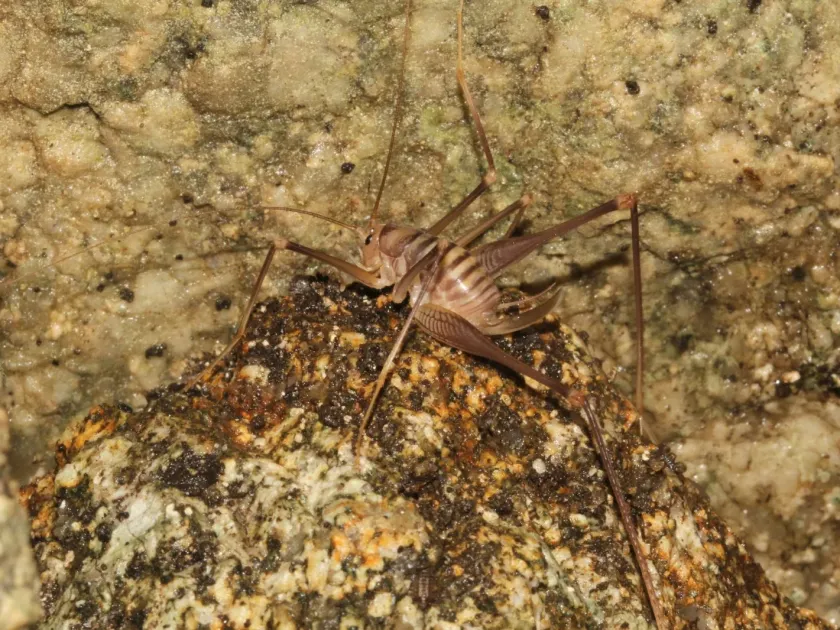
The cave cricket (genus Dolichopoda) belongs to the order Orthoptera and the family Rhaphidophoridae. These insects are easily recognized by their long, thread-like antennae, powerful hind legs, and complete lack of eyes and wings.
Physically, they are adapted to low-light environments, exhibiting brown or dull-colored bodies that act as camouflage in dark caves, cellars, or moist agricultural structures.
Adult specimens can reach several centimeters in length, with their legs often being disproportionately long compared to their bodies, which is a key identifying trait.
The life cycle is simple, consisting of egg, nymph, and adult stages. They do not undergo a pupal stage, with nymphs resembling smaller versions of adults, growing progressively through several molts.
They prefer environments with high humidity and stable, cool temperatures, making them common inhabitants of underground spaces where they interact with stored agricultural materials.
What it damages
While cave crickets are generally omnivorous, they can become significant pests in agricultural settings where they damage produce stored in damp or poorly maintained basements.
They frequently feed on stored root vegetables such as potatoes, carrots, and beets, as well as cabbages, leading to direct quality loss and marketability reduction.
In greenhouses, they may attack young seedlings, consuming tender stems and cotyledons, which can be devastating for crop establishment if the population density is high.
Damage is often exacerbated by secondary infections; as crickets feed, they introduce fungi and bacteria into the plant tissues, leading to rapid rot and decay of the affected parts.
Their feeding activity is indiscriminate, and they can contaminate large quantities of stored crops with excrement, making the produce unfit for human or animal consumption.
Signs of infestation
Signs of infestation include irregular, jagged feeding patterns on the surface of root vegetables and leaf tissues, often described as "chewed" or "shredded" edges.
The presence of cylindrical fecal pellets in storage areas or near vegetable crates is a clear indicator of cricket activity in the immediate vicinity.
Soft, rotting spots on stored produce, often accompanied by a foul odor, suggest that crickets have been feeding and facilitating the spread of microbial pathogens.
Finding shed insect skins (exuviae) near walls or in corners of storage facilities is a telltale sign that a healthy, developing population is present.
Direct observation of adult crickets, usually occurring at night when they are most active, provides definitive proof of their role as the causative agent of crop damage.
Control measures
The most effective strategy is environmental management, specifically reducing humidity levels, as these insects cannot thrive in dry, well-ventilated storage conditions.
Physical exclusion is essential; sealing cracks, crevices, and entry points into cellars and greenhouses prevents the migration of crickets from natural habitats.
Deployment of sticky traps in dark corners or along the perimeter of storage rooms is an effective way to monitor and manage the population without excessive chemical use.
Maintaining high standards of sanitation, including the prompt removal of decaying plant matter and debris, significantly limits the crickets' access to food sources.
Where necessary, the use of approved insecticides in bait form can be implemented, provided that food safety regulations are strictly followed in storage areas.
Taxonomy
- Latin name
- Dolichopoda
- Order
- Orthoptera (locusts)
- Family
- Rhaphidophoridae
- EPPO code
- DLCPSP
Discussion
No discussions yet — be the first.