
Cave cricket
Hadenoecus
Description
How to identify
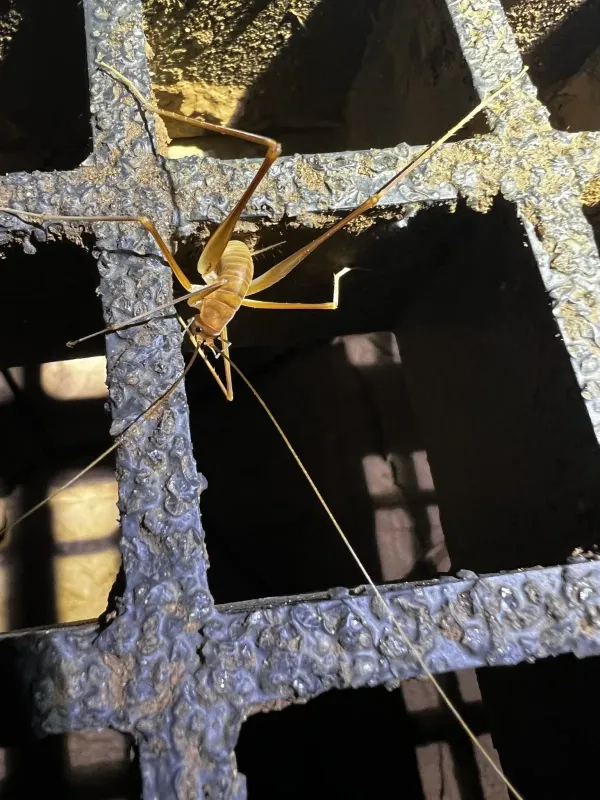
The cave cricket (genus Hadenoecus) belongs to the family Rhaphidophoridae within the order Orthoptera. These insects are easily identified by their extremely long, thread-like antennae and robust, jumping hind legs adapted for navigating in darkness.
Distinctively, cave crickets lack wings and are typically shades of light brown or grey. They lack functional eyes, relying heavily on their sensitive antennae to detect vibrations and humidity levels in their environment.
Biologically, these insects are moisture-dependent and naturally thrive in cool, damp, and dark habitats like caves. When they infiltrate agricultural structures, they seek out similar microclimates to complete their life cycle.
They are omnivorous scavengers. While they primarily consume fungi and organic detritus, their presence near cultivated plants poses a significant risk to young, delicate foliage in greenhouse environments.
Their developmental cycle involves several nymphal stages. Slow maturation allows them to persist in stable environments for extended periods, making them resilient to minor environmental fluctuations.
What it damages
Although cave crickets typically scavenge, in intensive greenhouse conditions, they are known to feed on young seedlings. They gnaw at the epidermis of leaves, causing structural damage that hinders plant development.
The damage often serves as an entry point for secondary fungal or bacterial pathogens, which can be more destructive to the crop than the crickets themselves. Weakened plants are particularly susceptible.
Fruit damage may occur, with crickets leaving unsightly scars and sores on the skin of produce. This significantly lowers the market value and storability of the harvest, leading to economic losses.
Seedlings and young transplants may suffer from feeding on the root collar, which disrupts nutrient transport. If the stem is girdled, the entire plant may quickly wilt and die.
Crops most at risk include high-moisture greenhouse vegetables such as tomatoes, cucumbers, and leafy greens, especially when they are grown in shaded or poorly ventilated sections of the facility.
When it appears
Cave crickets do not follow traditional seasonal patterns when found indoors. They are active year-round in greenhouses, basements, or storage areas where temperature and humidity remain constant.
Periods of high humidity stimulate their activity levels and search for food. They often migrate toward the most humid corners of a building, especially during transition periods when exterior conditions change.
Signs of infestation
The primary sign of an infestation is the sighting of adult crickets, usually at night. They are nocturnal and tend to congregate in dark, secluded areas behind pots or equipment.
Evidence of feeding is visible as irregular, scraped-out patches on leaf surfaces or gnawed holes in the plant tissue. These symptoms often appear near the base of the plant or in shaded foliage.
Small, dark fecal droppings left on floor surfaces, potting containers, or benches indicate the active presence of the colony. These droppings are often the first sign of an infestation before the insects are seen.
Control measures
Effective management begins with environmental modification. Reducing moisture levels by improving ventilation and fixing leaky pipes creates an inhospitable environment for cave crickets.
Sanitation is critical; regularly remove all decaying organic matter, old potting soil, and plant debris. Depriving them of their primary food source significantly reduces their population in the facility.
Mechanical exclusion is highly effective. Sealing cracks in foundations, basement walls, and greenhouse perimeters prevents these insects from entering from their natural outdoor habitats.
Insecticide use should be targeted. Bait stations are preferable to broad-spectrum spraying, as they effectively control the crickets while minimizing exposure to the crops being cultivated.
Biological controls, including the use of entomopathogenic fungi or introducing natural predators, can be a sustainable option in closed greenhouse systems to maintain ecological balance.
Taxonomy
- Latin name
- Hadenoecus
- Order
- Orthoptera (locusts)
- Family
- Rhaphidophoridae
- EPPO code
- HADESP
Discussion
No discussions yet — be the first.