
Cave cricket
Ceuthophilus longipes
Description
How to identify
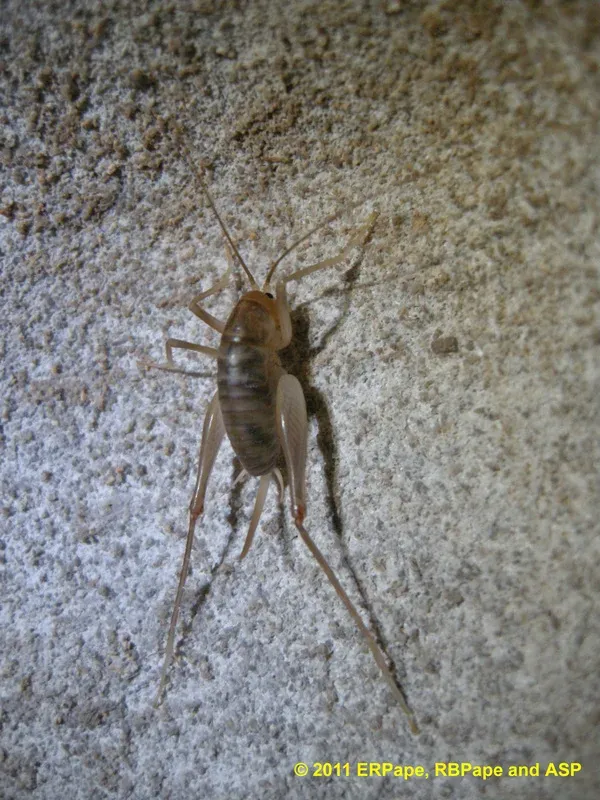
The cave cricket (Ceuthophilus longipes) belongs to the family Rhaphidophoridae. These insects are easily identified by their wingless, humpbacked bodies and exceptionally long, spindly legs used for leaping.
They are nocturnal creatures that thrive in dark, humid environments. Their antennae are remarkably long and serve as vital sensory organs for navigating in total darkness.
Coloration ranges from light tan to dark brown, providing excellent camouflage against soil, rocks, and plant debris. They lack sound-producing organs and are completely silent.
The life cycle involves incomplete metamorphosis. Females lay eggs in moist soil, and the emerging nymphs resemble miniature, wingless versions of the adults.
Their population density is often highest in damp basement areas, tunnels, or poorly ventilated greenhouses where organic matter accumulates on the floor.
What it damages
Cave crickets are generalist feeders and pose a threat to various greenhouse-grown vegetables and fruits. They are particularly destructive when they enter areas with stored produce.
In greenhouses, they feed on young, succulent plant tissues. They often target seedlings, nibbling on leaves and stems, which can stunt plant growth or lead to mortality.
In storage facilities, they cause significant damage by feeding on tubers, roots, and bulbs. These feeding marks often serve as entry points for rot-causing fungi and bacteria.
Their presence is often accompanied by the accumulation of droppings, which contaminate products and degrade their quality. This makes the harvest visually unappealing and unsellable.
Mushroom cultivation is also prone to damage by these insects. They may consume mycelium and developing mushrooms, leading to yield loss for fungi growers.
Control measures
The most effective management strategy focuses on habitat modification. By removing debris, organic waste, and wood piles, you eliminate the shelter necessary for their survival.
Moisture control is crucial. Repairing leaky pipes and improving drainage in greenhouses and storage sheds significantly reduces the attractiveness of the area to cave crickets.
Sticky traps placed along walls and in corners are highly effective for monitoring and controlling small populations. They provide a non-toxic way to reduce insect numbers.
Sealing structural gaps, such as cracks in foundations or around door frames, prevents crickets from migrating into buildings from the outside environment.
When infestation levels become critical, targeted application of residual insecticides can be employed. Always ensure the chosen product is labeled for the specific crop and environment.
Taxonomy
- Latin name
- Ceuthophilus longipes
- Order
- Orthoptera (locusts)
- Family
- Rhaphidophoridae
- EPPO code
- CTHPLO
Discussion
No discussions yet — be the first.