
Red rove beetle
Tachinus rufipes
Description
How to identify
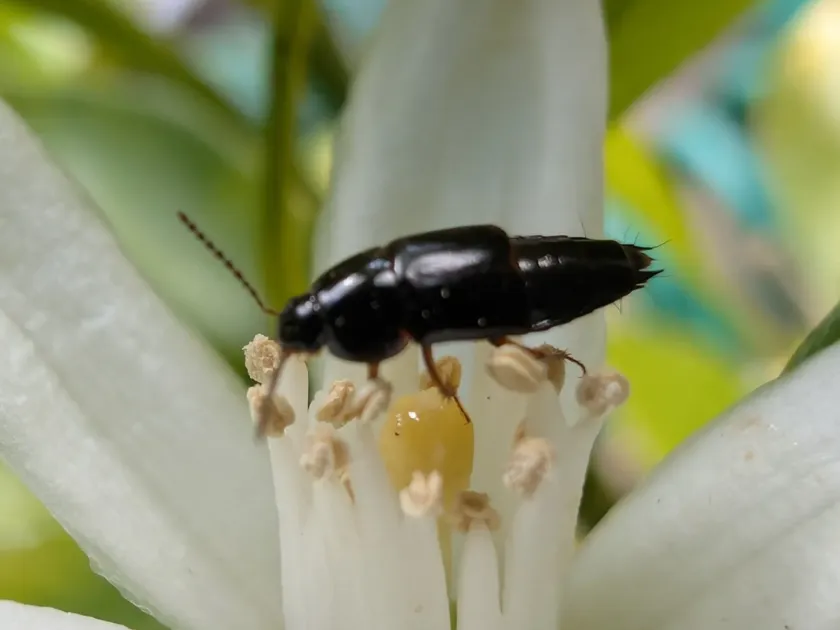
The red rove beetle (Tachinus rufipes) belongs to the Staphylinidae family within the order Coleoptera. Adult beetles are typically 4 to 6 mm in length with an elongated, slender body.
They are characterized by a dark brown to reddish color, giving them their common name. The wing covers (elytra) are relatively short, exposing the flexible abdomen, which is a hallmark feature of the Staphylinidae family.
The larvae of this species are campodeiform, featuring well-developed thoracic legs and distinctive appendages on the terminal abdominal segment, typical for rove beetles.
Correct identification of Tachinus rufipes requires expertise in coleopteran morphology, as many species within the genus Tachinus are visually very similar.
These insects are primarily ground-dwelling, commonly found in leaf litter, decaying organic matter, and moist soil environments where they hunt for smaller invertebrates.
What it damages
The red rove beetle is generally not considered a primary agricultural pest. Instead, it acts as a scavenger and an opportunistic predator within its natural habitat.
Direct damage to crops is rare and usually occurs only when the beetle population density becomes excessively high in greenhouse environments or seedbeds with significant organic waste accumulation.
In such conditions, they may occasionally nibble on the epidermal tissues of young roots or seedlings, causing minor lesions that may facilitate the entry of secondary pathogens.
In most scenarios, these beetles provide ecosystem services by decomposing organic material and predating on the eggs or larvae of actual crop pests.
Therefore, their presence is often an indicator of high soil organic content rather than an immediate threat to the health or yield of commercial crops.
When it appears
Tachinus rufipes remains active throughout the growing season, typically emerging in early spring and remaining visible until late autumn, depending on regional temperatures.
They prefer high humidity and moist environments, making them most active after rainfall or irrigation cycles when the soil moisture is optimal.
The winter is typically spent in the adult stage, overwintering in protected sites such as deep soil layers, under stones, or beneath dense layers of vegetation and debris.
Reproductive activity peaks in late spring, as rising temperatures stimulate mating and subsequent egg-laying in organic-rich substrates.
The development time from egg to adult is relatively short and is highly dependent on ambient temperature and the availability of sufficient food sources.
Signs of infestation
The presence of the red rove beetle is easily detected by using pitfall traps placed at the soil surface, which is the most reliable method for monitoring their population.
Visible signs of potential issues may include small, superficial feeding marks on the stems or roots of very young, vulnerable seedlings in areas with excessive leaf litter.
Regular visual inspections of the soil surface and organic mulches are recommended to assess whether their activity levels are becoming problematic for young plant growth.
In greenhouses, high beetle activity may correlate with poor sanitation or excessive moisture levels, which can be identified by the rapid movement of beetles when soil or organic mulch is disturbed.
Consistent monitoring helps distinguish between beneficial predatory activity and potential nuisance behavior that might require minor adjustments to greenhouse management.
Control measures
Chemical control is rarely necessary for the red rove beetle, as it does not pose a significant economic threat to most agricultural and horticultural crops.
The most effective strategy for managing their population is through good cultural practices, including maintaining a clean field environment and removing excessive decaying debris.
Proper irrigation management is essential to prevent overly moist conditions that naturally attract these beetles to the rhizosphere of vulnerable plants.
Avoiding the use of immature or improperly composted manure can significantly reduce the attractiveness of the area to egg-laying adults.
Integrated pest management protocols should be followed, focusing on ecosystem balance rather than broad-spectrum insecticide application, which could harm more beneficial organisms.
Taxonomy
- Latin name
- Tachinus rufipes
- Order
- Coleoptera (beetles)
- Family
- Staphylinidae
- EPPO code
- TACNRU
Discussion
No discussions yet — be the first.