
Dark giant horsefly
Tabanus sudeticus
Description
How to identify
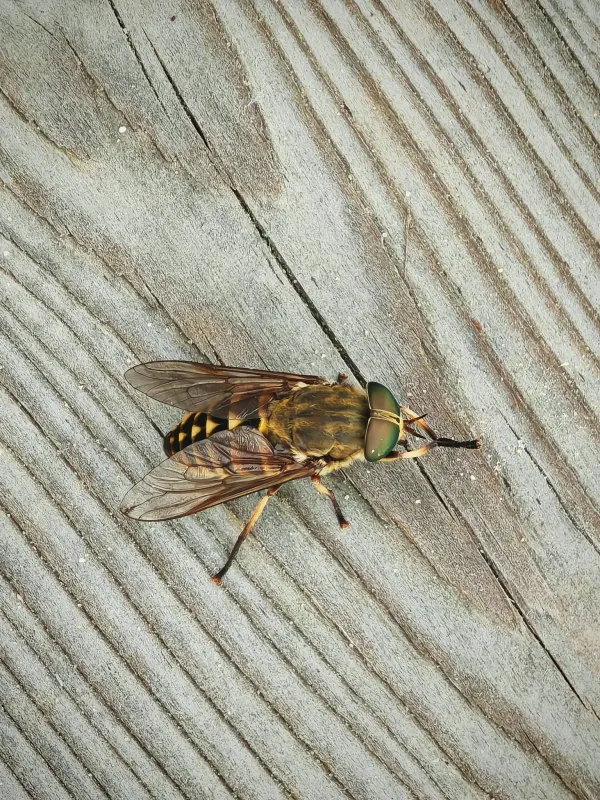
The Dark giant horsefly (Tabanus sudeticus) is one of the largest fly species in Europe, belonging to the family Tabanidae.
Adult specimens measure between 20 mm and 25 mm in length, making them easily identifiable in the field due to their massive size.
The body is dark brown to greyish, and the abdomen features a distinct pattern of pale triangular spots along the center.
The wings are clear with dark veining, producing a loud buzzing sound that characterizes the species during flight.
Larvae develop in damp soil or near water sources, possessing a pale, spindle-shaped body adapted for burrowing in mud.
What it damages
While this insect does not feed on crops, it poses a severe threat to the livestock industry through aggressive blood-feeding behavior.
Cattle and horses are primary targets, experiencing immense stress and physical pain during the feeding process of the females.
Constant attacks lead to decreased grazing time and high levels of agitation, resulting in significant milk yield losses and weight loss.
Tabanus sudeticus acts as a vector for various pathogens, potentially transmitting diseases such as anthrax and equine infectious anemia.
The bites often lead to severe skin inflammation, secondary bacterial infections, and open wounds that require veterinary care.
When it appears
Adult activity peaks during the summer months, specifically from July through August, depending on regional weather conditions.
These insects prefer hot, sunny days for hunting, as their activity levels correlate strongly with high temperatures and direct sunlight.
The life cycle is dependent on water, as females lay eggs on emergent vegetation located in or near wetland areas.
Larval development can take one or more years before the insect undergoes pupation and emerges as a fully developed adult fly.
By late August or early September, the population declines rapidly as the adult flies reach the end of their natural lifespan.
Signs of infestation
The most evident sign of infestation is the erratic behavior of livestock, such as tail swishing, stamping, and running to escape attacks.
Visible punctures on the animal's hide, often accompanied by bleeding, indicate the presence and feeding activity of the flies.
Swelling, localized heat, and inflammation around the bite sites are common reactions to the saliva injected during feeding.
General deterioration in animal health, evidenced by weight loss or nervousness, can be a indirect sign of intense horsefly pressure.
Observing the physical presence of large, buzzing flies in pasture areas during peak daytime hours confirms the infestation.
Control measures
The primary method of control is the application of livestock-safe repellents and insecticides to protect animals from bites.
Installing specialized horsefly traps that utilize visual cues or heat signatures can significantly reduce the local adult population.
Pasture management, such as avoiding grazing near stagnant water during peak heat, can help minimize exposure to fly attacks.
Drainage of small stagnant water bodies near farms helps to destroy the breeding grounds and prevent larval development.
- Utilizing protective mesh covers for livestock.
- Ensuring proper stable hygiene to limit entry points.
- Monitoring animal health for signs of bite-related infections.
Taxonomy
- Latin name
- Tabanus sudeticus
- Order
- Diptera (flies)
- Family
- Tabanidae
- EPPO code
- TABASU
Discussion
No discussions yet — be the first.