
Striped horse fly
Tabanus lineola
Description
How to identify
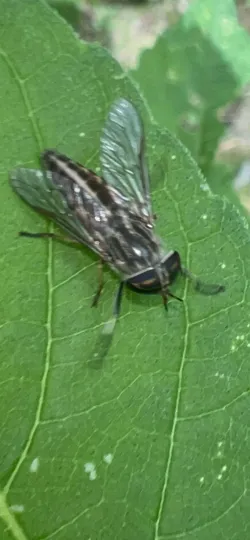
The striped horse fly (Tabanus lineola) belongs to the order Diptera, family Tabanidae. It is characterized by a distinctive striped abdomen and large, iridescent eyes that often appear gold or green in sunlight.
Adult flies typically measure between 12 and 15 millimeters in length. They possess a robust body and a piercing-sucking mouthpart in females, which is specialized for feeding on the blood of large mammals.
Males of the species are strictly nectar feeders and do not bite. They are not considered pests in agricultural settings, as their primary function is pollination and mating.
The larvae are segmented and elongated, typically inhabiting moist soil near water bodies. They are predatory in nature, feeding on small invertebrates found in their aquatic or semi-aquatic habitats.
Adults are highly active during warm, sunny days. They utilize their complex eyes and thermal sensors to locate suitable hosts, making them particularly bothersome during the heat of summer.
What it damages
The primary damage caused by Tabanus lineola is the painful bite inflicted on livestock. These bites are not only stressful but cause significant irritation, leading to restlessness and loss of productivity in farm animals.
Milk yields in dairy cattle can drop significantly due to the constant disturbance. Animals may become underweight and malnourished as they spend more time defending themselves than grazing.
Horse flies act as mechanical vectors for various diseases, including anthrax, tularemia, and several parasitic infections. Their ability to move between hosts quickly makes them efficient transmitters of pathogens.
Bite sites are prone to secondary infections. The persistent wounds attract other pests and flies that lay eggs in the injured tissue, leading to more complex dermatological issues for the animals.
Livestock may also suffer from secondary physical injuries while attempting to escape the swarms of flies, often damaging fences or crowding together, which increases the risk of accidents.
When it appears
The peak activity of the striped horse fly occurs throughout the summer months, typically reaching its height in June and July. They thrive in hot, humid conditions, especially in areas near marshes, ponds, or rivers.
The life cycle is tied to water, as females deposit egg masses on vegetation overhanging damp areas. The larvae drop into the moist environment below to continue their development.
Depending on environmental conditions, the life cycle may take several months to a year. Overwintering occurs during the larval stage, buried in the soil, followed by pupation in the spring.
Adults emerge in waves, creating prolonged periods of pressure on livestock. Their activity is most intense during the middle of the day, correlating with the times when grazing animals are most vulnerable.
Changing climate patterns have extended the seasons in which these insects are active, forcing farmers to maintain consistent vigilance for longer periods throughout the year.
Signs of infestation
A clear sign of a striped horse fly infestation is abnormal herd behavior. Livestock will often group together tightly, swish their tails incessantly, or move rapidly to evade the flies.
Physical signs on the animals include visible bite marks that may bleed or swell. Areas of skin may become inflamed, showing signs of dermatitis or crusting due to repeated attacks from the flies.
The presence of large, buzzing flies circling around cattle or horses is a direct indicator of an infestation. Observations near watering holes usually reveal the highest concentration of the insects.
A sudden decline in overall herd performance, such as reduced milk production or poor weight gain, in the absence of other medical conditions, serves as a strong signal of fly pressure.
- constant tail swishing and restlessness;
- animals seeking refuge in water or dense shade;
- multiple bleeding bite sites on the animal's hide;
- swollen or inflamed skin patches;
- presence of dense swarms around the herd.
Control measures
The application of insecticidal sprays, pour-ons, or ear tags containing pyrethroids is the standard method for protecting livestock. Regular application is necessary to maintain an effective repellent barrier.
Habitat management is crucial; draining small standing water sources or clearing overhanging vegetation near pastures can significantly reduce breeding sites for the flies.
Using specialized horse fly traps, such as those that mimic the size and heat signature of an animal, can help suppress local populations and provide relief to confined herds.
Adjusting grazing schedules to avoid peak activity hours (midday) can help mitigate the stress on animals. Keeping livestock indoors during the hottest hours may be necessary in high-pressure areas.
Encouraging natural predators, such as certain wasps and birds that prey on horse fly larvae or adults, is a sustainable long-term strategy for integrated pest management.
Taxonomy
- Latin name
- Tabanus lineola
- Order
- Diptera (flies)
- Family
- Tabanidae
- EPPO code
- TABALI
Discussion
No discussions yet — be the first.