
Horse flies
Tabanus cacens
Description
How to identify
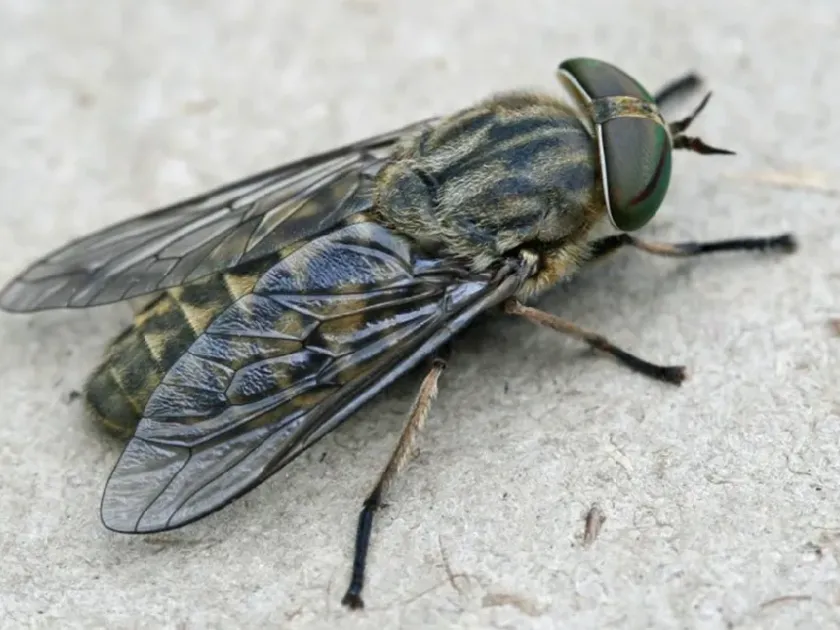
Horse flies of the genus Tabanus are large dipterous insects belonging to the family Tabanidae. They are easily recognizable by their robust build and large, often iridescent eyes.
Adult flies range from 10 to 25 mm in length. Their coloration typically consists of various shades of grey, brown, or black, sometimes with distinct patterns on the abdomen and wings.
The mouthparts of the females are specially adapted for cutting skin and consuming blood, which is a necessary protein source for their reproductive development.
The life cycle of the horse fly includes four distinct stages: egg, larva, pupa, and adult. The developmental period is closely tied to aquatic or semi-aquatic habitats where moisture is abundant.
While males feed mainly on nectar, the females are aggressive bloodsuckers that pose a significant nuisance to large mammals, including cattle, horses, and sheep.
What it damages
The damage caused by Tabanus species is primarily economic, stemming from the stress and physical exhaustion inflicted upon agricultural animals during the grazing season.
Persistent attacks disrupt grazing patterns, preventing animals from feeding and resting effectively, which directly leads to weight loss and a decline in milk production.
The bites of horse flies are painful and cause significant irritation, often leading to local swelling, skin inflammation, and open wounds that are prone to secondary infections.
Horse flies are recognized as vectors for various pathogens. By moving from one host to another, they can mechanically transmit diseases such as tularemia and anthrax.
Additionally, the quality of animal hides is compromised due to scarring caused by repeated bites, which results in financial losses for the leather industry and livestock owners.
When it appears
The emergence of adult horse flies typically begins in late spring, with activity peaking during the warmest months of the summer, specifically June and July.
These insects are highly active during bright, sunny, and calm weather. They prefer open areas where they can easily locate their hosts by sight and heat signature.
The seasonal activity duration is strongly influenced by local climate and the proximity of breeding sites such as swamps, ponds, and irrigated fields.
Throughout the day, horse flies show increased activity during the peak temperature hours. Activity usually declines as the sun begins to set and temperatures drop.
By late August, the population density of Tabanus generally begins to decrease as the life cycle of the summer generations draws to a close.
Signs of infestation
One of the clearest indicators of a horse fly infestation is the behavioral change in livestock, which becomes restless, aggressive, and constantly attempts to swat away pests.
Visual inspection of the animals often reveals fresh, bleeding bites or inflamed patches of skin where the insects have successfully taken a blood meal.
A sudden drop in daily milk yield or a failure to reach target weight gains in growing livestock are major warning signs of heavy fly pressure on the pasture.
The sound of loud, persistent buzzing around the animals is a telltale sign of their presence, as horse flies are noticeably more auditory and aggressive than other flies.
In addition, observing large numbers of flies congregating around moist areas or pond edges confirms that the habitat is supporting a local breeding population.
Control measures
The primary control measure involves the application of livestock-safe insecticides and repellents to prevent flies from landing and feeding on the animals.
Deployment of specialized horse fly traps, which utilize visual lures like dark, heat-radiating spheres, can significantly lower the local population in pasture settings.
Managing the grazing schedule to avoid peak activity hours and providing covered sheds where livestock can escape the heat and flies is highly recommended.
- Land management: draining unnecessary standing water and clearing dense, overgrown vegetation near watering sites.
- Using protective netting or fly sheets for horses and high-value cattle to physically prevent bites.
- Ensuring herd health through regular vaccination against diseases transmitted by blood-feeding vectors.
Promoting natural predators, such as dragonflies and insectivorous birds, is a sustainable approach to maintaining balance and reducing fly numbers in the environment.
Taxonomy
- Latin name
- Tabanus cacens
- Order
- Diptera (flies)
- Family
- Tabanidae
- EPPO code
- TABAGI
Discussion
No discussions yet — be the first.