
Black horse fly
Tabanus atratus
Description
How to identify
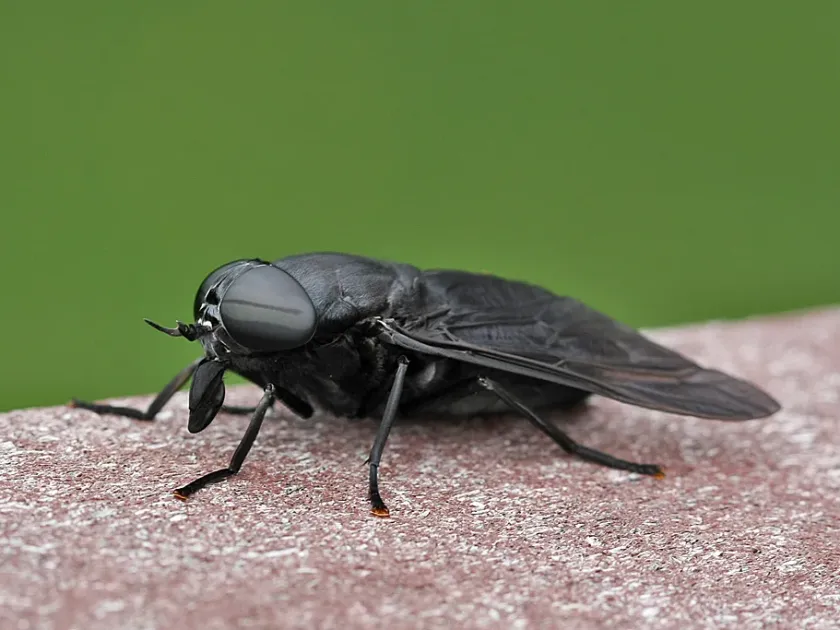
The black horse fly (Tabanus atratus) is a member of the Tabanidae family within the order Diptera. Adults are large insects, measuring approximately 20–28 mm, with a distinct coal-black body and dark wings.
Females possess robust, piercing-sucking mouthparts specifically evolved to penetrate the thick skin of large mammals, while males feed exclusively on nectar and plant sap.
They are easily identified by their loud buzzing sound while in flight and their high activity levels on bright, sunny days. Their eyes are large, often displaying a subtle iridescent sheen.
Larvae are spindle-shaped, typically pale in color, and dwell in damp soil or wetland substrates where they act as predators, feeding on smaller invertebrates.
The life cycle encompasses several stages: egg, multiple larval instars, pupa, and finally the adult stage, often taking one to two years to complete depending on environmental temperatures.
What it damages
The primary economic impact is directed at the livestock industry, as these flies do not damage crops but severely impair the health and output of grazing animals.
Female flies inflict painful bites on cattle, horses, and other farm animals to obtain blood meals, which are essential for their egg development process.
The relentless attacks cause significant agitation and stress in livestock, leading to reduced grazing time, loss of body condition, and substantial declines in milk production.
Bite sites are prone to inflammation, dermatitis, and secondary bacterial infections, causing further distress and potential medical complications for the affected animals.
Beyond the direct physical harm, black horse flies serve as mechanical vectors for various serious diseases, including anthrax and tularemia, spreading pathogens between herds.
When it appears
The activity period for adult black horse flies begins in late spring and persists throughout the summer months, often continuing until mid-autumn.
They exhibit peak activity during warm, still, and sunny conditions, particularly during the early morning and late afternoon hours when temperatures are most favorable for flight.
Habitats such as moist lowlands, pond edges, and swampy pastures are highly preferred by the species for both resting and reproductive activities.
During periods of heavy rain or significant temperature drops, fly activity diminishes as they seek shelter in foliage and dense vegetation.
The highest population density is typically recorded in mid-summer, triggered by the maturation of larvae and subsequent emergence of new adult generations.
Control measures
Managing the black horse fly requires a multi-faceted approach, as their high flight capability makes total eradication in open pastures nearly impossible.
Utilizing repellent sprays and pour-on insecticides containing pyrethroids on livestock is a frontline strategy to prevent flies from landing and biting.
Deployment of specialized traps, such as the Malaise trap or black ball traps that mimic the visual silhouette of a large animal, effectively reduces adult numbers in localized areas.
Land management, specifically the drainage of small wetland areas or standing water on farm premises, is crucial for eliminating breeding sites for the larvae.
Providing indoor or shaded areas for cattle during the peak heat of the day helps minimize exposure to the most aggressive biting periods.
Taxonomy
- Latin name
- Tabanus atratus
- Order
- Diptera (flies)
- Family
- Tabanidae
- EPPO code
- TABAAR
Discussion
No discussions yet — be the first.