
American horse fly
Tabanus americanus
Description
How to identify
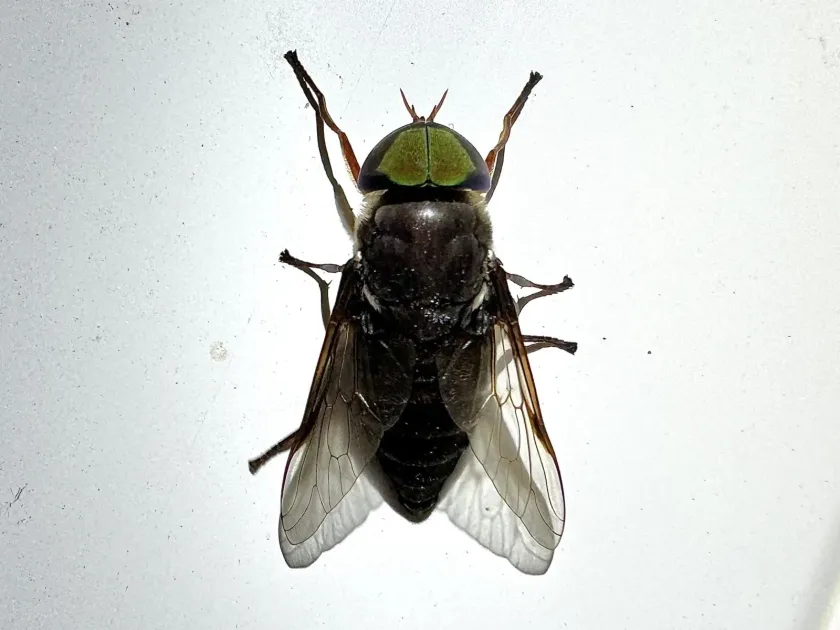
The American horse fly (Tabanus americanus) is one of the largest fly species in the Tabanidae family found throughout North America, with adults growing up to 30 mm in length.
They possess a robust body with a dark brown or black coloration, often covered in dense, light-colored hairs on the thorax. Their wings are broad, clear, and powerful, enabling rapid and sustained flight.
Female flies have eyes separated by a narrow band, whereas male eyes touch; both sexes often display a distinctive iridescent sheen on their large compound eyes.
The life cycle involves four distinct stages: egg, larva, pupa, and adult. Larvae are typically aquatic or semi-aquatic, developing in damp soil or near the edges of wetlands.
While males feed on nectar, adult females are blood-feeders, requiring high-protein meals from mammalian blood to develop their eggs, making them significant pests.
What it damages
While the American horse fly does not directly damage vegetation, it causes substantial economic losses by negatively impacting the health and productivity of livestock.
The bite of this fly is extremely painful because their mouthparts are designed to lacerate skin, causing immediate distress, restlessness, and frantic behavior in cattle and horses.
Livestock constantly harassed by these flies spend less time grazing and more time trying to evade attacks, which directly results in reduced milk yields and weight loss.
Furthermore, they serve as mechanical vectors for various diseases, such as anthrax, tularemia, and bovine anaplasmosis, posing a serious threat to farm health.
Persistent biting can lead to severe skin irritation, secondary infections, and anemia in heavily infested animals, necessitating expensive veterinary interventions.
When it appears
The American horse fly is most active during the warmest months of the year, with peak population levels occurring during June, July, and the beginning of August.
Their activity levels are highly dependent on environmental conditions, as they thrive in hot, humid weather and are most active under bright sunlight.
They prefer calm, windless days for hunting, as these conditions are ideal for their flight mechanics and their ability to track hosts through visual and olfactory cues.
During overcast, windy, or cool conditions, the activity of these flies decreases significantly, as they rely on ambient heat to maintain their high metabolic rates.
The timing and intensity of their appearance are often synchronized with the local hydrological cycle, as they depend on moist habitats for the development of their larvae.
Signs of infestation
The primary sign of an infestation is observing highly agitated behavior in livestock, such as tail switching, stomping, running, or attempting to hide in shaded areas.
Physical evidence of the pests can be seen directly on the animals, where the flies are often persistent and difficult to dislodge once they begin feeding.
Bite sites are typically characterized by significant swelling, localized inflammation, or bleeding wounds due to the tearing nature of the horse fly's mouthparts.
A decline in the overall condition and growth rate of a herd, despite ample food supply, is a strong indicator of chronic annoyance caused by blood-feeding insects.
The presence of large numbers of flies near muddy banks, wetlands, or stagnant water sources confirms the existence of local breeding grounds on or near the farm.
Control measures
Effective control requires the deployment of specialized traps, such as the Nzi trap or horse fly boards, which use visual stimuli to attract and kill the flies.
The application of approved pour-on insecticides or repellent sprays on livestock provides temporary protection, though effectiveness varies depending on weather and frequency of use.
Farm management strategies should include avoiding grazing near swampy areas or damp brush during the peak hours of fly activity to minimize animal stress.
Drainage of small stagnant water pools and maintaining cleared vegetation around livestock housing help reduce the availability of suitable larval breeding sites.
- Installation of horse fly visual traps
- Application of insecticidal repellents
- Providing shelter or dark stalls during peak fly hours
- Managing water sources and wetlands
- Biological control through natural predator promotion
Taxonomy
- Latin name
- Tabanus americanus
- Order
- Diptera (flies)
- Family
- Tabanidae
- EPPO code
- TABAAM
Discussion
No discussions yet — be the first.