
Sympherobius sanctus
Sympherobius sanctus
Description
How to identify
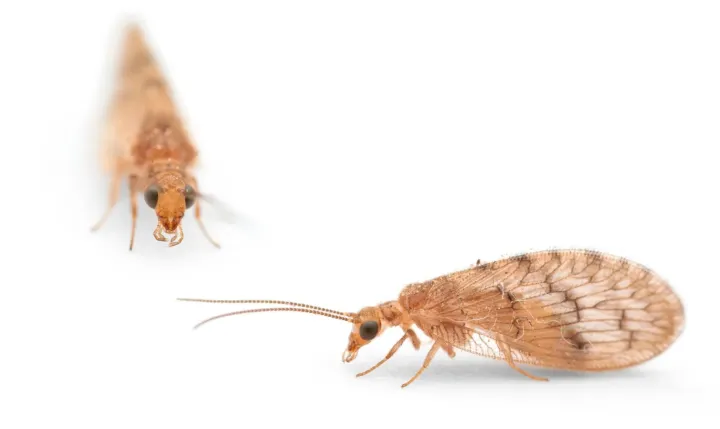
Sympherobius sanctus is a species of brown lacewing belonging to the family Hemerobiidae in the order Neuroptera. They are small insects, often overlooked due to their cryptic coloration.
The adults are characterized by their brown, delicate, net-veined wings. When at rest, they hold their wings roof-like over their bodies, which is a typical trait of the family.
The larvae are active, voracious predators. They have an elongated body and prominent, sickle-shaped mandibles designed to pierce their prey and extract body fluids.
These insects are commonly found in woody habitats, orchards, and gardens, playing a crucial role in maintaining the balance of the local ecosystem.
Proper identification of this species is essential for orchard management, as recognizing it as a beneficial insect prevents unnecessary chemical treatments.
What it damages
It is important to clarify that Sympherobius sanctus is not a plant pest. In fact, it is a highly beneficial predator that helps control various agricultural pests.
The primary diet of both larvae and adults consists of aphids, scale insects, and other soft-bodied pests that damage crops by sucking sap from foliage and shoots.
By consuming large numbers of harmful insects, they act as natural controllers, reducing the need for synthetic pesticides and promoting healthy plant growth.
Farmers sometimes mistakenly treat them as pests because they are often spotted in high numbers on plants infested with aphids; however, they are only present to feed on the prey.
Protecting Sympherobius sanctus is a recommended practice in sustainable agriculture and integrated pest management (IPM) programs.
When it appears
The activity of Sympherobius sanctus spans from late spring through summer, closely following the population peaks of their prey, such as aphids.
The life cycle involves egg, larval, pupal, and adult stages. Larvae are most active during the warmest months when prey availability is at its highest.
They overwinter as cocoons in sheltered areas, such as bark crevices or leaf litter, allowing the population to emerge and regenerate quickly in the spring.
The number of generations per year is influenced by the regional climate and the consistency of the prey supply in the agricultural environment.
High temperatures generally favor rapid development, provided that the habitat offers enough cover and food resources for the predator population.
Signs of infestation
A primary indicator of Sympherobius sanctus presence is a natural decline in aphid colonies on fruit trees without any human-led chemical intervention.
During visual inspections of the undersides of leaves or near growing shoots, one may observe the active larvae hunting and feeding on prey colonies.
Adults are nocturnal to some degree and are attracted to artificial light, often appearing near garden lights during summer evenings.
The absence of crop damage combined with the presence of small lacewings confirms that this species is performing its ecological service as a predator.
Integrated pest management specialists track these insects using sticky cards to ensure the population is healthy enough to manage pest infestations naturally.
Control measures
Since Sympherobius sanctus is a beneficial insect, the goal of management is to preserve and encourage its population rather than to control it.
Reducing the use of broad-spectrum insecticides is the most effective way to ensure the survival of these predators in the orchard or field.
Providing a diverse environment with nectar-rich plants ensures that adult lacewings have a food source during periods when pest populations are low.
Implementation of IPM strategies focuses on selective control methods that target specific pests while sparing beneficial predatory species like Sympherobius sanctus.
- Minimize pesticide applications during peak blooming periods.
- Selectively apply insecticides that are safe for Neuroptera.
- Maintain hedgerows and wildflower borders to support beneficial populations.
- Monitor pest levels before resorting to any chemical control measures.
Taxonomy
- Latin name
- Sympherobius sanctus
- Family
- Hemerobiidae
- EPPO code
- SYMHSA
Discussion
No discussions yet — be the first.