
Sympherobius inconspicuus
Sympherobius inconspicuus
Description
How to identify
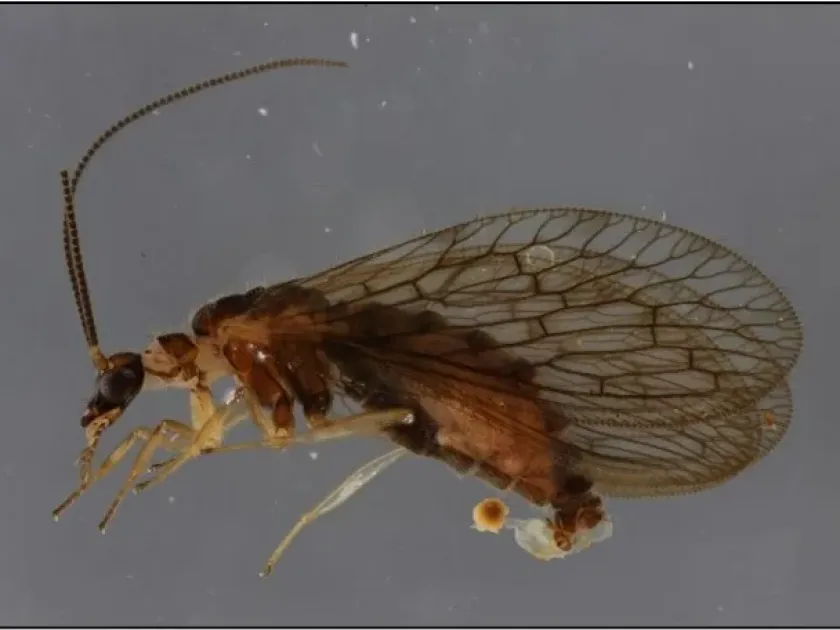
Sympherobius inconspicuus is a small insect belonging to the order Neuroptera and the family Hemerobiidae, commonly known as brown lacewings.
The adult insect has a wingspan of approximately 8–10 mm. Its wings exhibit characteristic net-like venation, while the body color is typically brown, providing excellent camouflage against tree bark.
The larvae of this species are spindle-shaped and possess sickle-shaped mandibles, which are specialized for capturing and piercing soft-bodied prey.
These insects are largely nocturnal or crepuscular, spending daylight hours hiding in crevices of bark, which explains the "inconspicuus" part of their name.
As a predatory species, they are a vital component of the food web, specializing in hunting various types of small insects on both coniferous and deciduous trees.
What it damages
Sympherobius inconspicuus is not a plant pest; rather, it is a significant predator that aids in the reduction of harmful agricultural pest populations.
Their primary food sources include aphids, scale insects, whiteflies, and spider mites, which are common pests in many agricultural and horticultural settings.
Because they actively feed on these pests, they provide essential biological control services without causing any damage to the plants themselves.
There is no economic loss associated with the presence of this insect; on the contrary, its absence often leads to higher pest pressure and increased crop damage.
Consequently, they are viewed as allies in integrated pest management (IPM) programs, and their protection is recommended for sustainable agricultural practices.
When it appears
The activity period of the adult Sympherobius inconspicuus typically begins in spring as temperatures rise, signaling the emergence from hibernation.
Peak abundance usually aligns with the reproductive season of aphids, ensuring a steady food supply for both adults and developing larvae during the summer months.
Multiple generations can occur throughout the growing season, depending on the climatic conditions and the availability of prey species.
As autumn approaches, individuals seek protected overwintering sites, such as bark fissures or leaf litter, to survive the winter temperatures.
The extended period of activity makes them consistent regulators of pest populations throughout the entire vegetation cycle of most tree species.
Signs of infestation
Detection of these insects is challenging due to their cryptic nature and small size, which is why they are often overlooked by amateur observers.
The presence of larvae in the middle of aphid colonies is the most direct indicator that these predators are actively working in the ecosystem.
Adults are sometimes caught in light traps, but their appearance is often confused with other small brown insects if not properly identified under magnification.
Since they do not cause plant damage, there are no characteristic feeding marks or plant tissue deformations to look for when scouting for this species.
The most reliable way to monitor their population is through physical sampling of branches or using beating sheets during evening hours to capture active specimens.
Control measures
No control measures are necessary for Sympherobius inconspicuus because it is a highly beneficial insect that serves as a natural pest deterrent.
Agronomists should focus on preserving this species by avoiding the use of broad-spectrum insecticides that could negatively impact their populations.
If chemical pest control is absolutely required, selective, narrow-spectrum insecticides are preferred to protect the predator-prey balance in the field.
Promoting biodiversity within and around crop areas by planting nectar-rich hedgerows can help maintain and attract populations of brown lacewings.
In modern sustainable agriculture, the goal is to encourage the presence of such predators as a core element of natural, cost-effective pest management.
Taxonomy
- Latin name
- Sympherobius inconspicuus
- Family
- Hemerobiidae
- EPPO code
- SYMHIN
Discussion
No discussions yet — be the first.