
Sympherobius
Sympherobius
Description
How to identify
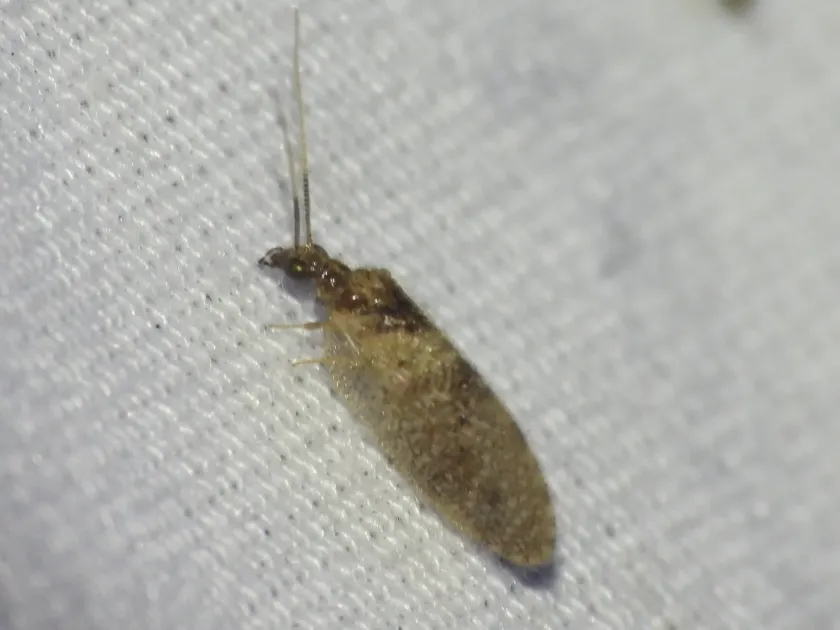
Sympherobius is a genus of insects belonging to the family Hemerobiidae, commonly known as brown lacewings, within the order Neuroptera. These insects are small, with a wingspan usually ranging from 10 to 15 mm.
Adults possess thin, membranous wings with a dense network of veins, which they fold over their bodies when at rest. Their coloration, typically brown or tan, provides excellent camouflage against tree bark.
The larvae are highly mobile predators equipped with sickle-shaped mandibles, which are specialized for piercing the bodies of their prey and extracting fluids.
As members of the Neuroptera order, they undergo complete metamorphosis. The life cycle consists of egg, three larval instars, prepupa, pupa, and adult stages.
They are widely recognized in entomology not as pests, but as valuable natural enemies of various harmful insects that attack orchards and ornamental plants.
What it damages
It is important to clarify that Sympherobius species do not cause any damage to plants. They are strictly predaceous and do not feed on plant tissues, sap, or fruits.
These insects are highly beneficial, as they actively hunt and consume various soft-bodied pests, including aphids, mealybugs, scale insects, and spider mites.
Their presence on plants is an indicator of a pre-existing pest infestation. They aggregate where food sources (pests) are abundant, acting as a natural population regulator.
Because they lack the specialized mouthparts needed for herbivory, they are incapable of causing the symptoms typical of agricultural pests, such as leaf chlorosis, gall formation, or fruit necrosis.
Therefore, farmers should consider them as allies in integrated pest management (IPM) rather than a threat to their crop production.
When it appears
The active season for Sympherobius begins in early spring, as temperatures rise and the first pest populations (like aphids) begin to emerge on trees.
Their population peaks during the summer months, correlating with the density of their prey. The more food available, the higher the survival rate and reproductive success of the lacewings.
Depending on the climatic zone, they can produce several generations within a single growing season, ensuring constant pressure on pest populations throughout the summer.
As autumn approaches and temperatures drop, larvae seek protected overwintering sites, such as bark crevices, leaf litter, or debris, to undergo diapause.
Monitoring their seasonal patterns helps in timing biological interventions and reducing the need for chemical applications that could harm these beneficial insects.
Signs of infestation
Identifying Sympherobius involves looking for their larvae, which are often found directly within clusters of aphids or mealybugs on leaves and branches.
Adults are sometimes attracted to artificial lights at night, which can serve as a simple method for detecting their presence in the local ecosystem.
Small, white, silk-like cocoons can be observed in tree fissures or branch junctions, signaling that pupation is occurring and the next generation is developing.
The absence of typical herbivore damage symptoms, even if the plant has previously suffered from pests, is a strong sign that natural predators are effectively controlling the situation.
Entomological monitoring using yellow sticky traps or visual inspections of twigs is recommended to confirm the presence of these beneficial insects in the orchard.
Control measures
There is no need for control measures against Sympherobius, as they are essential beneficial insects. They play a critical role in reducing the reliance on chemical insecticides.
To support and preserve their populations, agricultural practices should prioritize the health of the entire ecosystem rather than just the target crop.
- Avoid the prophylactic use of broad-spectrum insecticides that kill both pests and natural enemies.
- Maintain floral borders to provide nectar and pollen for adult lacewings, which supplement their diet.
- Retain some natural habitat structures, like leaf litter or old wood, for successful overwintering.
- Adopt selective pesticides or biopesticides that have minimal toxicity to predatory Neuroptera.
By protecting Sympherobius, growers can naturally suppress pest outbreaks, leading to more sustainable and cost-effective agricultural production.
Taxonomy
- Latin name
- Sympherobius
- Family
- Hemerobiidae
- EPPO code
- SYMHSP
Discussion
No discussions yet — be the first.