
Symmerista
Symmerista
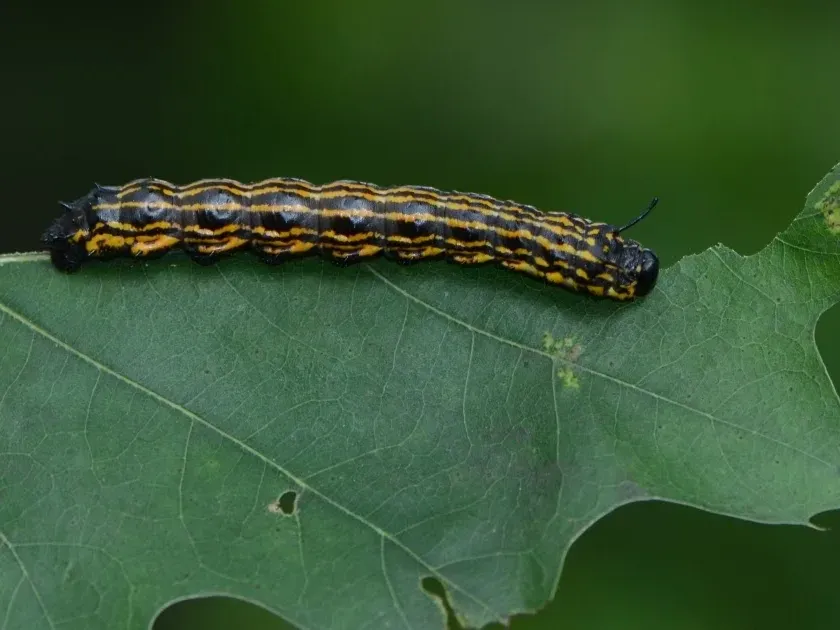
Description
How to identify
The genus Symmerista belongs to the Notodontidae family of the order Lepidoptera. Adult moths are typically modest in appearance, with gray or brown camouflaged wings suited for nocturnal life.
The larvae, or caterpillars, are the primary focus for foresters. They often possess distinct longitudinal stripes, which vary in coloration depending on the developmental stage and the specific species of the genus.
The life cycle begins with eggs laid in small clusters on the underside of leaves. Due to their small size and cryptic coloration, egg clusters can be difficult to spot during routine forest inspections.
As they grow through several instars, the larvae increase significantly in size and feeding intensity. Proper identification during the early stages is crucial, as they can cause rapid defoliation if left unchecked.
While adult moths look similar to many other Notodontid species, the specific larval behavior and host tree preference serve as primary identifiers for field agronomists.
What it damages
The primary hosts for Symmerista caterpillars are trees within the Fagaceae family, with a strong preference for oak (Quercus). Occasionally, they may also target beech trees and other deciduous varieties.
These insects are significant defoliators. During outbreaks, the caterpillars can consume entire leaf canopies, leaving the branches bare and significantly reducing the tree's photosynthetic capacity.
Repeated defoliation over consecutive seasons severely weakens the host trees. This stress makes them susceptible to secondary infestations by wood-boring beetles and opportunistic fungal pathogens.
In forest ecosystems, Symmerista outbreaks can result in growth retardation, branch dieback, and, in severe cases, the mortality of weakened trees, leading to notable economic and ecological losses.
For nursery owners and landscaping professionals, the loss of foliage not only retards tree development but also ruins the aesthetic value of the plantings, necessitating urgent intervention.
When it appears
The development of Symmerista is synchronized with the phenology of its host trees. Adults emerge from overwintering pupae in the soil just as the oak buds begin to flush in early spring.
Feeding larvae are most active during the mid-summer months. This period represents the highest risk of damage, as the caterpillars reach their later, most voracious stages of growth.
By late summer or early autumn, the larvae cease feeding, move to the soil, and pupate within the leaf litter. They remain in the soil as pupae throughout the winter until the next spring cycle.
Environmental factors significantly influence population density. Warm, early springs often correlate with faster development and potentially larger population surges compared to cold, wet spring seasons.
Understanding these biological windows allows managers to schedule monitoring and control efforts precisely, ensuring maximum impact on the larvae before they reach mature, damaging stages.
Signs of infestation
The first sign of an infestation is the presence of small holes or notched leaf edges, characteristic of early-stage larval feeding. These initial signs are often concentrated on lower branches.
Significant accumulation of frass (caterpillar excrement) on the ground or on foliage is a tell-tale sign of a high population density. This is often noticed before large-scale canopy thinning becomes obvious.
The progression of defoliation usually moves from the lower canopy upwards. As the infestation grows, the foliage may appear shredded, with only the central veins remaining on the leaves.
The presence of fine silk threads, which the larvae use to drop from branches when disturbed, provides another indication of their activity within the canopy.
Stressed trees exhibit a decline in overall vigor, with late-season refoliation sometimes occurring, which consumes energy reserves and leaves the tree vulnerable to winter frost.
Control measures
Biological control via Bacillus thuringiensis (Bt) is the preferred method for managing Symmerista. This approach is highly effective against young larvae while sparing beneficial insects and natural predators.
Monitoring with pheromone traps allows for precise timing of interventions. By tracking moth flights, agronomists can determine the exact timing for treatment, avoiding unnecessary chemical applications.
In ornamental or small-scale settings, manual removal of larvae or infested branches can be an effective non-toxic solution if the infestation is detected early and remains localized.
Promoting a healthy, diverse forest environment encourages natural enemies such as parasitic wasps, predatory beetles, and insectivorous birds, which serve as the first line of defense against outbreaks.
- Implementation of regular aerial or ground monitoring of canopy health.
- Utilization of systemic insecticides only as a last resort in high-value or highly stressed tree populations.
- Maintaining soil health and moisture levels to support tree vitality and resistance against pests.
Taxonomy
- Latin name
- Symmerista
- Order
- Lepidoptera (butterflies)
- Family
- Notodontidae
- EPPO code
- SYMMSP
Discussion
No discussions yet — be the first.