
Eastern cottontail
Sylvilagus floridanus
Description
How to identify
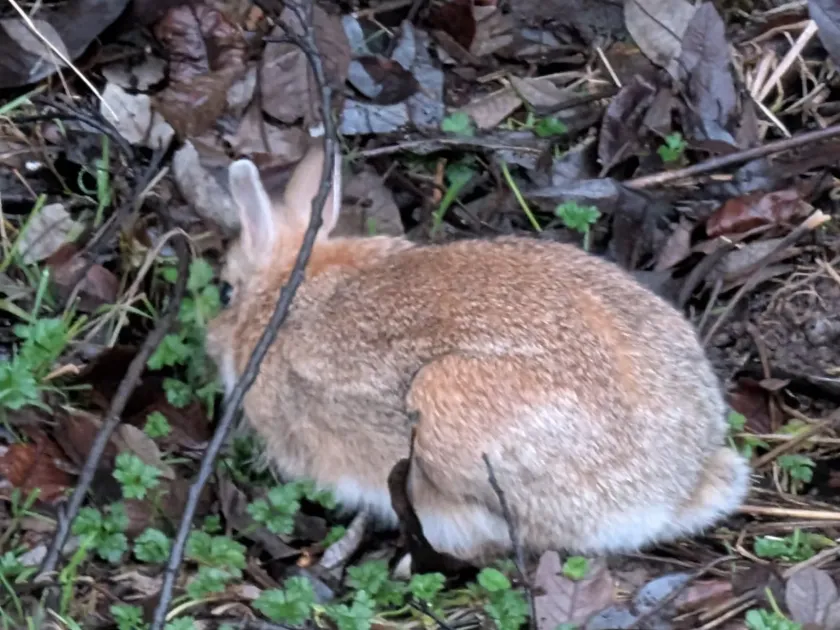
The Eastern cottontail (Sylvilagus floridanus) is a mammal belonging to the order Lagomorpha and the family Leporidae. It is characterized by its relatively small size, typically measuring 35 to 45 cm in length, and its iconic fluffy, white-underside tail.
Their coat color ranges from brownish-gray to reddish-brown, often with white fur on the belly and throat. These rabbits have prominent ears with dark edges and powerful hind legs adapted for swift movement when threatened.
Cottontails are highly territorial and prefer habitats such as brushy areas, hedgerows, and overgrown fields, which offer excellent cover from predators. They are elusive creatures, often remaining hidden during daylight hours.
The biology of the Eastern cottontail is marked by high reproductive capacity. A single female can produce multiple litters per breeding season, allowing populations to rebound or expand quickly in favorable environments.
They are primarily crepuscular or nocturnal, meaning their activity peaks at dawn, dusk, or during the night. This behavioral pattern often makes them difficult to observe, even when they are actively damaging agricultural lands.
What it damages
The Eastern cottontail is a major pest for various crops, as its diverse diet includes grasses, legumes, leafy vegetables, and fruits. They can devastate home gardens and large-scale vegetable plots by grazing on young plants.
In orchards, cottontails pose a severe threat, especially during winter months when food is scarce. They gnaw the bark off the trunks of young trees, often leading to girdling, which can severely weaken or kill the trees.
Field crops such as soybeans, alfalfa, and young corn are also frequent targets. Rabbits prefer the succulent, tender parts of plants, which significantly affects the growth and eventual yield of the crops.
Decorative plant nurseries are also susceptible to damage, as rabbits nibble on ornamental shrubs, flowers, and tree saplings, ruining their aesthetic value and requiring costly remediation efforts.
The extent of damage is often correlated with population density. In areas with high numbers, the total consumption of green matter and the destruction of new seedlings can result in significant financial loss for farmers.
When it appears
Peak damage generally occurs during the spring and summer growing seasons, coinciding with the rabbit's breeding cycle and the availability of abundant, succulent green vegetation.
Winter is a critical season for orchard protection. When snow covers low-lying grasses, rabbits rely on the bark and twigs of woody plants, causing permanent structural damage to orchards.
Early spring is particularly hazardous for newly planted seedlings. As soon as the first green sprouts appear, cottontails seek them out, often destroying entire rows of freshly sown crops.
Because these rabbits do not hibernate, they remain active throughout the entire year. Their presence must be monitored consistently, regardless of the season, to prevent cumulative damage.
Seasonal weather fluctuations can influence their movement patterns; for instance, prolonged dry periods may drive rabbits closer to irrigated agricultural plots in search of water and fresh food.
Signs of infestation
The most recognizable sign of rabbit damage is the presence of clean, angled cuts on plant stems. Unlike insects that leave ragged edges, rabbits snip vegetation cleanly with their sharp front teeth.
Gnaw marks on tree trunks are another definitive sign. These usually appear as parallel grooves of varying lengths, typically found within a few dozen centimeters of the ground level.
Small, spherical, dark-colored droppings are commonly found in feeding areas. Finding these pellets is a strong indicator of the frequency of rabbit activity in a specific area of the garden.
Well-worn paths or runways through tall grass leading to gardens are clear indicators of rabbit transit. These tracks are usually consistently used by the animals to travel safely between cover and food.
Footprints in moist soil or snow, showing the large, elongated hind feet and smaller front feet, clearly identify the presence of these lagomorphs in the immediate vicinity.
Control measures
Fencing is the most reliable method of exclusion. A mesh fence buried at least 15–20 cm into the ground prevents rabbits from digging underneath and accessing the protected crops.
Individual tree protection is essential for young orchards. Using hardware cloth, plastic tree guards, or wire mesh cages around the base of each sapling prevents rabbits from accessing the bark.
Habitat management is a key preventative measure. Reducing cover by mowing tall weeds and clearing brush piles near gardens makes the area less attractive to rabbits, as it removes their refuge.
Repellents, including commercial sprays or natural substances like hot pepper or garlic, can be applied to vegetation to deter rabbits, though these must be reapplied frequently, especially after rain.
- Installing perimeter exclusion fencing.
- Using individual protective tree guards.
- Clearing brush and high weeds to reduce habitat.
- Applying taste-based repellents to crops.
- Encouraging natural predators such as hawks and owls.
Taxonomy
- Latin name
- Sylvilagus floridanus
- Family
- Leporidae
- EPPO code
- SYLLFL
Discussion
No discussions yet — be the first.