
White-tailed jackrabbit
Lepus townsendii
Description
How to identify
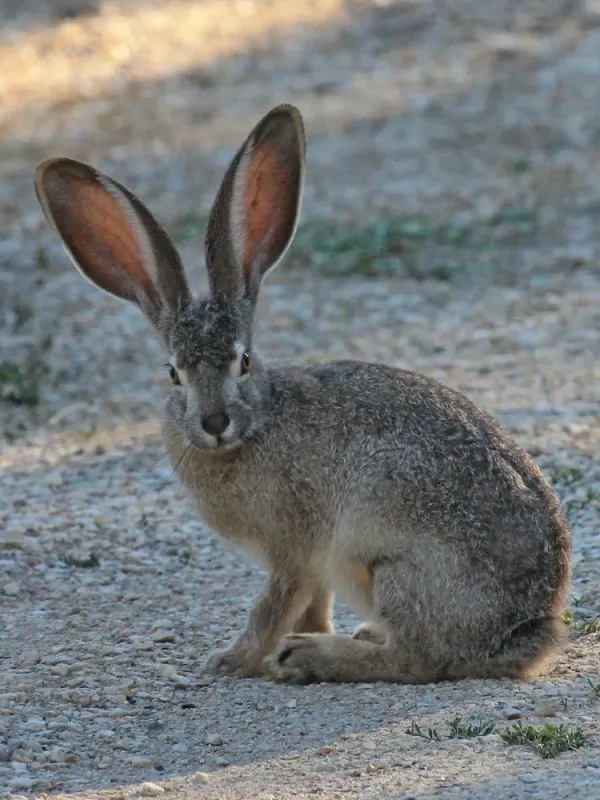
The white-tailed jackrabbit (Lepus townsendii) is a member of the Leporidae family. It is one of the largest hares, reaching lengths of up to 65 cm and weighing several kilograms.
It is easily identified by its distinctive all-white tail, which contrasts with its grayish or brownish coat. In winter, the fur undergoes a moult, turning white to camouflage in snowy environments.
These animals are nocturnal and crepuscular, meaning they are most active during the night and at dawn or dusk. They are ground-dwelling, usually creating shallow depressions in the earth.
Their native range includes the open grasslands and prairies of North America. They thrive in agricultural areas where they find a consistent supply of nutritious food throughout the season.
The reproduction rate of this species is relatively high, with females producing several litters per year, which can lead to rapid population growth under favorable conditions.
What it damages
White-tailed jackrabbits are significant agricultural pests that target cereal grains including wheat, oats, and barley, especially during the seedling stage.
Orchards and nurseries are highly vulnerable as these hares strip the bark from young saplings, often girdling the tree and causing irreversible damage or death.
Forage crops such as alfalfa and clover are frequently overgrazed, reducing the available yield for livestock and causing economic losses for farmers.
Vegetable crops are also affected, as the animals consume the foliage of crops like cabbage, sugar beets, and carrots during the peak growth months.
The damage is often localized but can spread rapidly across a field, causing patches of crop failure that reduce the overall quality and quantity of the harvest.
Signs of infestation
The most reliable sign of a jackrabbit infestation is the appearance of clean, angled cuts on plant stems, caused by their sharp, specialized incisors.
Small, round, dry fecal pellets scattered across the field are a clear indicator of the animals' recent feeding activities in the area.
Well-defined trails leading from forest edges or brushy areas into the middle of crop fields are indicative of established feeding patterns and high rabbit density.
Winter damage to trees is characterized by visible teeth marks and large patches of missing bark, usually found near the base of the trunk.
Patches of missing plants in the early spring indicate that jackrabbits have been grazing on the tender young sprouts as they emerge from the soil.
Control measures
Installing fencing made of woven wire mesh around young orchards is the most effective way to provide long-term protection against rabbit foraging.
Applying taste or scent-based repellents to the bark of trees and the leaves of vulnerable crops can deter jackrabbits from feeding on them.
Using ultrasonic deterrents or sonic devices that mimic predator sounds can temporarily scare rabbits away from specific crop areas.
Maintaining a clean field perimeter by clearing out tall weeds and brush removes the hiding spots that jackrabbits rely on during the daylight hours.
In cases of severe infestation, landowners may use trapping or population control measures in accordance with local environmental and wildlife regulations.
Taxonomy
- Latin name
- Lepus townsendii
- Family
- Leporidae
- EPPO code
- LEPUTW
Discussion
No discussions yet — be the first.