
Hare
Lepus
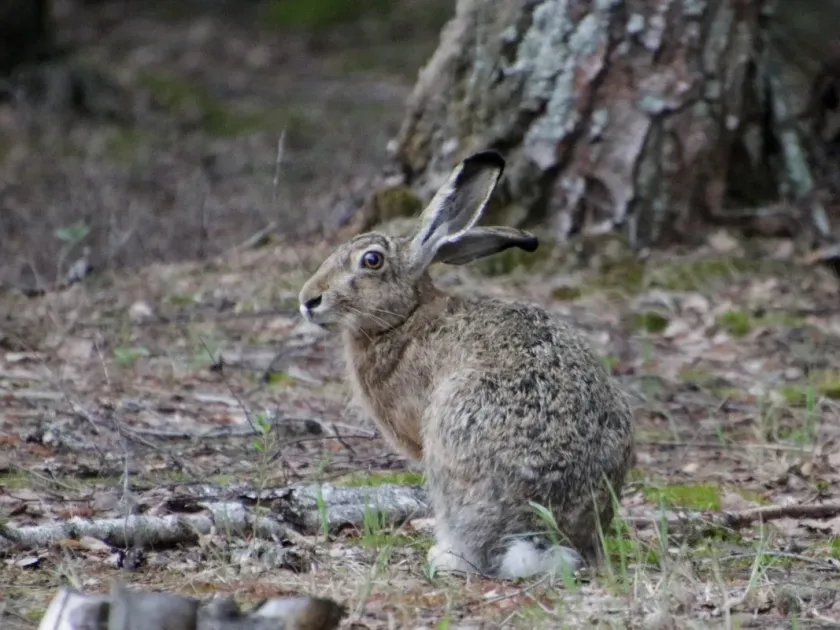
Description
How to identify
Hares (genus Lepus) are members of the Leporidae family, known for their powerful hind legs and excellent speed. Unlike rabbits, they do not live in burrows but rely on their speed and camouflage.
These animals are primarily crepuscular and nocturnal, which allows them to enter gardens unnoticed to feed on vegetation and tree bark under the cover of darkness.
Their biological cycle includes high reproductive rates, leading to significant population increases that can put immense pressure on local agricultural and horticultural areas.
Hares are highly alert, possessing keen eyesight and hearing that help them detect threats, making manual trapping or catching extremely difficult for farmers.
They are adaptable creatures that thrive in open fields, orchards, and gardens where they can find a steady supply of green matter throughout the growing seasons.
What it damages
The primary damage caused by hares occurs during winter when natural food sources like grass are covered by snow, forcing them to turn to woody plants.
They strip the bark from fruit trees, such as apples, pears, and plums, often circling the entire trunk, which effectively cuts off nutrient flow and kills the tree.
Cereal crops, particularly winter wheat and barley, are often grazed by hares during the early growth stages, leading to reduced plant density and yield loss.
Vegetable gardens are also susceptible, as hares will consume leafy greens, root crops, and seedlings, causing significant economic loss for small-scale growers.
Beyond direct feeding, the wounds inflicted on trees serve as entry points for fungal pathogens and wood-boring insects, further compromising the tree's health.
When it appears
Winter is the peak season for hare damage in orchards, as snow cover prevents access to ground-level forage, leaving tree trunks as the only available food source.
In autumn, as vegetation starts to die back, hares begin exploring gardens more frequently, testing various plants and trees for their nutritional value.
Early spring remains a high-risk period, as animals continue to feed on bark until the new spring growth provides sufficient green food for them to relocate.
During the summer months, while damage to trees is minimal, hares may focus their attention on vegetable patches, causing damage to newly planted crops.
Farmers and gardeners should plan their protective strategies in advance, ensuring physical barriers are installed before the first frosts appear.
Signs of infestation
One of the most obvious signs is the presence of distinct incisor marks on the bark, usually seen at a height of 30 to 100 centimeters from the ground.
Footprints in the snow or mud around the base of trees or along garden borders are clear indicators of recent activity, showing the characteristic long rear feet.
The presence of droppings, which appear as dry, round pellets, near the site of damage confirms that hares have been feeding in that specific area.
Broken twigs and branches on young trees, often with clean, angled cuts, indicate the browsing habits of hares rather than the more ragged gnawing of rodents.
Disturbed soil and small "forms" or depressions in the grass near the garden are resting places where hares spend their daytime hours monitoring the vicinity.
Control measures
Physical barriers are the most reliable solution; wrapping tree trunks with wire mesh or specialized tree guards prevents hares from reaching the sensitive bark.
Repellents, including commercial sprays or natural mixtures like tar, can be applied to trunks to make the bark unpalatable to browsing animals.
Maintaining a clean perimeter around the orchard by clearing tall weeds and dense brush removes hiding spots, making the garden less inviting for hares.
Fencing the entire garden with sturdy wire mesh buried slightly into the ground is highly effective for keeping larger hares out of sensitive planting areas.
- Use wire mesh guards around young tree trunks.
- Apply scent-based repellents to bark.
- Clear tall vegetation near fences.
- Install perimeter fencing with small-gauge wire.
- Perform regular winter damage audits.
Taxonomy
- Latin name
- Lepus
- Family
- Leporidae
- EPPO code
- LEPUSP
Discussion
No discussions yet — be the first.