
Japanese hare
Lepus brachyurus
Description
How to identify
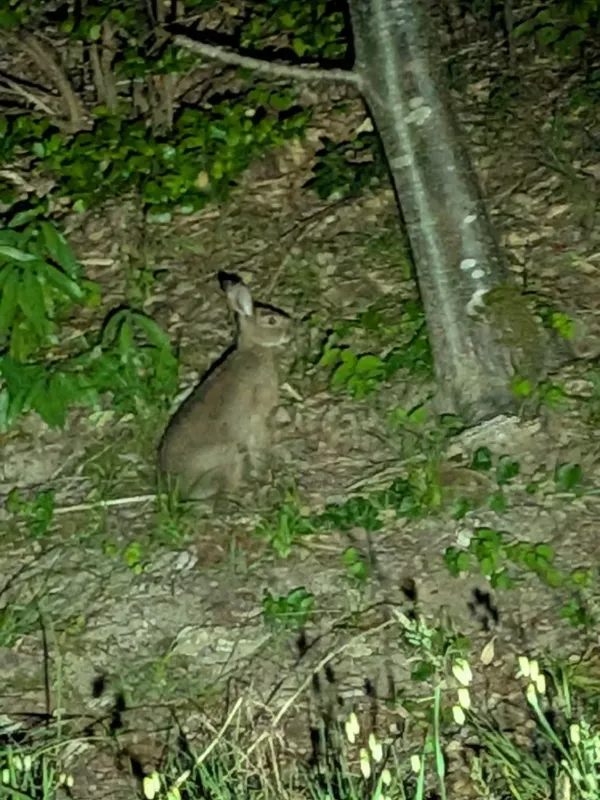
The Japanese hare (Lepus brachyurus) is a species of the Leporidae family, endemic to the Japanese archipelago. It is distinguished by its relatively compact body and shorter ears compared to other hare species found in continental Asia or Europe.
These animals typically weigh between 1.5 and 2.5 kg. Their fur coloration varies depending on the specific island and habitat, often ranging from brownish-gray to reddish-brown, which provides excellent camouflage.
They are primarily nocturnal and crepuscular, meaning they are most active during twilight and night hours. This behavior makes it difficult to spot them during standard field inspections conducted during the day.
Their reproductive cycle is quite efficient; females can produce several litters within a single breeding season, which allows their populations to recover or grow rapidly in areas with abundant food and few predators.
They establish home ranges that often include forest margins or shrublands adjacent to agricultural fields, where they find a diverse source of nutrients necessary for their survival.
What it damages
The Japanese hare is considered a significant agricultural pest, particularly damaging to young orchards and vegetable crops. In winter, when alternative forage is scarce, they frequently feed on the bark of young fruit trees.
This ring-barking behavior can severely disrupt nutrient flow in the plant, often leading to the death of the tree if the damage is extensive enough to expose the vascular tissue.
During the growing season, hares target leafy vegetables such as cabbage, carrots, and the tender shoots of grain crops. Their feeding can destroy entire rows of seedlings in a single night.
Furthermore, they can compromise the overall health of the vegetation by causing physical damage to the root systems or stems, which leaves the plants vulnerable to various fungal and bacterial infections.
In forest nurseries, they may cause widespread destruction by clipping off the leading shoots of young saplings, preventing proper vertical growth and reducing the value of the timber crop.
Signs of infestation
The most prominent sign of a Japanese hare infestation is the presence of clean, angled cuts on young shoots and branches, as if sliced by a sharp blade, which is characteristic of rabbit and hare teeth.
Bark damage on fruit trees, often near the base of the trunk, appears as rough or grooved patches where the outer layer has been stripped away, showing signs of teeth marks.
Animal droppings, appearing as small, rounded pellets scattered near feeding sites or along common pathways, are clear indicators of their frequent presence in the area.
Well-worn trails through tall grass or vegetation at the edge of the field provide evidence of their movement patterns between their shelter and the food source.
Daytime sightings of hollowed-out "forms" or resting spots in high vegetation or under shrubbery indicate that the animals are sheltering on or near the property.
Control measures
Fencing is the most reliable method of exclusion. A fine-mesh wire fence, at least 1 meter high and buried slightly into the ground, is highly effective at preventing hares from entering fields or orchards.
Individual tree protection is essential for young orchards. Using tree guards made of plastic mesh or spiral wraps around the base of the trunk prevents the hares from reaching the bark.
Chemical repellents, which taste bitter or have strong odors, can be applied to the foliage or bark of vulnerable plants to deter feeding, although these require reapplication after rain.
Landscape management plays a role; keeping the area surrounding the fields clear of tall weeds and brush removes the hares' hiding places and makes the site less attractive for colonization.
Some growers utilize motion-activated lights or sound-emitting devices to scare off pests, though efficacy can be short-lived as animals may habituate to these stimuli over time.
Taxonomy
- Latin name
- Lepus brachyurus
- Family
- Leporidae
- EPPO code
- LEPUBR
Discussion
No discussions yet — be the first.