
Tolai hare
Lepus tolai
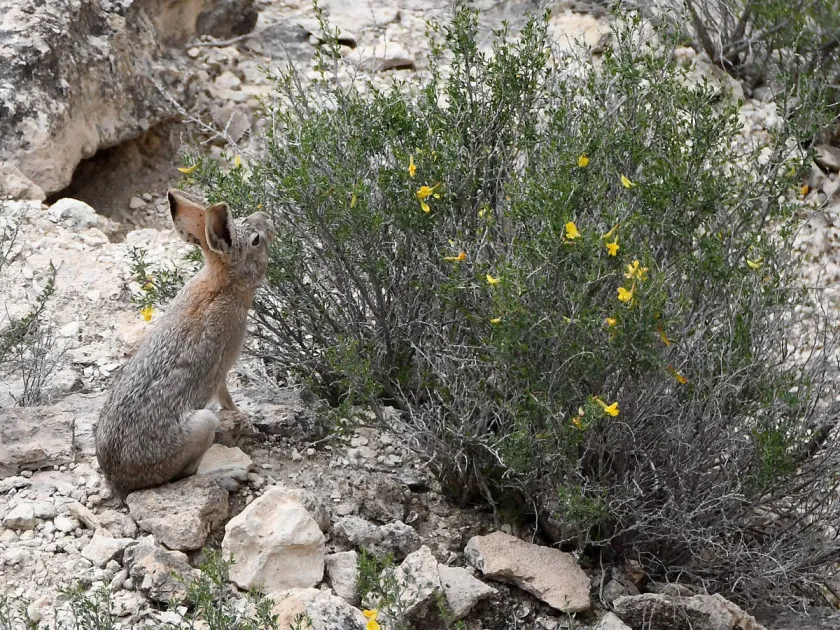
Description
How to identify
The Tolai hare (Lepus tolai) is a member of the Leporidae family, perfectly adapted to arid and semi-arid environments across Central and East Asia.
It is relatively smaller than the European hare, characterized by long ears with distinct black tips and a sandy-grey coat that provides excellent camouflage in desert terrain.
These animals are primarily nocturnal, which often leads to them going unnoticed by farmers until significant damage to the crops has already been sustained.
They do not dig their own burrows, instead preferring to utilize abandoned dens or natural thickets, which influences their distribution patterns near agricultural lands.
Their reproductive strategy is highly efficient, often resulting in multiple litters per year when food resources are abundant, leading to rapid local population growth.
What it damages
Tolai hares cause substantial agricultural damage by feeding on cereal crops, pulses, melons, and various vegetable plants, often targeting tender young shoots.
In orchards and nurseries, they are notorious for stripping bark from young tree stems, which can lead to the widespread death of seedlings and saplings.
Fields of alfalfa and cotton are particularly susceptible to grazing, resulting in reduced biomass production and significant economic losses for farmers.
During the winter months, when vegetation is scarce, their impact on perennial crops and tree plantations becomes particularly severe and destructive.
Beyond direct consumption, the trampling of soil and plants by congregating hares can lead to secondary damage, affecting soil aeration and plant health.
Signs of infestation
Distinctive footprint patterns on soft or damp soil are the most reliable indicators of the Tolai hare's presence within or around a cultivated field.
Plants damaged by hares display clean, angular cuts on stems and branches, which is a clear signature of their incisor teeth in action.
Small, round fecal pellets found near the borders of the field or along vegetation corridors confirm the active presence of this pest species.
Visible bark scraping on tree trunks, usually occurring at the base level, serves as a major sign of hare activity in orchards or forested areas.
Defined movement trails leading from dense brush or natural habitats into the heart of the crops indicate established paths used for nightly foraging.
Control measures
Mechanical exclusion using fine-mesh wire fencing, buried slightly underground, remains the most effective long-term deterrent for small to medium-sized plots.
Individual tree guards made of plastic or wire mesh are essential for protecting the lower stems of fruit trees from gnawing during the dormant season.
Vegetation management around field perimeters, such as clearing weeds and dense undergrowth, reduces attractive hiding spots for hares during the daytime.
While deterrents like repellents or noise-makers can be used, their effectiveness is usually short-term, requiring frequent application or rotation of methods.
Cooperation with regional wildlife services is recommended to monitor population spikes and implement professional management strategies according to local regulations.
Taxonomy
- Latin name
- Lepus tolai
- Family
- Leporidae
- EPPO code
- LEPUTO
Discussion
No discussions yet — be the first.