
Mountain hare
Lepus timidus
Description
How to identify
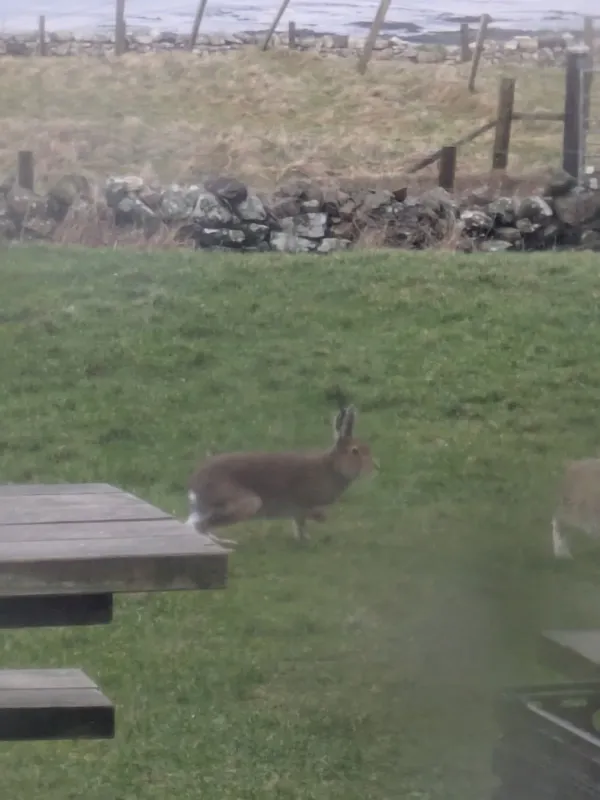
The mountain hare (Lepus timidus) is a mammal belonging to the order Lagomorpha and the family Leporidae, well-adapted to cold northern climates.
This species is distinguished by its seasonal fur changes: brown or grey in summer for camouflage, and almost pure white in winter to blend with the snow.
Compared to other hares, the mountain hare has shorter, broader ears and large, furry paws that act as natural snowshoes, facilitating movement on soft snow.
These animals are primarily nocturnal and crepuscular, often residing in forest edges and thickets, which brings them into direct conflict with nearby orchards.
Their population dynamics are cyclical, often leading to years of high density where their impact on agricultural and garden landscapes becomes significantly intensified.
What it damages
The primary damage occurs during the winter months when natural forage in forests is limited, forcing the hares to seek alternative food sources in orchards.
They target young fruit trees, including apples, pears, and plums, stripping the bark from trunks and lower branches to consume the nutrient-rich phloem.
Girdling, where the bark is removed all around the trunk, is particularly devastating, as it interrupts the flow of sap and leads to the death of the tree.
In addition to bark, mountain hares frequently consume apical buds and terminal shoots, causing irreversible structural damage to the tree's canopy.
Orchards located near forests or overgrown areas are at the highest risk, as these environments provide safe harbor for hares during the daylight hours.
When it appears
The threat to fruit trees is most severe throughout the winter season, lasting from the first snowfalls in late autumn until the arrival of spring thaw.
Late winter, specifically February and March, represents the peak period of damage as natural food supplies dwindle and hares become more desperate.
As soon as the snow melts and green grass becomes available, the animals cease their reliance on tree bark and shift their diet toward herbaceous plants.
The severity of the damage is heavily influenced by winter weather conditions: deep snow allows hares to reach higher branches that would otherwise be safe.
Orchard managers must stay vigilant during these months, especially in years when wild food sources are depleted or population levels are at their cycle peak.
Signs of infestation
Initial signs include distinctive tracks in the snow, showing the large hind feet positioned ahead of the front feet in a characteristic bounding gait.
Direct evidence of damage is found on tree trunks, showing clean, parallel tooth marks left by the hare's sharp incisors as they strip the bark.
Small, round droppings left at the base of the trees and discarded twigs are clear indicators that a mountain hare has been feeding in the area.
In cases of severe infestation, the bark may be stripped cleanly to the wood, with the damage clearly visible at heights corresponding to the snow level.
Observing these signs requires immediate action to protect vulnerable saplings before the hare returns to complete the destruction of the bark.
Control measures
Physical exclusion is the most effective management strategy, utilizing mesh wire guards or tree wraps around the base of every young fruit tree.
- Wrapping trunks with repellent-treated materials or specialized plastic guards.
- Using olfactory repellents that deter hares with strong, unpleasant odors.
- Installing light-reflecting deterrents to scare off animals at night.
- Maintaining clear ground around trees to remove potential hiding spots.
- Constructing perimeter fences that are buried several inches into the ground.
Regular maintenance of these protective barriers is essential, as heavy snow accumulation can bend guards or allow hares to climb over them.
Good agricultural practices, such as removing winter prunings from the garden and managing nearby brush, help minimize the attraction of your orchard to hares.
Taxonomy
- Latin name
- Lepus timidus
- Family
- Leporidae
- EPPO code
- LEPUTI
Discussion
No discussions yet — be the first.