
Western meadowlark
Sturnella neglecta
Description
How to identify
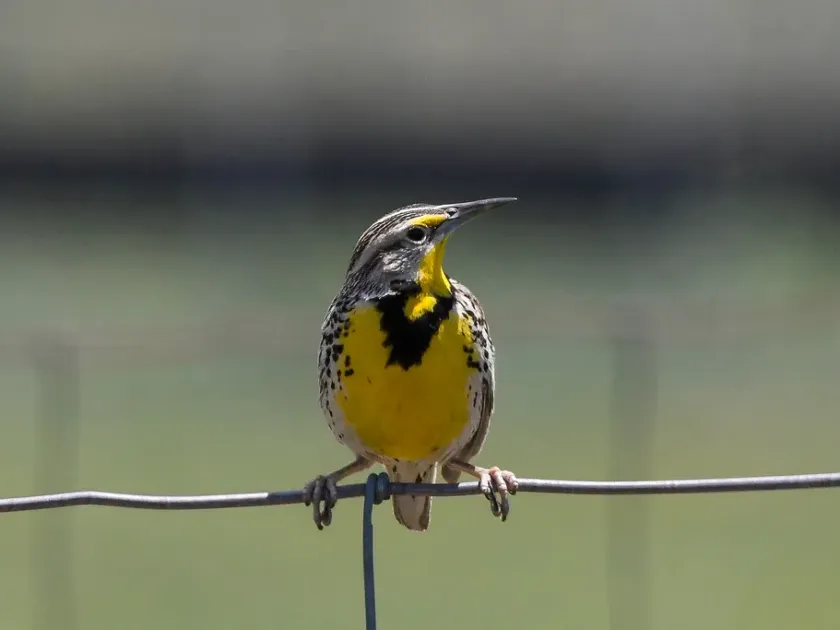
The Western meadowlark (Sturnella neglecta) is a member of the Icteridae family, within the Passeriformes order. It is recognized by its vivid yellow underbelly and a prominent black V-shaped mark on its chest.
While both sexes share similar markings, the male is typically more vibrant, serving to attract mates during the breeding season. The species is most easily distinguished from its relatives by its melodious, flute-like song.
They prefer open habitats such as prairies, grasslands, and agricultural margins. Unlike many other birds, they construct their nests on the ground, tucked away in dense vegetation.
Native to western and central North America, their range has expanded into cultivated areas, where they adapt to agricultural landscapes with ease.
Field professionals should note that their habit of nesting in tall grasses makes them a consistent presence near field edges throughout the growing season.
What it damages
The primary economic damage caused by the Western meadowlark involves the consumption of cereal grains during the germination stage and the pre-harvest phase.
In newly seeded fields, they may dig up and consume seeds, leading to uneven crop stands and the necessity for costly reseeding operations.
During the ripening stage, flocks feed on wheat, corn, and sorghum, pecking at the grain heads and causing significant reductions in yield and kernel quality.
Mechanical damage occurs as birds forage, trampling seedlings and breaking stems, which creates entry points for moisture and secondary pathogens.
Although they also consume insects, the shift to grain feeding during shortages can cause localized but severe damage to field margins, especially near boundary fence lines.
When it appears
The peak period for meadowlark-related damage corresponds with the planting season in early spring and the grain maturation stage in late summer.
Springtime activity is primarily driven by the nesting cycle, as parent birds seek abundant food sources for their offspring within the local agricultural environment.
In late summer, flocks aggregate as young birds fledge and begin foraging in larger groups, often targeting maturing crops at the edges of the fields.
Migratory patterns can also influence their presence, as temporary surges in population density may occur during spring and autumn movements across the region.
Diurnal activity is highest during the early morning and late afternoon hours, when the birds are most actively engaged in communal feeding flights.
Signs of infestation
Signs of infestation include patches of missing sprouts near field margins and noticeable clusters of abandoned seed husks left behind after foraging.
Disturbed soil and small depressions are common where birds have been digging for seeds, often accompanied by visible footprints in the loose topsoil.
- Evidence of trampled vegetation in specific focal points.
- Damaged grain heads with missing kernels or jagged bite marks.
- Droppings scattered throughout areas of high feeding intensity.
The presence of meadowlarks is often signaled by their persistent, flute-like calls heard throughout the fields, especially during the early morning hours.
Damage is typically concentrated along the perimeter, though it may extend deeper into the field if the crop is particularly accessible or near nesting sites.
Control measures
Visual deterrents, such as reflective holographic tapes or predatory bird decoys, can be effective if moved frequently to prevent the birds from acclimating.
Acoustic deterrent systems, which utilize recorded distress calls or predator sounds, can successfully clear fields if implemented early in the ripening phase.
Cultural practices, such as ensuring seeds are planted at the recommended depth, minimize the accessibility of grain to surface-feeding birds during germination.
Maintaining clear margins or using trap crops on non-productive land can help redirect the birds away from the main commercial crop areas.
Integrated pest management strategies are essential, combining scouting with non-lethal deterrents to maintain economic thresholds without harming local biodiversity.
Taxonomy
- Latin name
- Sturnella neglecta
- Family
- Icteridae
- EPPO code
- STULNE
Discussion
No discussions yet — be the first.