
Blackbirds
Agelaius
Description
How to identify
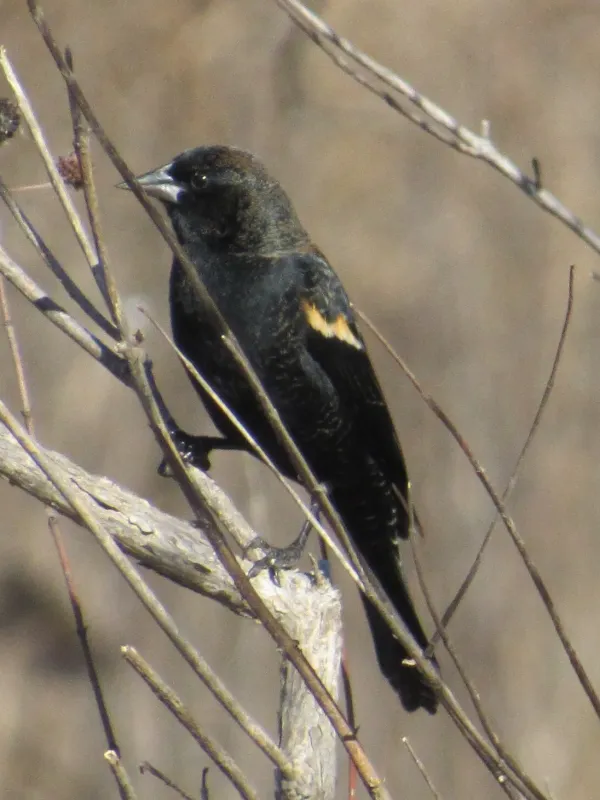
The genus Blackbirds (genus Agelaius) belongs to the Icteridae family, within the order Passeriformes. These birds have a distinctive appearance: males are primarily coal-black with bright colored "epaulets" (patches) on their wings, which can be red, orange, or yellow depending on the specific species.
Females are much less conspicuous, often displaying brownish plumage with dark streaks, which assists with camouflage during nesting. They have a compact body structure and a sharp, pointed beak perfectly adapted for foraging for insects and husking grain.
A crucial identification feature is their social behavior. Outside the breeding season, these birds congregate in massive flocks that can number tens or even hundreds of thousands, exerting significant pressure on agroecosystems.
The breeding range primarily covers North and Central America. They favor moist habitats such as wetlands and the edges of bodies of water, making them a serious threat to rice and corn plantations located near these zones.
For agronomists, it is vital to distinguish between species in the genus, as the intensity of the damage can vary. The most well-known agricultural pest in this group is the Red-winged Blackbird (Agelaius phoeniceus).
What it damages
Blackbirds primarily cause damage to cereal and row crops. Their preferred targets include rice, corn, sorghum, wheat, and various types of sunflowers.
The birds actively destroy crops during the milk and dough stages of grain development, when the seeds are richest in moisture and nutrients. Both adults and juveniles peck grains directly from the ears or cobs.
Beyond direct grain consumption, blackbirds cause indirect damage by breaking plant stems when the flock lands. This leads to lodging, which complicates mechanized harvesting and promotes the development of fungal diseases.
In cornfields, flocks are capable of destroying a significant portion of the cob tips, exposing the kernels. This creates an entry point for further damage by other pests and pathogens, such as Fusarium, which reduces both the quantity and quality of marketable grain.
In regions of intensive farming, damage from blackbird flocks can account for a significant percentage of the total harvest. Their massive population numbers make them one of the most serious risk factors in modern plant production.
When it appears
Peak pest activity occurs during the ripening period of cereal crops. Depending on the region, this timing falls between late summer and early autumn.
During the spring, blackbirds can damage corn seedlings by pulling them from the soil and eating the seeds. This type of damage often remains unnoticed until gaps appear in the field emergence.
After the breeding cycle ends, the birds form large nomadic flocks. It is during this migratory phase that they pose the greatest threat to fields currently in the grain-filling stage.
Winter months in the northern parts of their range are characterized by low pest activity, as most individuals migrate to warmer areas where their diet shifts toward wild seeds.
Agronomists are advised to conduct phenological monitoring to forecast the arrival of flocks and implement timely protection measures during critical crop development phases.
Signs of infestation
The first sign of blackbird presence in a field is the existence of massive avian gatherings on nearby trees or power lines during early morning and late evening hours.
A characteristic sign is the pecked-out tips of corn cobs or "stripped" ears of rice and wheat. If you notice grains missing in an uneven pattern with debris scattered everywhere, it is the work of a flock.
The presence of these pests is also evidenced by mass lodging of crops in specific zones of the field where the birds landed in large numbers. Stems in these spots are often snapped or show signs of physical crushing.
On the soil beneath bird resting areas, a significant accumulation of droppings can be found, visually highlighting the areas where the flocks were concentrated.
In addition to visual damage, during periods of high bird activity, a loud chatter or clatter is audible in the field, which can serve as an indicator of the pest's presence even in dense vegetation.
Control measures
Controlling blackbirds is difficult due to their high mobility and large numbers. The most effective method is the use of acoustic repellents that mimic distress calls or the sounds of birds of prey.
The use of visual repellents, such as reflective tape, inflatable predator figures, or moving decoys, provides only a short-term effect, so they must be moved periodically.
- Use of automatic gas cannons with timers to create rhythmic, loud pops.
- Creation of buffer zones and clearing field edges of tall vegetation where birds might hide.
- Application of specialized chemical repellents to the grain surface, making the seeds unpalatable to birds.
For long-term control, agrotechnical methods are recommended, including planting varieties with tighter corn husks, which makes it harder for birds to access the grain.
In critical situations, the use of integrated pest management (IPM) systems is advisable, combining chemical agents, physical barriers, and constant monitoring to reduce the feeding attractiveness of specific fields.
Taxonomy
- Latin name
- Agelaius
- Family
- Icteridae
- EPPO code
- AGELSP
Discussion
No discussions yet — be the first.