
Euphagus
Euphagus
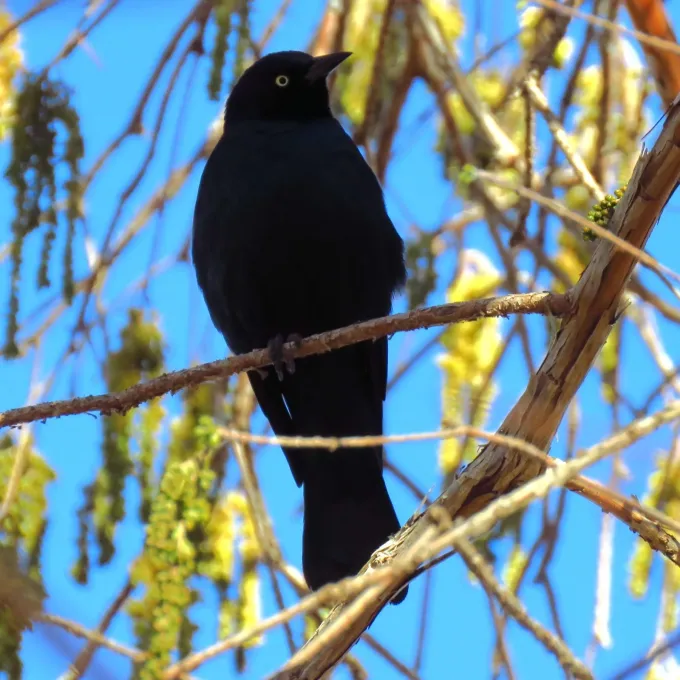
Description
How to identify
The genus Euphagus belongs to the family Icteridae (blackbirds). In an agricultural context, these birds are recognized as significant pests that affect grain fields and vegetable crops.
They are characterized by a sleek black plumage, often with a metallic or rusty sheen. Their sharp, sturdy beaks are perfectly adapted for digging in the soil or husking grain, which makes them effective foragers in agricultural settings.
Typically, these birds reach 20–25 cm in length. They are highly social creatures that move in large, aggressive flocks, which allows them to cause widespread damage in a short period of time.
Identifying this species requires observing their behavior in flocks, as they often exhibit synchronized movements across fields during the foraging phase.
Agronomists monitor these species by tracking their migration patterns and arrival dates in order to implement early protective strategies.
What it damages
The primary damage caused by Euphagus includes the consumption of seeds during the planting phase and the destruction of cereal grains like wheat, corn, and oats during maturation.
Beyond cereals, these pests target sunflowers and various vegetable crops, pulling out young seedlings and damaging developing fruits, resulting in a direct reduction of crop yield.
The economic impact is exacerbated by the need for crop reseeding, as the initial density of the plants is significantly reduced by the birds' activities.
Fields located near wetlands or dense forest edges are particularly susceptible to heavy infestation, as these areas provide both shelter and nesting grounds for the flocks.
Mechanical damage to crop stems and leaves, combined with the loss of harvested grain, poses a persistent threat to commercial farming operations.
When it appears
The peak threat period occurs during early spring when freshly sown seeds are highly accessible in the soil, attracting flocks to the fields.
Another critical period is late summer during the grain-filling stage, when the maturing crops provide a rich and easily available food source for the birds.
Migration timing is the key factor determining when Euphagus will appear in a specific agricultural region, requiring farmers to stay alert during these intervals.
While autumn activity is generally lower, unharvested fields can keep the flocks in the area for longer, leading to delayed post-harvest damage.
Data from local monitoring stations regarding bird migration can help agronomists predict arrival times and prepare necessary defense measures.
Signs of infestation
The most evident sign of infestation is the presence of bare patches in a newly planted field where seeds have been pulled out by the birds.
On grain crops, damaged ears and empty husks are classic indicators that Euphagus flocks have been feeding in the area.
Accumulation of bird droppings on leaves or soil is a clear indicator of frequent flock visits, which can sometimes be seen even before crop loss is severe.
A reduction in stand density that follows a specific pattern across the field often correlates with the foraging trajectory of an avian flock.
Auditory evidence, such as high-pitched flock chatter during the early morning or evening hours, often precedes significant visible crop destruction.
Control measures
Acoustic deterrents that play recordings of predator calls or distress signals are highly effective at dispersing Euphagus flocks from agricultural fields.
Visual repellents, such as holographic tapes, reflective surfaces, or predator-mimicking scarecrows, should be moved frequently to prevent the birds from habituating to them.
Cultural methods, such as deeper planting or using seed coatings with repellent properties, can decrease the success rate of the birds during the germination stage.
Maintaining clean field borders by trimming overgrown shrubs and weeds removes potential shelters that attract birds to the area.
- Use of professional scaring devices like propane cannons during peak feeding times.
- Collaboration with local environmental agencies to manage nesting sites in nearby habitats.
- Implementing crop rotation to disrupt the birds' predictable reliance on specific fields.
Taxonomy
- Latin name
- Euphagus
- Family
- Icteridae
- EPPO code
- EUPASP
Discussion
No discussions yet — be the first.