
Red-winged blackbird
Agelaius phoeniceus
Description
How to identify
The Red-winged blackbird is a passerine bird belonging to the Icteridae family. Adult males are easily identified by their glossy black plumage and distinctive red shoulder patches, known as epaulets, bordered by yellow.
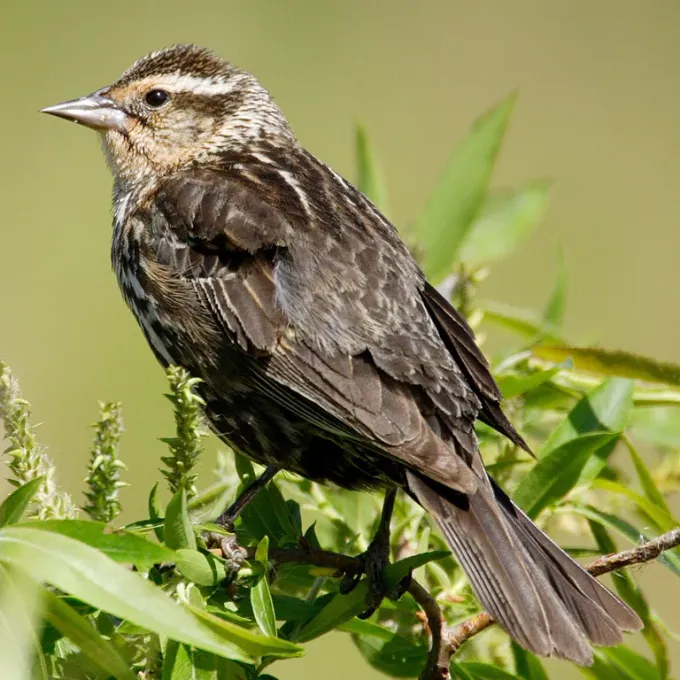
Females have a completely different appearance, sporting a streaky brown, sparrow-like plumage that provides essential camouflage while nesting in dense wetland vegetation.
The birds measure approximately 17 to 23 centimeters in length. Juvenile males may appear somewhat duller, gradually developing their striking coloration as they mature.
They are primarily associated with marshes, wetlands, and open fields. Their high adaptability allows them to thrive in agricultural landscapes adjacent to their natural nesting grounds.
These birds are highly gregarious, often forming massive flocks during the post-breeding season, which creates significant pressure on nearby agricultural production.
What it damages
This species is considered a major agricultural pest, especially for cereal crops like corn, rice, wheat, and sorghum. They cause damage by pecking and consuming kernels from developing ears or heads.
Corn is the most severely affected crop. The birds tear open the protective husks, which not only leads to direct grain loss but also creates entry points for fungal infections and ear rot.
Beyond direct feeding, the weight of large flocks landing on crops causes lodging and physical injury to the stems, reducing the overall quality and harvestability of the grain.
In addition to cereals, they can cause significant damage to sunflower and other seed-bearing crops, impacting both yield and market value for farmers.
The cumulative effect of these losses can be devastating for farms located near large wetland nesting sites, requiring integrated management strategies.
When it appears
The damage potential peaks during the milk and dough stages of grain development, as the kernels are soft, nutritious, and easily accessible to the birds.
Large-scale incursions into fields typically occur from late summer through the autumn harvest season, when birds congregate into large pre-migratory or roosting flocks.
During spring, these birds consume insects, which can provide a slight benefit; however, this is vastly outweighed by the crop damage occurring later in the growing cycle.
Seasonal migration patterns and the timing of crop maturation are key factors that dictate the intensity of the pest pressure on agricultural fields.
Monitoring the size and movement of local flocks is essential for agriculturalists to prepare defensive measures before the most vulnerable stages of crop maturation.
Signs of infestation
A classic sign of infestation is the presence of corn ears with shredded or torn husks, leaving the ripening kernels exposed to the elements and further pest attack.
Stunted, flattened, or broken stalks are visible indicators of where large flocks have gathered to feed for extended periods, creating localized damage patterns.
Accumulation of bird droppings on leaves and the soil surface serves as a clear indicator of heavy flock activity within specific areas of the field.
Auditory evidence, such as the constant calling and synchronized movement of the flock when flushed from the field, is a primary indicator of their presence.
Damage often follows an edge-to-center progression, where fields closest to water sources or brush lines are attacked first as the birds move into the crops.
Control measures
Acoustic deterrents, including propane cannons and bio-acoustic systems that play distress calls, are widely used to scare flocks away from standing crops.
Visual repellents, such as hawk kites, reflective tape, and motion-activated scarecrows, can be effective but require frequent relocation to prevent bird habituation.
Cultural control strategies include timely harvesting to reduce the exposure window and managing tall, dense weeds or brush around fields that provide roosting sites.
- Utilizing drones or specialized scare tactics to disrupt flock behavior.
- Planting non-preferred crop varieties in edge rows.
- Coordinating community-wide bird management efforts to increase efficiency.
Taxonomy
- Latin name
- Agelaius phoeniceus
- Family
- Icteridae
- EPPO code
- AGELPH
Discussion
No discussions yet — be the first.