
Bobolink
Dolichonyx
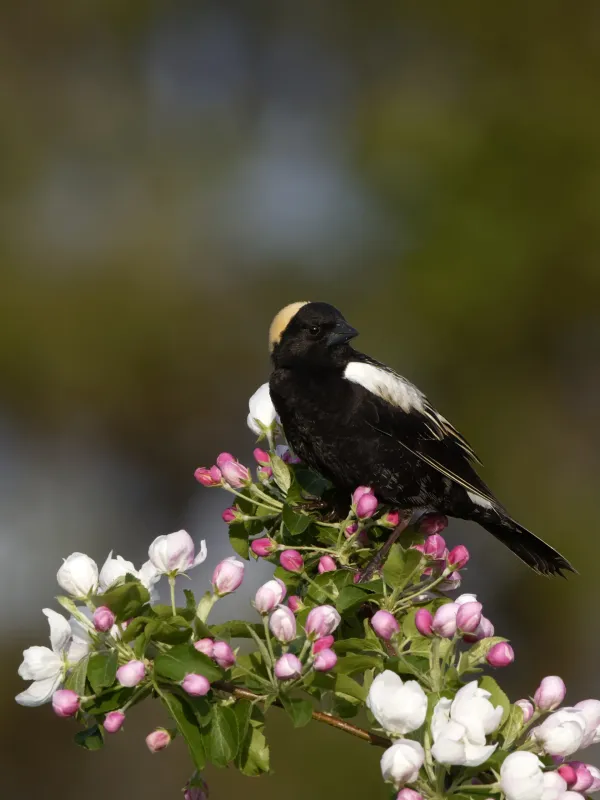
Description
How to identify
The Bobolink (Dolichonyx oryzivorus) is a small songbird in the family Icteridae, part of the order Passeriformes.
Adult males are distinctive during the breeding season, displaying a striking black, white, and cream plumage that sets them apart from other species.
Females and non-breeding males possess a sparrow-like appearance with buff and brown streaked feathers, which provides effective camouflage in grassland habitats.
They are famous for one of the longest annual migrations of any songbird, traveling thousands of miles between North and South America.
Physically, they feature a stout, conical bill designed for husking seeds, which contributes to their efficiency as grain-consuming pests in agricultural settings.
What it damages
During their southward migration, Bobolinks often congregate in immense flocks that settle on agricultural lands, specifically targeting rice paddies.
These birds feed primarily on rice grains during the milky and soft dough stages, consuming large quantities and causing significant yield losses.
Beyond rice, they may impact other cereal crops such as oats, sorghum, and millet, depending on their availability along migratory corridors.
Massive gatherings of these birds can cause structural damage to plants by breaking stalks and flattening portions of the crop under their collective weight.
The economic impact is often concentrated in specific regions where the timing of bird migration perfectly aligns with the maturation of the local grain crops.
When it appears
The period of crop vulnerability corresponds directly with the Bobolink's fall migration, typically occurring in late summer and early autumn.
As the birds move south, they rely on energy-rich grain crops to fuel their strenuous flights, leading to peak damage during the late-season ripening phase.
Activity is most intense in the morning and evening hours when the birds are actively foraging across the landscape.
Once the grain reaches full maturity and hardens beyond the reach of their beaks, or once the birds continue their journey, the damage ceases.
Regional agricultural calendars must account for these migratory windows to ensure proper crop protection strategies are implemented in time.
Signs of infestation
The most immediate indicator of Bobolink presence is the arrival of large, noisy flocks that move rapidly across fields in synchronized flight patterns.
Examination of the crops often reveals damaged panicles with empty husks where the soft grain was systematically removed by the birds.
Patches of flattened vegetation and broken stalks indicate areas where flocks have congregated to feed for extended periods.
Accumulated bird droppings on leaves and the ground beneath the feeding zones provide further evidence of heavy flock occupancy.
Visual observations of the birds during feeding hours confirm their identification and help estimate the potential severity of the crop loss.
Control measures
Effective management strategies include the use of acoustic deterrents, such as broadcasts of raptor alarm calls to frighten away flocks.
Visual deterrents, including hawk decoys and reflective Mylar tape, can discourage birds from settling on specific areas of the farm.
Farmers often employ strategic crop scheduling to ensure the rice is past the vulnerable milky stage before the peak migration period begins.
Rapid harvesting techniques are recommended to minimize the exposure time of the crop to migratory bird populations.
Monitoring regional bird migration forecasts allows farmers to proactively deploy deterrent measures before large flocks arrive at the fields.
Taxonomy
- Latin name
- Dolichonyx
- Family
- Icteridae
- EPPO code
- DLNXSP
Discussion
No discussions yet — be the first.