
Meadowlarks
Sturnella
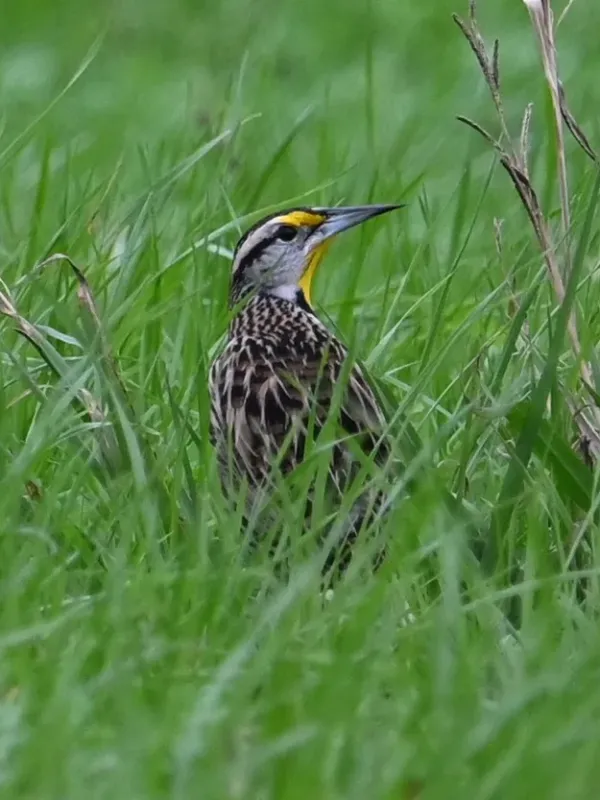
Description
How to identify
Meadowlarks (genus Sturnella) belong to the family Icteridae and the order Passeriformes. These medium-sized birds are easily recognized by their striking yellow underparts with a distinct black V-shaped chest band.
They are ground-dwelling birds that inhabit open grasslands, pastures, and agricultural fields, where they search for insects and seeds using their sharp, pointed bills.
Their social structure involves forming groups, especially during the non-breeding season, which allows them to efficiently locate and exploit food sources in agricultural settings.
Identifying their presence is relatively straightforward due to their colorful plumage and characteristic vocalizations, which are often heard during the early morning hours.
Understanding their behavior is essential for agronomists, as these birds exhibit high levels of intelligence and adaptability to human interventions in their feeding grounds.
What it damages
Meadowlarks cause agricultural damage primarily by feeding on corn, wheat, and sunflower crops, specifically targeting grains in the milk and dough stages of development.
By tearing the husks of corn, they expose the ears to external pathogens, leading to fungal growth and increased vulnerability to other agricultural pests and insects.
In the spring, they can cause significant losses by pulling out newly germinated seedlings, which leads to reduced plant density and potentially necessitates field replanting.
The damage is often concentrated along the edges of fields or near natural flight paths, but can spread across larger areas if the population density remains unchecked.
Farmers face significant financial losses due to the combined impact of direct crop consumption, quality degradation of remaining grains, and increased pest management costs.
When it appears
The peak period for meadowlark damage occurs in late summer and early autumn, coinciding with the maturation phase of cereal crops like corn and sorghum.
Spring presents another risk window during sowing operations, as birds are attracted to fields where seeds are placed near the surface or left uncovered.
Migratory patterns influence their arrival in agricultural regions, making timely monitoring and early preparation essential for farmers in affected zones.
During periods of dry weather or limited insect availability, meadowlarks are more likely to switch to agricultural crops as a primary source of nutrients and hydration.
Understanding the daily activity cycles, primarily morning and evening feeding patterns, helps in optimizing the timing of bird control applications.
Control measures
Managing meadowlark populations requires an integrated approach that utilizes various deterrent technologies to discourage them from settling in active crop areas.
- Deploying acoustic deterrents such as propane cannons or recorded distress calls to create a hostile environment.
- Installing visual deterrents like predator decoys or holographic tape to disrupt their sense of security.
- Ensuring proper soil coverage during planting to hide seeds from potential avian predators.
- Maintaining field perimeters by trimming tall grasses to reduce nesting and hiding opportunities.
The success of these measures relies on rotating the types and locations of deterrents, as birds adapt quickly to fixed or predictable threats.
Taxonomy
- Latin name
- Sturnella
- Family
- Icteridae
- EPPO code
- STULSP
Discussion
No discussions yet — be the first.