
Tawny owl
Strix
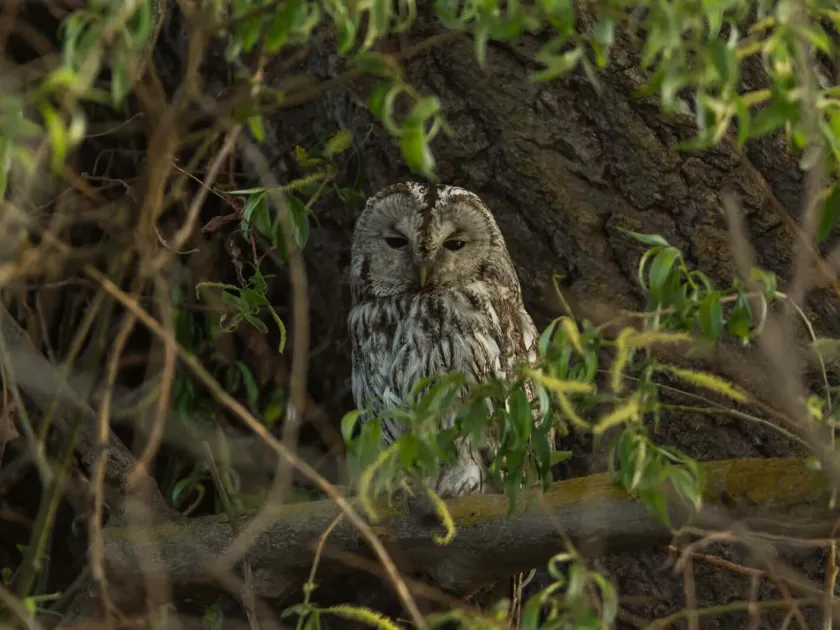
Description
How to identify
The genus Strix (Tawny Owl) belongs to the order Strigiformes and the family Strigidae. These are medium-to-large birds of prey, primarily nocturnal in their habits.
They are characterized by a large, round head without ear tufts, powerful talons, and a sharp, curved beak. Their plumage is soft and cryptic, allowing for silent, stealthy flight.
In agronomy, the Tawny Owl is recognized as an essential component of the ecosystem rather than a pest, given its diet and predatory behavior.
These birds possess highly evolved hearing and vision, which enable them to detect and hunt small mammals effectively in dark environments.
Identifying the presence of Strix helps farmers assess the natural regulatory potential of their land against rodent infestations.
What it damages
The Tawny Owl is not a pest; it causes no damage to crops, fruits, or agricultural infrastructure. It does not feed on vegetation of any kind.
Its diet consists almost exclusively of small mammals, primarily mice and voles, which are notorious pests that destroy grain and root crops.
Unlike herbivorous pests, Tawny Owls actively contribute to the reduction of rodent populations in fields and grain storage facilities.
There are no recorded instances of these birds damaging agricultural yields, making them highly beneficial to the farming industry.
The ecological role of the owl is that of a natural predator that maintains the balance of the farm's wildlife, ultimately protecting the harvest.
When it appears
Tawny Owls are sedentary birds, remaining in the same agricultural zones and forest belts throughout the year.
They are most active during the breeding and nesting season, which aligns with the peak growth cycles of agricultural rodent pests.
During the winter months, these birds may frequent farmstead outbuildings where rodents seek refuge from the cold, thereby providing ongoing protection.
The nesting period in early spring is critical for local population maintenance and requires protection of their habitat.
Year-round presence of these predators ensures continuous monitoring and control of pests across the farming estate.
Signs of infestation
The presence of owls is often indicated by pellets — regurgitated masses of undigested bones, fur, and teeth of their rodent prey.
Auditory signs include the distinct hooting calls used for territory defense and communication, especially during dusk and dawn.
White streaks of excrement on branches or tree trunks often mark the regular resting spots of the owls.
Discarded feathers found in barns or near forest edges serve as secondary evidence of their residency.
Finding such signs is a positive indication that the farm maintains a healthy, functioning ecosystem with natural pest regulators.
Control measures
Management of Tawny Owls focuses entirely on conservation and habitat enhancement to encourage their presence on farmland.
Preserving mature trees with natural cavities is the most effective way to provide suitable nesting sites for these birds.
- Avoiding the use of anticoagulant rodenticides to prevent secondary poisoning of owls.
- Installing owl boxes in areas where natural nesting sites are scarce.
- Minimizing human disturbance near identified nesting trees during the spring months.
Integrated Pest Management (IPM) strategies should prioritize the protection of these raptors as a biological control measure.
By protecting the owl, farmers reduce their reliance on chemical rodenticides, thereby promoting sustainable agricultural practices.
Taxonomy
- Latin name
- Strix
- Family
- Strigidae
- EPPO code
- STRXSP
Discussion
No discussions yet — be the first.