
Eagle owl
Bubo
Description
How to identify
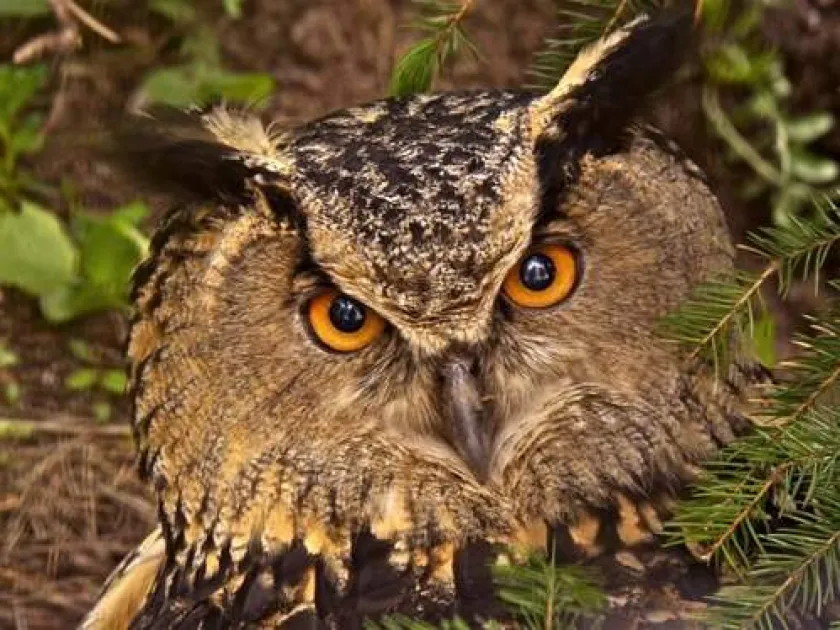
The Eurasian Eagle owl (Bubo bubo) is a member of the Strigiformes order and Strigidae family. It is one of the largest owl species known for its impressive size and ear tufts.
From an agronomic point of view, the Eagle owl is strictly a predatory bird. It does not cause any damage to vegetation, crops, or agricultural produce.
The owl is adapted to hunting in various landscapes, including agricultural zones where small mammals often congregate near crops.
Its biological cycle is highly synchronized with the activity of small rodents, making it a critical player in natural population regulation within rural environments.
Understanding the biology of Bubo bubo confirms its ecological importance as a top predator that does not threaten food security.
What it damages
The Eagle owl is not a crop pest. It feeds exclusively on rodents, small mammals, and occasionally other birds, showing zero interest in cultivated plants.
Farmers often underestimate the role of such raptors in reducing the population of rodents that cause massive annual losses in cereals and stored grains.
There is no evidence of Eagle owls causing economic damage. Instead, their presence indicates a healthy, functioning ecosystem capable of natural pest management.
Misidentifying this owl as a pest can lead to unnecessary and harmful interventions, which would ultimately be detrimental to the farmer's own interests.
The species provides a free and sustainable service by naturally suppressing pests that compete for agricultural yields.
Control measures
No control measures are needed. On the contrary, the focus should be on conservation to ensure the continued biological control of harmful rodents.
Farmers are encouraged to preserve nesting sites and avoid the indiscriminate use of pesticides that might affect the health of these beneficial predators.
Implementing eco-friendly farming practices, such as maintaining hedgerows and field margins, can attract Eagle owls to agricultural areas.
Integrated Pest Management strategies should actively include the protection of such avian predators to reduce reliance on synthetic rodenticides.
Protecting the Eagle owl is a scientifically sound practice that supports the long-term sustainability of agricultural operations.
Taxonomy
- Latin name
- Bubo
- Family
- Strigidae
- EPPO code
- BUBOSP
Discussion
No discussions yet — be the first.